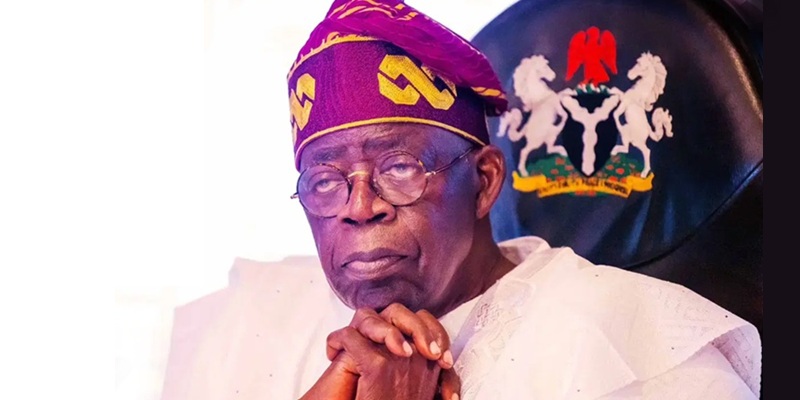
TDA new investigative exposé titled The Nigerian Connection has reignited controversy around President Bola Ahmed Tinubu.

The investigative report alleges long-standing ties to heroin trafficking networks, forged academic credentials, and protection from U.S. intelligence agencies.
The report, authored by Mike Arnold, compiles sworn affidavits, court filings, and depositions spanning three decades.
The documents raise questions about Nigeria’s leadership and its intersection with global drug and arms pipelines.
The Origins of the Allegations Against Tinubu
The controversy dates back to the early 1990s when U.S. authorities investigated heroin trafficking networks operating out of Chicago.
In 1993, IRS Special Agent Kevin Moss testified in a sworn affidavit that Tinubu’s accounts at First Heritage Bank and Citibank contained proceeds from heroin trafficking.
Although Tinubu was not criminally charged, he agreed to forfeit $460,000 to the U.S. government in a civil case.
This forfeiture, critics argue, remains a shadow over his political career.
Tinubu’s defenders insist that the forfeiture was a civil matter, not a criminal conviction.
Yet the resurfacing of these documents in the recent investigation has reignited debate about whether Nigeria’s president was ever fully cleared of association with drug cartels.
Disputed Tinubu Academic Credentials
Another pillar of the exposé concerns Tinubu’s educational background.
In 1999, under oath, Tinubu claimed he held a degree from the University of Chicago.
However, the institution later confirmed that no record of his enrollment or graduation exists.
More recently, in 2023, Chicago State University’s registrar testified that the certificate Tinubu submitted to Nigeria’s electoral commission was not issued by CSU.
Adding to the confusion, Tinubu’s transfer transcript into CSU was gendered female, and multiple birth years — 1952, 1954, and 1955 — appear across his documents.
These discrepancies have fueled speculation about identity manipulation and document forgery.

Sealed U.S. Files and FOIA Battles
Between 2022 and 2026, activists and lawyers pursued Freedom of Information Act (FOIA) requests to compel U.S. agencies to release Tinubu’s files.
The CIA, DEA, and FBI resisted disclosure.
The CIA invoked “active human intelligence source” protections, while the DEA argued Nigerians “do not have a right to know what their president is up to.”
In a landmark ruling, a U.S. federal judge ordered full disclosure by June 1, 2026.
This deadline has become a focal point for Nigerian civil society, which sees the release of these files as critical to understanding the true background of their president.
The Global Supply Chain
The report situates Tinubu’s alleged past within Nigeria’s present-day heroin and arms trafficking infrastructure.
Afghan heroin, routed through Pakistan and Turkey, enters Nigerian ports such as Apapa and Tin Can Island.
From there, shipments exit via airports and northeastern borders controlled by Boko Haram and ISWAP.
These insurgent groups tax shipments to fund their operations, creating a direct link between narcotics trafficking and terrorism.
Arms shipments have also raised alarms.
In 2016 and 2024, Nigerian authorities intercepted Turkish weapons at Lagos and Port Harcourt ports.
Conflict Armament Research later traced Turkish shotguns directly to Boko Haram fighters.
The overlap between drug and arms trafficking routes suggests a deeply entrenched criminal infrastructure.
Financial Dimensions Involving Tinubu
The financial stakes are staggering.
Nigeria loses an estimated $9 billion annually to illicit mineral exports, with protection layers allegedly taking a cut.
Drug transit revenues are estimated at $3–10 billion annually, with protection fees yielding $250–500 million each year.
Domestically, conflict-driven displacement has created a captive drug market.
Opioid misuse rates in Nigeria’s northeast stand at 20 percent, double the global average.
This crisis underscores how trafficking networks not only destabilize governance but also devastate communities.
Political Context and International Ties
Tinubu’s rise from Chicago to Lagos politics is central to the narrative.
After returning to Nigeria, he became a key figure in NADECO, the pro-democracy movement opposing General Sani Abacha’s dictatorship.
His positioning as a reformer earned him credibility with Western governments.
The report notes that Tinubu’s Chicago years overlapped with Barack Obama and David Axelrod.
Axelrod later managed Muhammadu Buhari’s 2015 campaign, which ousted Goodluck Jonathan.
This overlap has fueled speculation about long-standing ties between Nigerian politics and U.S. political networks.
The CIA Pattern
The Nigerian Connection argues that Tinubu’s case fits a broader pattern of U.S. intelligence protecting drug-trafficking allies in exchange for strategic cooperation.
Historical parallels are drawn with Southeast Asia, Central America, and Afghanistan, where narcotics networks were tolerated or shielded to advance geopolitical objectives.
If Tinubu was indeed protected as a “human intelligence source,” it would explain why U.S. agencies resisted releasing his files.
It would also explain why he avoided criminal prosecution despite sworn affidavits linking his accounts to heroin proceeds.
Risks and Implications
The allegations carry profound implications for Nigeria and the world:
- Political Stability: If the June 1 disclosures confirm the allegations, Nigeria’s political stability could be severely shaken.
- Opposition Realignment: The PDP and ADC may seize on the revelations to challenge Tinubu’s legitimacy ahead of 2027.
- Global Security: Nigeria’s ports and borders remain central to heroin and arms pipelines. Jihadist groups benefit directly from this infrastructure, raising global counterterrorism concerns.
- Public Trust: Nigerians already grappling with economic hardship may lose further confidence in leadership if allegations are substantiated.
What Comes Next for Tinubu
The countdown to June 1, 2026, is critical.
Civil society groups, opposition parties, and international observers await the release of Tinubu’s files.
If the documents confirm long-standing suspicions, Nigeria may face calls for accountability at the highest levels.
For now, Tinubu remains in office, insisting on his legitimacy.
But the shadow of The Nigerian Connection looms large, threatening to redefine Nigeria’s political landscape and its relationship with global powers.
Note:
While no criminal conviction exists against Tinubu, the persistence of sealed files and intelligence protections raises serious questions.
The Nigerian public — and the international community — await clarity as the June 1 deadline approaches.