
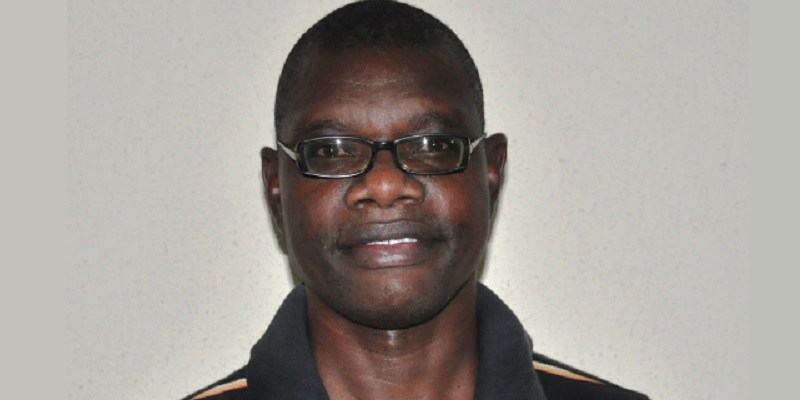
TD“You have two options now: To live or to die.” That was the chilling message with which a senior police officer confronted Mubarak Bello, a 38-year-old whistleblower and father of four young children, whose revelation has left the Katsina State police command fiercely rattled since 2019.

Bello, a civilian staff in the finance unit of the state command had exposed three layers of massive fraud perpetrated by the command’s high-ranking but heavily corrupt police officers: a payroll inflated with thousands of phantom officers; illegal “tax” deductions ranging from N5,000 to N80,000 levied on officers’ monthly salaries; and a fraudulent loan scheme through fake companies in which loanees were fraudulently deducted long after repaying the loans.
Since Bello reported the grand-scale swindle to relevant authorities including the Independent Corrupt Practices and Other Related Offences Commission (ICPC) and the Economic and Financial Crimes Commission (EFCC), his universe has gone downhill. As this piece goes out, he is buffeted by a continuous stream of virulent retaliation launched, in a classic case of institutional betrayal, by his employers, the police, a critical organ of the state whose duty it is to preserve law and order and protect people who expose criminal conduct, but has now turned themselves into a tool of deliberate, mean-spirited oppression of a whistleblower.
And strangely enough even if unconsciously, the whistleblower’s punishment by the police is equally kept alive by no less similarly pivotal state organs, notably ICPC and EFCC, with their seeming acquiescence to an obvious illegality as shown by their failure to investigate the whistleblower’s disclosure and ensure his safety as global best practice recommends in such cases. These two institutions ought to know better, even if the police have chosen to go rogue.
In actual fact, both the ICPC and EFCC, and indeed other state-empowered institutions having anything to do with whistleblowing, need to be deeply schooled on the essentials of whistleblowing as a mechanism for achieving transparency and accountability in public and corporate governance. The consistent standard in whistleblowing management which has clearly eluded these institutions is that once a whistleblower submits a report to relevant agencies, the whistleblower is entitled to full protection from varied and non-exclusive forms of reprisals from any quarter, even as the accuracy of the disclosure is undergoing assessment.
So, in Bello’s case, ICPC, EFCC, SSS, and even the federal ministry of justice and the Police Service Commission (PSC) which received the whistleblower’s disclosure, it’s fair to say they all dropped the ball scandalously by failing to prevent the reprisals repeatedly launched at him. It’s even worse that Bello’s disclosure was found to be full of merit at a glance, yet nothing of substance came out of it. The wrongdoers in the police have not been brought to account, and the whistleblower is left to suffer all kinds of mistreatment.
At one point Bello was arrested by the police, tortured and released after eight days without a formal charge, but his car was seized and is still with the police. His house was ransacked and valuable property removed by operatives from the State Intelligence Bureau (SIB). He had been physically attacked many times by a combination of policemen and hired ruffians and, in one instance, almost left for dead with a big gash on his forehead. The scar left by the stitched wound on his face is an enduring mark of state cruelty not only against the whistleblower, but also against truth-telling.
Not done yet, the police turned the screw by slamming him with two separate lawsuits alleging spurious charges intended to shut him up, the latest is an upcoming re-arraignment at the federal high court in Katsina initiated by the inspector general of police. As is well known, lawsuits are a slippery terrain for whistleblowers. They are often long and costly, and their outcome, decided by a judge, are always unpredictable. More than anything, Bello is traumatized by the retaliatory court cases before him, and occasionally he fights off the distress by showing frustrations and resentment toward his lawyers understandably.
When Katsina became increasingly unsafe due to constant harassments, he fled the town and relocated his wife and children to where he thought they would be safest inside the city. He was wrong. His persecutors traced the house, and constantly stormed it to ask his wife his whereabouts. One night, they broke into the house and violated the woman. As Bello narrated the hideous crime, he broke down and tears of anguish filled his eyes.
To be fair to ICPC, they once attempted to act by writing to the police to release the indicted officers for questioning. But the police, then headed by Kayode Egbetokun, ignored them and ICPC quietly retreated with their tails between their legs, and leaving the familiar impression that “our hands are tied,” an expression commonly trotted out in Nigeria by weak, ineffectual institutions and state officials lacking the will to act in accordance with the law.
Shockingly, the same incapability was demonstrated by President Muhammadu Buhari whose administration introduced the whistleblowing policy to fight corruption, and to whom the whistleblower had the privilege of narrating his story at the height of his persecution, was unable to save the whistleblower despite his well-advertised aversion to corrupt practices. After the whistleblower shared his concern with Buhari during a rare private meeting, the best the administration did for Bello was to send him to a safe house in Kaduna. Bello spent three months there and left on his own out of frustration. He wanted justice, not the luxury of a secluded sprawling safe haven.
If the whistleblower’s experience shows anything, it is evidence of a considerable amount of state failure as seen in the collapse or ineffectiveness of the moral clarity of Nigeria’s leadership in key institutions. For example, the police failing to maintain law and order, and the anti-corruption agencies not having the nerve to tackle corruption and protect citizens who report wrongdoing.
Because of the uncertainty and delays surrounding his court cases, Bello is expectedly afflicted with legal abuse syndrome (LAS), a kind of post-traumatic stress disorder related to a psychic injury often found in individuals assaulted by legal abuses and betrayals. This has left him nursing suicidal thoughts sometimes. Fortunately, he is already seeing a psychologist, thanks to the Coalition of Whistleblower Protection and Press Freedom (CWPPF) which had mounted a feisty advocacy for the safety of the whistleblower.
The coalition, among others, includes the African Centre for Media and Information Literacy (AFRICMIL), which is the lead organization in the advocacy, Centre for Journalism Innovation and Development (CJID), International Centre for Investigative Reporting (ICIR) and Hope Behind Bars (HBB). In separate interventions, CWPPF and AFRICMIL had sent petitions to the Inspector General of Police and the Chair of ICPC highlighting the need to protect the whistleblower and guarantee his safety. Neither has responded to the petitions.
The police had been battling with extreme ferocity trying to persuade the whistleblower to disclaim his disclosure. The officer who accosted him offered money which Bello rejected, opting instead to stand by with the truth in the face of mortal danger. Seeing that the whistleblower won’t budge, the police journeyed with cash and plenty of gift items to Tsauri, a village in Kurfi Local Government Area of Katsina State, to meet with Bello’s father and persuade him to convince his son to shut up for good.
That is not the way to go. The police should be searching themselves and clearing the dregs that have put their reputation in a bad light. They should regenerate themselves as society’s pillar of rectitude, not a branch of corruption, dishonesty and wickedness.
To this end, the new Inspector General of Police, Olatunji Disu, should quickly terminate ongoing judicial retaliation deployed against the whistleblower by withdrawing the two frivolous suits and stopping all other forms of harassments against him and his family. Anything short of this will be grossly unfair and morally wrong, as well as an assault on public interest whistleblowing.
Above all, the Nigeria Police Force must guarantee the safety of Mubarak Bello and his family. The whole world is watching!
The Platform to Protect Whistleblower in Africa (PPLAAF) is deeply appreciated for its support in this campaign.
Godwin Onyeacholem is Program Manager at the African Centre for Media & Information Literacy.