TDWe are 12 months away from the next general election. In Nigerian politics, 12 months is an eternity—but it is also a ticking clock.

While the political class is busy with defections and media noise, the rest of us need to look at the empirical evidence.
Forget the social media wishy-washy. Forget the rhetorics. Let’s talk about the numbers that should keep the ruling party awake at night.
One State vs. Eleven States
Let’s start with a statistic that exposes the fault lines of the 2023 election.
Rabiu Kwankwaso, the NNPP candidate, polled 997,279 votes in Kano State alone.
Let that sink in.
That single state’s tally for one candidate was greater than the combined total votes the entire All Progressives Congress (APC) scored in eleven states:
- Bayelsa
- Delta
- Taraba
- Gombe
- Borno
- Yobe
- Abia
- Anambra
- Enugu
- Ebonyi
- Imo
Yes, you read that correctly. One state (Kano) produced more votes for one opposition candidate than the ruling party could muster in eleven states combined.
If that is not a referendum on popularity, what is?

The Governors’ Paradox: 22 Seats, Only 12 Wins
In the run-up to 2023, the APC boasted 22 state governors. They had the machinery, the incumbency, and the federal might.
Yet, when the presidential election results came in, the APC won only 12 states.
Let’s do the math: 10 governors could not convince their own people to vote for their party’s presidential candidate.
If a governor cannot deliver his own state in a presidential election, what exactly is the value of “structure” without genuine popularity?
The 64% Versus 36% Reality
We are often told that the 2023 election was a close race. The data says otherwise.
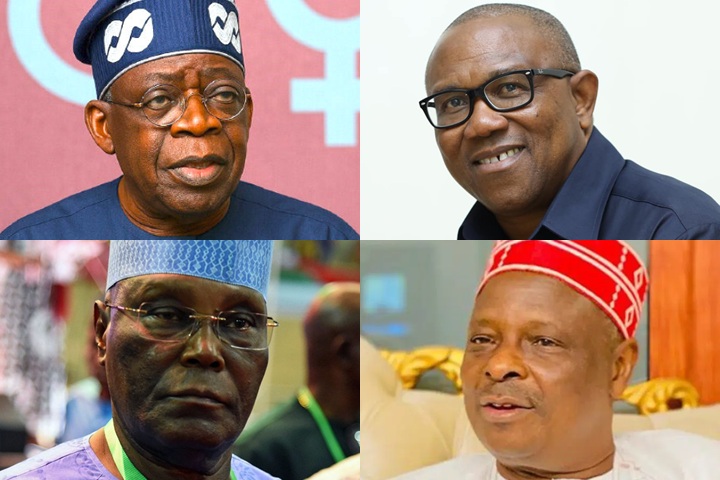
The opposition—comprising Atiku Abubakar (PDP), Peter Obi (LP), and Rabiu Kwankwaso (NNPP)—polled a combined 14,582,740 votes.
That represents approximately 64% of the total votes cast in that election.
The APC, with all its incumbency power, garnered 8,794,726 votes—roughly 36%.
The majority of Nigerians who voted, voted against the status quo. They voted for change.
The only reason the math looks different is because the opposition’s votes were split three ways.
The Geography of Defeat
While the APC celebrated its victory at the central level, the map told a different story.
Tinubu won in 12 states. The opposition (Atiku, Obi, Kwankwaso) won in 25 states, including the Federal Capital Territory (FCT).
The FCT is significant. In Nigerian electoral law, the FCT holds a symbolic status.
For the ruling party to lose the capital city is a psychological blow that no amount of “nationwide support” rhetoric can cover.
The Speed of the Opposition
If you think the opposition is slow, consider the timeline of 2023:
- Peter Obi joined the Labour Party (LP) just six months before the election.
In that short window, he galvanized a youth movement that shocked the political establishment.
- Atiku Abubakar fought the election despite the self-inflicted wound of choosing a running mate that did not align with the structure he needed.
He still secured his base.
- Rabiu Kwankwaso built the NNPP into a formidable force in the North West in just six months, taking Kano by storm.
Now, imagine what happens when these forces are not scrambling for time.
We have 12 months to the next election.
That is twice the preparation time they had in 2023.
The Earthquake Has Begun
The political landscape has already shifted.
The moving of heavyweights—Kwankwaso joining forces with Atiku, Peter Obi, Rotimi Amaechi, Nasir El-Rufai, Abubakar Malami, Rauf Aregbesola, Kashim Imam, and others in the African Democratic Congress (ADC) —is not a mere political alignment.
It is a political earthquake.
We are looking at a convergence of the aggrieved giants from the North West, the South East, the South South, and the reformist elements within the North East and North Central.
For the first time in recent history, the opposition is consolidating before the primaries, not after the results are announced.
The Bottom Line
The 2023 election was lost by the opposition due to fragmentation, not popularity.
The data is clear:
- 64% of the electorate wanted an alternative.
- 25 states preferred the opposition.
- One man in Kano outperformed the ruling party in 11 states.
Now, with 12 months to go, that fragmented majority is consolidating.
When you see the defections and the alliances, don’t dismiss them as “the same old faces.”
Recognize them for what they are: empirical evidence that the mathematical nightmare of 2023 is turning into a structural reality for 2027.
The numbers don’t lie. The question is: will the opposition manage the math better this time?
12 months. Tick tock.