
THIS DAWN — The United States and Nigeria have embarked on a significant joint security initiative aimed at mapping enclaves of terrorists across both remote and urban regions of Nigeria.

This operation represents a deepening of bilateral cooperation in counterterrorism and intelligence gathering.
Washington will provide advanced reconnaissance support to bolster Nigeria’s existing Intelligence, Surveillance, and Reconnaissance (ISR) architecture.
“Unmanned US surveillance drones has been hovering over Nigeria, especially, the North bases of the terrorists.
“They have database of their movements and has details of their communication links, past and present,” a source said.
Background of the Operation against Terrorists
Nigeria has long faced persistent threats from extremist groups, particularly Boko Haram and Islamic State West Africa Province (ISWAP).
ISWAP activities have destabilized communities in the northeast and spread insecurity into central and urban areas.
The Nigerian government has sought international partnerships to strengthen its intelligence capabilities.
It has also recognized that accurate mapping of terrorist hideouts is critical to dismantling networks and preventing attacks.
In late November, the United States began conducting ISR flights over Nigerian territory as part of this joint effort.
These flights are designed to provide real‑time intelligence.
They can track movements of terrorists and identify safe havens that may otherwise remain hidden in Nigeria’s vast terrain.
Role of Tenax Aerospace
Tenax Aerospace, a Mississippi‑based private aviation company specializing in special mission operations, is carrying out the surveillance flights, This Dawn learnt.
Tenax operates a fleet of modified aircraft tailored for intelligence and reconnaissance missions.
For Nigeria, the company has deployed a Gulfstream 5 jet, extensively modified to serve as an ISR platform.
The aircraft, which is in Ghana, has advanced sensors and communication systems.
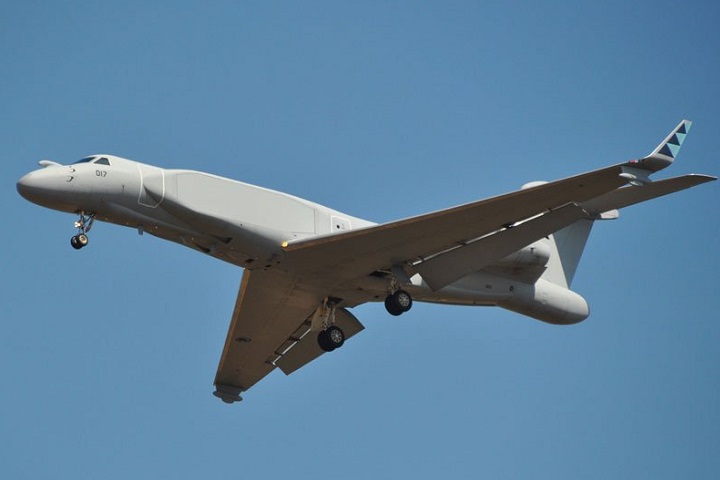
The sensors allow it to capture high‑resolution imagery, intercept signals, and relay intelligence to both U.S. and Nigerian command centers.
Its deployment underscores the reliance on private contractors in modern military operations.
Thereafter, specialized expertise and equipment can be rapidly mobilized to support national security objectives.
Strategic Importance of ISR Flights
ISR capabilities are central to counterterrorism operations. By augmenting Nigeria’s surveillance architecture, the U.S. is enabling Nigerian forces to:
- Identify terrorist enclaves hidden in forests, deserts, and urban slums.
- Monitor cross‑border movements of insurgents and arms traffickers.
- Provide actionable intelligence for ground and air operations.
- Enhance situational awareness for commanders planning raids or defensive measures.
The joint operation will expectedly improve Nigeria’s ability to preempt attacks, disrupt logistics chains, and dismantle cells before they can regroup or expand.
Bilateral Cooperation and Implications for Terrorists
This initiative reflects a broader U.S. commitment to supporting African partners in combating terrorism.
Nigeria, as West Africa’s largest economy and most populous nation, is a strategic partner whose stability has regional implications.
By integrating U.S. reconnaissance assets with Nigerian intelligence networks, both countries aim to create a more comprehensive picture of terrorist activity.
For Nigeria, the partnership provides access to cutting‑edge technology and expertise that would otherwise take years to develop domestically.
For the U.S., it strengthens ties with a key ally while advancing its own counterterrorism objectives in a region where extremist groups have shown resilience.
Challenges and Considerations
Despite the promise of this cooperation, several challenges remain:
- Operational secrecy: Ensuring that intelligence gathered is protected from leaks or misuse.
- Dependence on foreign assets: Nigeria must balance reliance on U.S. technology with efforts to build its own ISR capacity.
- Civilian concerns: Surveillance operations must respect privacy and avoid collateral impacts on communities.
- Sustainability: Long‑term success will depend on Nigeria’s ability to maintain and expand ISR infrastructure after U.S. support phases down.
The development was confirmed by sources close to Nigerian military.
The joint U.S.–Nigeria operation to map terrorist enclaves marks a significant step in counterterrorism collaboration.
With Tenax Aerospace’s Gulfstream 5 ISR aircraft providing advanced reconnaissance, Nigeria is better positioned to confront extremist threats across its territory.
While challenges remain, the operation demonstrates the value of international partnerships in addressing complex security issues.
If sustained, this initiative could reshape Nigeria’s counterterrorism landscape and contribute to greater stability across West Africa.