
THIS DAWN — In recent weeks, public discourse in Nigeria has been stirred by widespread misinformation regarding the application of Value Added Tax (VAT) on banking transactions.

At the center of this clarification effort is Taiwo Oyedele, Chairman of the Presidential Committee on Fiscal Policy and Tax Reforms.
Oyedele reiterated that VAT is not charged on the actual money transferred by individuals or businesses.
He noted that it’s rather charged on the fees or commissions charged by banks for facilitating such transactions.
Oyedele’s reaction, echoed by the Nigeria Revenue Service (NRS) press release, aims to dispel confusion.
He reassured the public that no new VAT has been introduced on electronic money transfers or banking services.
This clarification is particularly important given the viral nature of misleading claims.
Such claims suggest that the Nigeria Tax Act has imposed fresh tax burdens on customers.
Historical Context of VAT in Nigeria
VAT was formally introduced in Nigeria in 1993, replacing the previous Sales Tax regime.
Since its inception, VAT has been applied to goods and services, including those rendered by financial institutions.
Thus, when banks provide services, the fee charged for that service is subject to VAT, typically at a rate of 7.5%.
Such processing transfer includes issuing a bank draft or managing a commission-based transaction.
However, the principal amount of money being transferred—whether between individuals, businesses, or across accounts—is not subject to VAT.
This distinction is crucial and has been consistently upheld in Nigeria’s tax framework for over three decades.
Taiwo Oyedele’s Role and Expertise
Taiwo Oyedele is a respected economist and public policy expert with a strong background in taxation and fiscal reform.
He was appointed in July 2023 by President Bola Tinubu to lead the Presidential Committee on Fiscal Policy and Tax Reforms.
Oyedele has been instrumental in advocating for transparent, equitable, and growth-oriented tax policies.
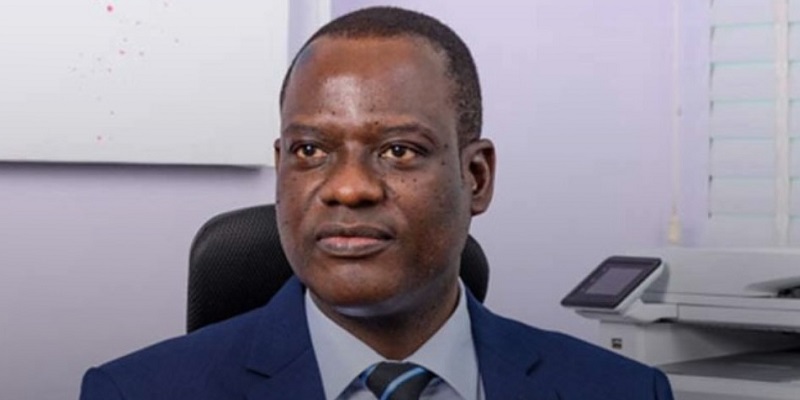
His clarification on the VAT issue is not only timely but also authoritative, given his role in shaping Nigeria’s fiscal landscape.
Oyedele emphasized that the current VAT regime does not impose any new obligations on bank customers.
According to him, the application of VAT to banking fees is a longstanding practice, not a recent development.
Nigeria Revenue Service’s Official Position
In the statement issued by the NRS, the agency categorically stated that VAT on banking services is not a new tax.
The release explained that fees, commissions, and charges for services rendered by banks have always attracted VAT.
According to him, the Nigeria Tax Act did not alter this arrangement.
The NRS urged the public to disregard misleading narratives and rely solely on official communications for accurate tax information.
This call for vigilance is essential in an era where misinformation can quickly spread through social media and other informal channels.
For everyday bank users, this clarification means that:
- Transferring money between accounts or to other individuals does not attract VAT.
- The service fee charged by the bank for processing the transfer is subject to VAT.
- There is no new tax burden introduced by recent legislation.
Implications for Bank Customers
Understanding this distinction helps customers make informed decisions and avoid unnecessary concern over their financial transactions.
Taiwo Oyedele’s reaffirmation of Nigeria’s VAT policy on banking services is a vital step in restoring public confidence and correcting misinformation.
His statement, backed by the Nigeria Revenue Service, confirms that VAT applies only to banking fees and commissions—not to the money being transferred.
This has been the case since VAT was introduced in 1993 and remains unchanged.
As Nigeria continues to refine its fiscal policies, clear communication from experts like Oyedele and institutions like the NRS will be essential.
Such communication will ensure transparency, trust, and compliance within the tax system.