

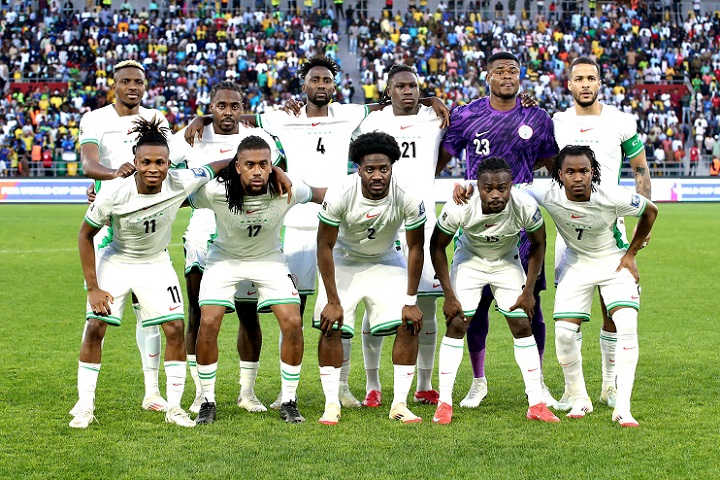
THIS DAWN — The Nigerian government has moved to resolve a brewing crisis within the Super Eagles camp at the 2025 African Cup of Nations (AFCON), after players threatened to boycott their quarter‑final clash against Algeria over unpaid bonuses and allowances.

The Minister of State for Finance, Dr. Doris Nkiruka Uzoka‑Anite, made the disclosure in a statement on Thursday.
Dr. Uzoka‑Anite reassured the team and the public that the Federal Government, in collaboration with the Central Bank of Nigeria (CBN), has stepped in.
They had streamlined foreign exchange processes to ensure players receive their entitlements without further delay.
She emphasized that the government’s priority is the welfare of the national team.
She noted that all group‑stage bonuses had already been released and cleared through regulatory channels.
Uzoka‑Anite outlined three key areas of progress:
- Funding: All group‑stage bonuses have been fully released.
- Acceleration: A fast‑track conversion process has been implemented to move funds into foreign currency, honoring players’ preferences.
- Disbursement: Final transfers to players’ domiciliary accounts are currently in flight, with funds expected to reflect within 48 hours.
“Our focus remains entirely on supporting the team’s welfare so they can maintain their incredible momentum in the knockout rounds.
“We move forward with one goal: bringing the trophy home,” she declared.

Background to the Crisis
Nigeria’s Super Eagles have enjoyed a strong run at AFCON 2025, winning all three group‑stage matches and defeating Mozambique 4–0 in the round of 16.
With 12 goals scored so far, they have been tipped as strong contenders for the title.
However, on January 7, 2026, reports emerged that players were unhappy over unpaid bonuses and allowances for all four matches played.
The squad refused to train and delayed travel to Marrakesh, Morocco, where they were scheduled to face Algeria in the quarter‑finals.
The players’ grievances centered on three issues:
- Unpaid Bonuses: Despite advancing impressively, agreed payments had not been honored.
- Delayed Allowances: Outstanding allowances from earlier competitions remained unsettled.
- Distrust of Authorities: Players feared promises would not be kept unless they took drastic action.
This combination of financial frustration and distrust of football administrators led to the boycott threat, casting a shadow over Nigeria’s AFCON campaign.
Impact on AFCON Campaign
The threat of boycott placed Nigeria’s tournament hopes at risk. The Super Eagles, three‑time AFCON champions, were seen as favorites to progress deep into the competition.
Their refusal to play raised concerns about morale, preparation, and Nigeria’s ability to maintain momentum against Algeria.
The crisis also highlighted long‑standing issues of player welfare and financial management in Nigerian football.
Among the issues, disputes over bonuses have repeatedly disrupted major tournaments.
The Nigerian Football Federation (NFF) faced criticism for failing to resolve the matter promptly.
Negotiations were reportedly ongoing to persuade players to honor the fixture, with government officials stepping in to calm tensions.
Uzoka‑Anite’s intervention, backed by assurances of immediate disbursement, was aimed at restoring confidence and preventing the crisis from derailing Nigeria’s AFCON campaign.
Broader Context
This is not the first time Nigerian players have protested over unpaid entitlements.
Similar disputes occurred during past AFCON and World Cup campaigns, often attracting international attention and damaging Nigeria’s football reputation.
The recurring nature of these disputes points to systemic issues in the administration of football finances.
This includes delays in processing payments, lack of transparency, and poor communication between players and officials.
The Super Eagles’ threat to boycott their AFCON quarter‑final match against Algeria underscores the persistent challenges of player welfare in Nigerian football.
While the government’s swift intervention has provided reassurance, the episode highlights the urgent need for structural reforms in financial management and accountability within the sport.
As Uzoka‑Anite noted, the focus must remain on supporting the team’s welfare and ensuring they can compete without distractions.
With bonuses now reportedly in the process of being disbursed, Nigeria’s campaign continues.
However, the incident serves as a reminder that success on the pitch must be matched by responsibility off the pitch.