TD1. Contextual Background: Power, Peace, and Asymmetry
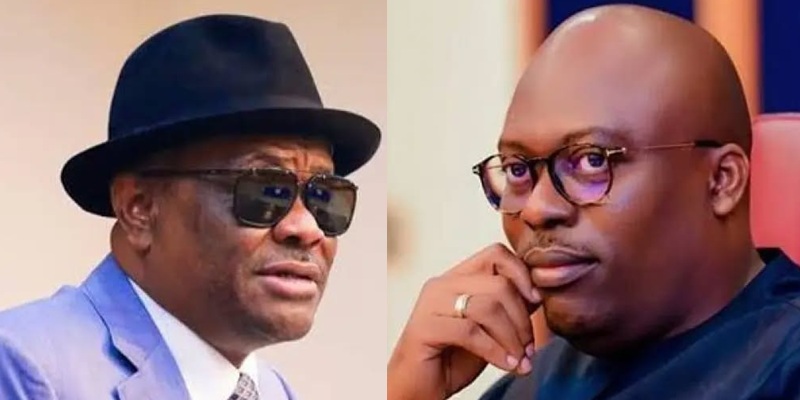
On February 3, 2026, THISDAY reported that President Bola Ahmed Tinubu brokered yet another peace accord between Nyesom Wike and Siminalayi Fubara, halting imminent impeachment threats against the Rivers State governor under strict political conditions.

The terms—recognition of Wike as political leader, validation of Wike’s candidates, and shelving of Fubara’s second-term ambitions—clearly favored Wike.
This asymmetry is not incidental; it is the strategic outcome of superior positioning, alliance management, and intelligence-driven power calculus.
This episode offers a fertile empirical case for interrogating why strategic intelligence, rather than moral outrage or procedural legality, often determines political survival.
2. Clausewitz Revisited: War, Politics, and the Illusion of Autonomy
Carl von Clausewitz famously argued that war is “the continuation of politics by other means.”
In modern political conflict, impeachment threats, legislative paralysis, and executive brinkmanship function as non-kinetic warfare.
Fubara’s resistance to Wike’s influence mirrored what Clausewitz would classify as engaging in conflict without full appreciation of the enemy’s total power — alliances, institutional reach, and external support.
Clausewitz warns against entering conflict without aligning ends, ways, and means.
Fubara possessed constitutional authority (ends) but lacked sufficient political means and alliance depth to prosecute the struggle.
Wike, by contrast, retained expansive political means—party machinery, legislative loyalty, and proximity to presidential power—rendering the contest structurally unequal from inception.
Lesson: Leaders must never confuse formal authority with effective power. Strategic intelligence demands a cold assessment of force ratios before confrontation.
3. Michael Handel: Leaders Who Ignore Intelligence Court Defeat
Michael Handel, in Leaders and Intelligence, demonstrates that leaders rarely fail due to lack of information, but because of misinterpretation, cognitive bias, and hubris.
The Wike–Fubara feud exemplifies Handel’s thesis.
Multiple warning indicators were present:
-
Wike’s sustained influence across party lines
-
Tinubu’s prior intervention and declaration of emergency rule
-
Legislative alignment unfavorable to Fubara
Yet Fubara persisted, suggesting a failure to internalize intelligence signals. Handel emphasizes that leaders often hear intelligence but do not accept it when it contradicts their self-image or aspirations.
Lesson: Strategic intelligence is not merely collected — it must be believed. Leaders who discount uncomfortable intelligence choose symbolism over survival.
4. John Keegan: Knowing the Enemy Beyond the Battlefield
John Keegan, in The Face of Battle and later works on strategic culture, insists that understanding an adversary requires more than knowing their weapons; it requires knowing their culture, temperament, and political instincts.
Wike’s political culture is confrontational, dominance-oriented, and alliance-driven.
Fubara’s resistance strategy underestimated this ethos and overestimated the restraining power of constitutional norms.
Keegan would interpret this as a failure to understand the enemy’s psychology.
Wike did not merely seek influence; he sought symbolic supremacy—recognition as political leader.
Tinubu’s peace accord institutionalized this reality, converting informal power into formal acknowledgment.
Lesson: Strategic blindness begins where leaders assume opponents share their norms of restraint. Intelligence requires cultural and psychological literacy.
5. Tinubu as Strategic Arbiter: Intelligence, Not Neutrality
President Tinubu’s role illustrates strategic intelligence in action. His intervention was not neutral mediation but interest-based stabilization.
Rivers State’s electoral importance for 2027 shaped the accord’s logic. The president prioritized systemic stability and alliance preservation over procedural fairness.
Clausewitz would describe this as political primacy over moral sentiment. Handel would see it as rational use of intelligence to prevent escalation.
Keegan would note Tinubu’s deep understanding of Nigerian political culture—where power follows networks, not offices.
Lesson: In high politics, peace is rarely equitable; it is usually strategic. Leaders must anticipate this reality rather than appeal to abstract fairness.
6. Strategic Intelligence and the Folly of Premature Battles
The directive that Fubara’s second-term ambitions were “premature” is perhaps the most instructive signal. It underscores a fundamental principle of strategic intelligence: timing is power.
Leaders who reveal ambition before consolidating strength invite pre-emptive counteraction.
Clausewitz warned against dissipating strength across multiple objectives. Fubara’s early assertion of autonomy, coupled with future ambition, multiplied threat perception among entrenched elites.
Lesson: Strategic patience is not weakness; it is intelligence in restraint.
7. Implications for Prospective Leaders
From the Wike–Fubara case, prospective leaders should internalize the following strategic axioms:
a. Never fight a battle you cannot win structurally.
b. Power resides in networks, not titles.
c. Intelligence ignored is worse than intelligence absent.
d. Peace accords often formalize existing power, not justice.
e. Strategic timing outweighs moral urgency.
8. Conclusion: Experience Teaches—Intelligence Saves
The Wike–Fubara feud reaffirms a timeless truth in strategic studies: experience teaches fools; intelligence saves the wise.
Clausewitz provides the grammar of power, Handel explains leadership failure, and Keegan humanizes conflict through culture and psychology.
Tinubu’s intervention illustrates that in political warfare, victory often belongs not to the righteous, but to the strategically informed.
For emerging leaders, the enduring lesson is clear: before you fight, know the terrain, know the enemy, know your allies—and above all, know yourself.