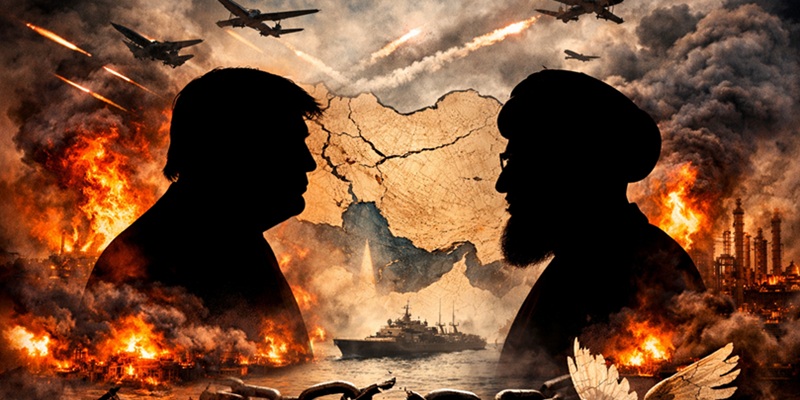
TDPresident Donald Trump has issued a stark ultimatum to Iran, declaring that Tehran has 48 hours to either strike a deal or open the Strait of Hormuz. Failure to comply, he warned, would result in “all hell reigning down on them.”

The statement, delivered with characteristic bluntness, underscores Washington’s growing impatience with what it views as Iran’s obstruction of vital global trade routes.
Why the Strait of Hormuz Matters
The Strait of Hormuz is not just a narrow stretch of water—it is a lifeline for the global economy.
- Roughly 20% of the world’s oil supply flows through this passage.
- It connects the energy-rich Gulf states with international markets.
- Any closure or disruption could cause oil prices to skyrocket, triggering inflationary pressures worldwide.
Historically, the strait has been a flashpoint during geopolitical crises, from the Iran-Iraq War in the 1980s to more recent naval confrontations.
Rising Tensions
Trump’s ultimatum comes amid already heightened U.S.–Iran tensions.
- Diplomatic pressure: Washington has long accused Tehran of using the strait as leverage in negotiations.
- Military concerns: The U.S. Navy maintains a strong presence in the Gulf, prepared to ensure freedom of navigation.
- Global impact: European allies are urging restraint, while Asian economies—heavily dependent on Gulf oil—are bracing for potential supply shocks.
Analysts warn that the rhetoric could spiral into confrontation, especially if Iran perceives the ultimatum as a direct threat to its sovereignty.
The Countdown
With the 48-hour deadline now ticking, the world waits anxiously.
- Will Tehran seek compromise to avoid escalation?
- Or will defiance push the region closer to open conflict?
- Energy markets are already reacting, with traders hedging against possible disruptions.
Historical Echoes
This is not the first time the Strait of Hormuz has been at the center of global tension.
- In the 1980s, the “Tanker War” saw vessels attacked as part of the Iran-Iraq conflict.
- In 2019, a series of tanker seizures reignited fears of a blockade.
- Each crisis has underscored the strait’s vulnerability—and its immense strategic importance.
What’s Next?
The coming hours may prove decisive.
Diplomats are scrambling to mediate, while military strategists prepare for worst-case scenarios.
The world’s attention is fixed on Tehran’s next move, knowing that the consequences could reverberate far beyond the Gulf.