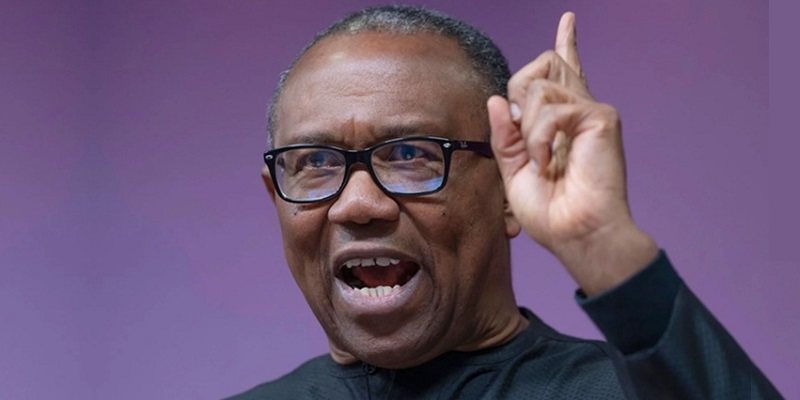
TDFormer Anambra State Governor and opposition leader, Mr. Peter Obi has issued a stern warning to the Nigerian government, calling for an immediate halt to what he described as the systematic persecution of political opponents disguised as criminal prosecution.

His remarks come amid heightened political tensions as the country edges closer to the 2027 general elections.
Rule of Law Under Threat
Obi emphasized that the rule of law is the bedrock of democracy.
He insisted that its erosion undermines both Nigeria’s economic development and national stability.
He condemned the recent arrests and continued detention of prominent figures from the African Democratic Congress (ADC), including:
- Mr. Abubakar Malami, former Attorney General of the Federation
- Malam Nasir El-Rufai, former Governor of Kaduna State
Obi argued that the timing of these arrests—coming shortly after the leaders pledged to challenge the current administration in 2027—suggests deliberate political targeting rather than genuine anti-corruption efforts.
Concerns Over Selective Prosecution
The opposition leader raised alarm over what he termed “fishing expeditions” in the case of El-Rufai.
He pointed to his repeated transfers between the EFCC, ICPC, and DSS as evidence of desperation to pin charges.
He insisted that prosecutorial decisions must be grounded in credible evidence and probable cause, transparently presented without ulterior motives.
Obi also criticized the denial of bail and the imposition of excessively harsh bail conditions.
He described them as clear indicators that criminal prosecution is being wielded as a weapon against dissenting voices.
Call for Credible Justice System
Obi underscored the need for a justice system that instills confidence in citizens, ensuring that no Nigerian fears persecution for political beliefs or opposition activities.
He urged the government to stop undermining opponents under the guise of fighting corruption.
“I wholeheartedly support the fight against corruption and wrongdoing, but it must be conducted with integrity and transparency, starting with those currently in power rather than targeting opponents,” Obi declared.
Obi stressed that selective justice erodes public trust and weakens Nigeria’s democratic institutions.
He warned that the credibility of the 2027 elections could be jeopardized if such practices continue.
Wider Implications
Political analysts note that Obi’s statement reflects growing unease among opposition parties, who fear that the government may be using state institutions to silence dissent.
The arrests of Malami and El-Rufai—both influential figures with national reach—have sparked debates about the independence of Nigeria’s judiciary and anti-corruption agencies.
Civil society groups have echoed Obi’s concerns, warning that the weaponization of justice could deepen political divisions and fuel instability.
International observers are also watching closely, as Nigeria’s democratic resilience is seen as critical to regional stability in West Africa.
Outlook
As Nigeria approaches a pivotal election cycle, Obi’s warning highlights the urgent need to restore fairness, transparency, and accountability in governance.
His call resonates with citizens who fear that political persecution could derail democratic progress.
Obi concluded with his signature message of hope: “A new Nigeria is POssible.”
Obi’s sharp criticism of the government’s handling of opposition figures frames the issue as a test of Nigeria’s democratic integrity ahead of 2027.