TDNigeria, Africa’s most populous nation and home to one of the largest Christian populations on the continent, is once again reeling from waves of violence that have claimed hundreds of lives in early February 2026.

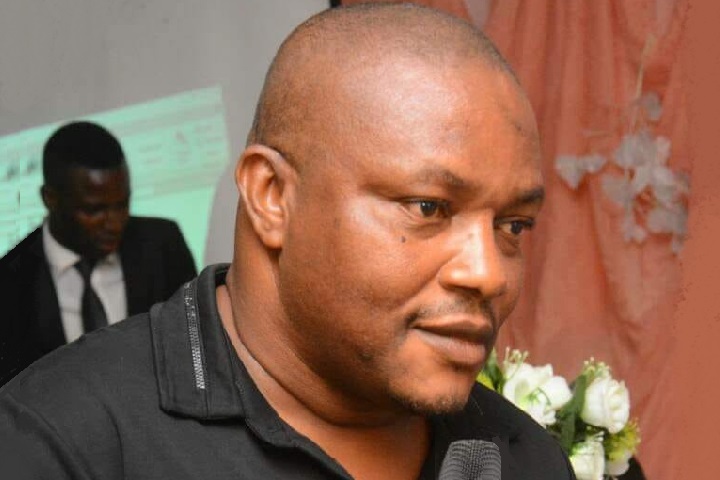
The International Society for Civil Liberties and Rule of Law (Intersociety), a leading human rights advocacy group, has issued a pre-special report condemning the killings of over 200 moderate Muslims and scores of Christians in Kwara and Katsina States, alongside the massacre of more than 70 Christians in Taraba State.
The report paints a grim picture of systematic religious persecution, alleging state complicity, media silence, and a pattern of downplaying atrocities against Christians.
It situates these events within a broader trajectory of religiously motivated violence that has plagued Nigeria since 2015.
It also raised urgent questions about governance, accountability, and the protection of fundamental human rights.
The Latest Wave of Killings
On February 3, 2026, Islamic Jihadist groups attacked villages in Kwara and Southern Katsina, killing more than 200 moderate Muslims and scores of Christians.
According to Intersociety’s investigations, many of the Muslim victims were targeted for rejecting radical indoctrination.
Meanwhile, Christians in southern Katsina—where indigenous Christian communities are concentrated—were also massacred.
Just days earlier, on February 1, Fulani Jihadist militias and their collaborators stormed villages in Chanchanji, Taraba State.
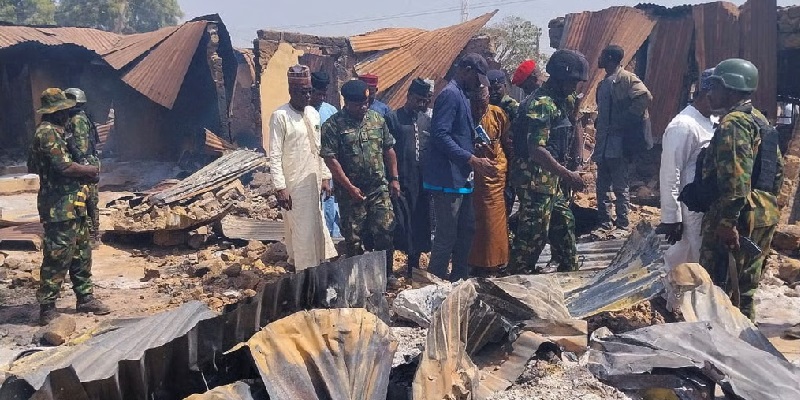
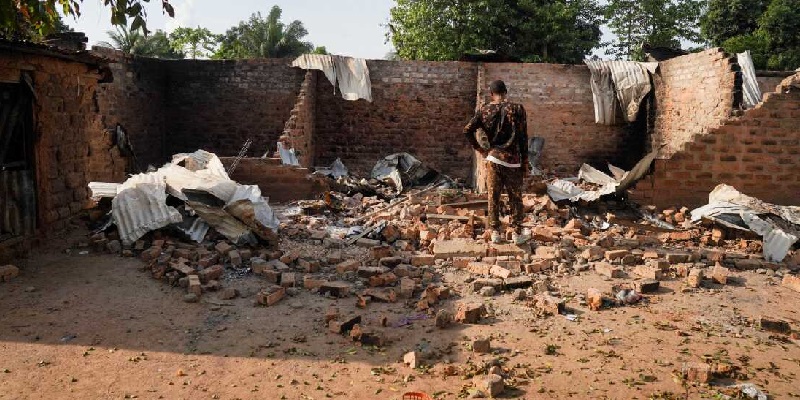
At least 70 Christians were killed, including a pastor, dozens of churches were attacked, homes were torched, and thousands displaced.
60 Identified Victims
Intersociety obtained the names of 60 victims, underscoring the scale and human tragedy of the assault.
The names of the 60 victims obtained are as follows: Terla Tyonenge, Dajo Senga, Sonter Msugh, Fanbo Orhena, Kundushima Yaor, Verlor Tyowus, Tyowua Firgha, Apinen Ikyondo, Gwa Osaugh, Aondona Gia, Terngu Gia, Usha Tumbee, Tyolumun Daida, Terzungwa Tilinga, Tordue Toryiln, Ornan Orgen, Mgbekenger Sawua, Zunguior Akigh, Mama Ageaor Kpaor, Terzungwe Chia, Mnenge Abiadu, Msugh Gaza, Saulu Kwazan, Tyonenge Ikpughun, Igbaga Mbakuaga, Mtera Akulaan, Mary Joseph, Tornongo Kpega, Atsator Ayal, Tyoor Orya, Usenga Pevikyaa, Gbaka Kalo, Pastor Doose Mbathembe, Aperaku Ondoaver Kua Kwase Na.
The rest are: Aondover Kparev Ugosol, Tyoakula Atsenga, Aondosoo Shacia, Aondoakura Kurave, Gogo Atindiga, Aondonengen Apine, Aondo Ijewua, Ushahemba Kerchia, Abraham Apine, Kumater Igo, Terlumun Apetimin, Jimeshin Mbaume, Orera Lorhom, Abraham Anyoho, Angoboga Mbagbe, Vershima Orhungs, Mary Kircivir, Orlega Maughaonde, Kwaghsaanga Aniv, Emmatue Fortan, Kumaaron Aperilighin, Maaserin Alibo, Chia Atunku, Zaki Agbaibo Tetan and Mverve Akombo, among others.
These attacks follow a disturbing pattern of mass killings across northern and central Nigeria.
This includes the December 2025 and January 2026 massacres in Niger State, where more than 50 civilians—mostly Christians—were slaughtered.
Media Silence and Government Inaction
Intersociety’s report strongly criticizes both the Nigerian government and mainstream media for their handling of these atrocities.
The group notes that killings of Muslims often receive extensive coverage, with victims’ religious identities highlighted.
In contrast, massacres of Christians are frequently downplayed or misrepresented as “farmers-herders clashes,” obscuring the religious dimension of the violence.
This selective reportage, the report argues, amounts to cultural violence and contributes to the normalization of religious persecution.
Intersociety likens this pattern to the early stages of the Rwandan Genocide of 1994, warning that Nigeria risks sliding into a similar catastrophe if urgent action is not taken.
Allegations of State Complicity
Perhaps the most damning aspect of the report is its accusation of state complicity.
Since June 2015, successive Nigerian governments have been accused of enabling or ignoring jihadist violence.
Intersociety alleges that state actors are not only failing to protect citizens but are also suspected of aiding and abetting attacks by non-state jihadist groups.
The report draws parallels with Sudan’s Janjaweed militias, which operated in partnership with the government under Omar al-Bashir.
This suggests that Nigeria’s current trajectory mirrors that model of state-backed religious persecution.
This accusation raises profound concerns about Nigeria’s commitment to its constitutional and international obligations.
Section 10 of the 1999 Constitution enshrines Nigeria’s secular status, while Section 38 guarantees freedom of religion.
International treaties such as the Universal Declaration of Human Rights, the International Covenant on Civil and Political Rights, and the African Charter on Human and Peoples’ Rights further obligate Nigeria to protect religious freedom.
Attacks on worshippers and sacred places, under the Geneva Conventions and the Rome Statute of the International Criminal Court, constitute war crimes or crimes against humanity.
Broader Context of Religious Persecution
Intersociety has monitored religious persecution in Nigeria since 2009, documenting patterns and trends across the country.
The report emphasizes that persecution is not limited to Christians, though they bear the brunt of casualties and material losses.
Shiite Muslims, traditional worshippers, and members of the Organization of African Instituted Churches (OAIC) have also faced violence and discrimination.
The group identifies six categories of persecutors:
- Mob actors supported by state agents.
- Radical Christian preachers targeting traditional worshippers.
- Muslim political and state actors engaging in structural and physical violence against Christians.
- Security forces profiling and attacking civilians, particularly Easterners and non-Muslims.
- Security forces targeting OAIC churches and leaders.
- Non-state jihadists, often backed by state actors, attacking Christians, churches, and livelihoods.
This complex web of persecution underscores that Nigeria’s crisis is multifaceted, involving both state and non-state actors, and affecting multiple religious communities.
The Global Dimension of Jihadist Violence
Intersociety situates Nigeria’s crisis within the broader global phenomenon of jihadist movements.
According to the report, jihadists aim to impose strict sharia rule on moderate Muslim populations and to Islamize non-Muslim lands, particularly Christian-majority states.
In Nigeria, this translates into dual campaigns: state-backed jihadists targeting Christians, and non-state jihadists attacking both Christians and moderate Muslims.
This dual strategy explains why moderate Muslims, who resist radicalization, are increasingly victimized alongside Christians.
It also highlights the ideological nature of the violence, which seeks not merely territorial control but cultural and religious transformation.
Human Cost and Names of Victims
The inclusion of victims’ names in the report is a poignant reminder of the human cost of Nigeria’s crisis.
By listing 60 of the Christians killed in Taraba, Intersociety personalizes the tragedy, moving beyond statistics to emphasize the dignity and individuality of each life lost.
This approach underscores the organization’s commitment to documenting atrocities and preserving memory, ensuring that victims are not forgotten amid political debates and media silence.
The report stresses that Nigeria is under inviolable obligation to protect religious freedom, both constitutionally and internationally.
Failure to do so constitutes a breach of domestic and international law.
Moreover, the attacks on churches and worshippers qualify as war crimes or crimes against humanity under international criminal law.
This raises the possibility of international accountability mechanisms being invoked if Nigeria continues to fail in its responsibilities.
Legal and Moral Imperatives
Intersociety’s pre-special report is a stark warning about the trajectory of religious persecution in Nigeria.
The killings in Kwara, Katsina, and Taraba are not isolated incidents but part of a broader pattern of violence, complicity, and silence.
The report calls for urgent action to protect vulnerable communities, uphold constitutional and international obligations, and confront the ideological roots of jihadist violence.
Without such action, Nigeria risks further descent into chaos, with devastating consequences for its diverse religious communities and for regional stability.
Ultimately, the report underscores the sanctity of human life and the imperative of protecting all citizens, regardless of religious affiliation.
It is a call to conscience for Nigeria’s leaders, media, and international partners to recognize the gravity of the crisis and to act decisively before it spirals beyond control.