


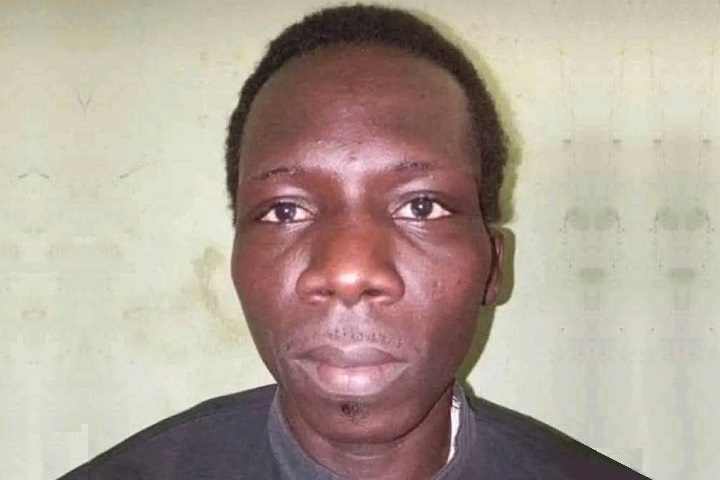
THIS DAWN — Nigeria’s justice system is facing renewed scrutiny following reports that Victor Solomon, a Christian resident who defended his community during attacks by armed Fulani militants, has been sentenced to death in Kaduna State.

A Kaduna High Court sentenced Solomon, also known as Zidane, to death by hanging for murder.
He was arrested in 2018 for defending his Adara community against Fulani terrorist attacks.
He was charged in two different state courts—acquitted in one, condemned in another
The case has sparked outrage among Christian advocacy groups.
Some argue that Solomon’s actions were in self-defense and that the ruling reflects systemic bias against minority communities.
Background
Victor Solomon reportedly took up arms to protect his community during violent raids attributed to Fulani Islamist attackers.
These attacks, which have plagued parts of Nigeria’s Middle Belt and northern regions for years, often target rural communities, leaving scores dead and displacing thousands.
Solomon was subsequently arrested and charged with murder.
Shockingly, he faced trial in two different state courts for the same alleged crime.
In one jurisdiction, he was acquitted, with the court recognizing his actions as self-defense.
However, in Kaduna, a Muslim judge presiding over the case sentenced him to death, igniting controversy and accusations of judicial inconsistency.
Dual Court Proceedings
Legal experts have expressed concern over the unusual circumstance of Solomon being tried twice for the same offense.
Typically, Nigeria’s constitution prohibits double jeopardy—being tried for the same crime more than once.
Advocacy groups argue that this irregularity undermines the fairness of the judicial process and raises questions about political or religious influence in the case.
The acquittal in one court suggested recognition of the right to self-defense, a principle enshrined in Nigerian law.
The death sentence in Kaduna, however, has been interpreted by critics as evidence of systemic bias against Christians in certain regions.
Reaction from Advocacy Groups
Christian organizations, including the Christian Emergency Alliance, have condemned the ruling, describing it as an attack on the fundamental right to self-defense.
They argue that communities under siege from armed militants cannot be expected to remain passive while lives are threatened.
In a statement shared on social media, the Alliance declared: “Yet another Christian has been sentenced to death for the crime of self-defense.
“Victor Solomon defended his community from Fulani Islamist attacks and is now condemned for doing so.”
The group has called for international attention to the case, urging human rights organizations and foreign governments to pressure Nigeria to review the judgment.
Broader Context: Violence in Nigeria’s Middle Belt
The case highlights the broader crisis of insecurity in Nigeria’s Middle Belt, where clashes between herders and farmers have escalated into deadly conflicts.
Armed Fulani groups have been accused of carrying out coordinated attacks on Christian farming communities, often with little effective response from security agencies.
Human rights groups have documented widespread killings, destruction of property, and displacement of villagers.
The government has struggled to contain the violence, which is fueled by competition over land, ethnic tensions, and religious divides.
For many communities, self-defense has become a necessity.
However, cases like Solomon’s raise questions about whether the justice system adequately protects those who act to defend themselves and their families.
Legal and Political Implications
Solomon’s sentencing underscores the challenges of Nigeria’s judicial system in handling cases involving communal violence.
Critics argue that the ruling could set a dangerous precedent, discouraging communities from defending themselves against armed attacks.
Politically, the case risks deepening mistrust between Christian communities and the state, particularly in northern Nigeria.
Religious leaders have warned that perceived bias in the courts could inflame tensions and further destabilize the region.
Calls for Review
Advocacy groups and legal experts are calling for an appeal of Solomon’s death sentence.
They argue that the acquittal in one court should have been binding and that the Kaduna ruling violates constitutional protections.
International observers have also expressed concern, noting that Nigeria is a signatory to human rights conventions that guarantee the right to life and fair trial.
Pressure is mounting on the federal government to intervene and ensure that justice is served fairly.
The sentencing of Victor Solomon to death for defending his community against violent attacks has ignited outrage and raised serious questions about Nigeria’s judicial system.
While one court recognized his right to self-defense, another condemned him, highlighting inconsistencies that undermine public confidence in the rule of law.
As protests grow and advocacy groups demand justice, the case has become emblematic of the broader struggle facing Nigeria:
- balancing security,
- human rights, and,
- religious coexistence in a nation deeply divided by violence and mistrust.