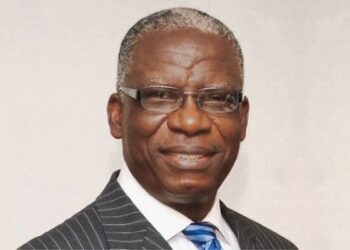
THIS DAWN — Senator Adams Oshiomhole has ignited a national debate after sharply criticizing what he described as troubling inconsistencies and leniency within Nigeria’s judiciary, particularly in cases involving terrorism and other capital offenses.

Oshiomhole made the remarks while speaking during plenary at the National Assembly respecting national security and judicial accountability.
The former Edo State governor questioned how individuals convicted of terrorism — an offense that carries the death penalty under Nigerian law — could have their sentences reduced to as little as 20 years in prison.
“How can someone commit a terrorism offense which carries the death penalty, and a judge will reduce the sentence to 20 years?
“That is not acceptable,” Oshiomhole declared.
He stressed that judicial officers must exercise discretion within the bounds of national interest and statutory prescriptions.

According to him, such judicial outcomes undermine deterrence, weaken national security efforts, and embolden extremist groups who exploit perceived institutional weaknesses to perpetuate violence.
He argued that reducing capital sentences to fixed-term imprisonment contradicts the severity of the crime and sends “the wrong message to both victims and perpetrators.”
‘Systemic corruption in the judiciary’
The senator linked the issue to what he described as systemic corruption within segments of the judiciary.
Oshiomhole warned that compromised rulings threaten Nigeria’s stability more than political disagreements or economic pressures.
He noted that when judges appear to deviate from the gravity of offenses — particularly crimes involving mass casualties, threats to sovereignty, or attacks on security forces — it erodes public trust and compromises the sacrifices of security agencies.
Oshiomhole called for urgent reforms, including stricter oversight of judicial conduct, clearer sentencing guidelines for terrorism-related crimes, and stronger disciplinary mechanisms within the judiciary.
He urged the National Judicial Council (NJC) to take firmer action against judges whose rulings raise ethical or procedural concerns.
His remarks have stirred intense public discussion.
Many Nigerians echoed his concerns about inconsistent sentencing and alleged judicial compromise.
Meanwhile, others cautioned that judicial independence must be preserved and that sentencing outcomes may vary based on evidence, trial proceedings, or plea arrangements.
Despite divided opinions, Oshiomhole’s comments have reignited a longstanding national conversation about the balance between judicial discretion, national security, and public accountability.