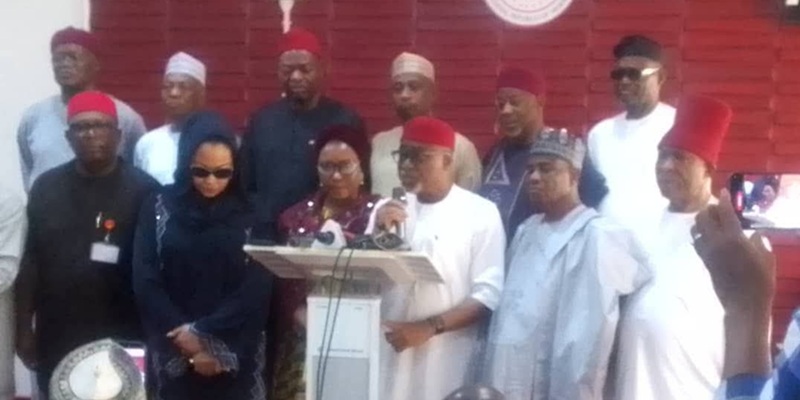
TDA fresh controversy has erupted in Nigeria’s National Assembly as several senators declared at a press conference that the Electoral Reform Bill signed off by Senate President Godswill Akpabio was not the version they had approved during plenary.

The lawmakers expressed shock, saying they were as surprised as Nigerians by the discrepancies between the bill they debated and the version that was eventually passed.
Watch the video footage below:
Senators Raise Alarm
Speaking to journalists in Abuja, the senators alleged that the final document transmitted from the Senate leadership contained alterations that were never agreed upon during the clause-by-clause review.
They insisted that the chamber had painstakingly debated and approved specific provisions, only for a different version to emerge in the final passage.
One senator described the development as “a betrayal of legislative trust”.
He warned that such manipulations undermine the credibility of the National Assembly and erode public confidence in Nigeria’s democratic process.
Echoes of Past Controversy
The senators drew parallels with the Tax Reform Bill, which was earlier passed into law amid allegations of fraud and manipulation.
Critics at the time warned that allowing such irregularities to stand would embolden further abuses of legislative procedure.
The current uproar over the Electoral Reform Bill appears to validate those concerns.
Lawmakers and civil society groups are now questioning whether Nigeria’s legislative process is being compromised by political interests.

Implications for Electoral Reform
The Electoral Reform Bill was expected to strengthen Nigeria’s democratic framework ahead of the 2027 general elections.
Key provisions debated in the Senate included timelines for election notices, electronic transmission of results, and harmonisation of electoral procedures.
However, senators now claim that the version passed does not reflect their deliberations.
The development has raised fears that critical safeguards may have been altered or omitted.
Analysts warn that if the allegations are true, the credibility of future elections could be jeopardized.
As it seems, reforms intended to enhance transparency may have been watered down.
Broader Political Context
The controversy comes amid growing criticism of President Bola Ahmed Tinubu’s administration, with opposition voices accusing the government of undermining the rule of law.
At the press conference, senators echoed these concerns, declaring that legislative integrity has been compromised under the current administration.
One lawmaker bluntly stated: “Under Tinubu’s administration, the rule of law has been put to death.”
Such remarks reflect mounting frustration within the legislature and highlight tensions between the executive and lawmakers over governance and accountability.
What Happens Next
-
Investigation:
Senators are calling for an internal probe to determine how the discrepancies occurred and who authorized the changes.
-
Public Pressure:
Civil society groups are expected to demand transparency and accountability, pressing for the authentic version of the bill to be made public.
-
Political Fallout:
The controversy may deepen divisions within the Senate and strain relations with the executive, especially if the bill is forwarded to the president for assent in its disputed form.
The unfolding dispute over the Electoral Reform Bill underscores the fragility of Nigeria’s legislative process and the high stakes surrounding electoral reforms.
Senators are openly disowning the version passed by the Senate President.
Questions now loom over the integrity of parliamentary proceedings and the future of democratic governance in the country.
The coming days will be critical as Nigerians await clarity on which version of the bill will ultimately be sent to President Tinubu.
Also, it waits to be seen whether the National Assembly can restore confidence in its role as the guardian of democracy.