
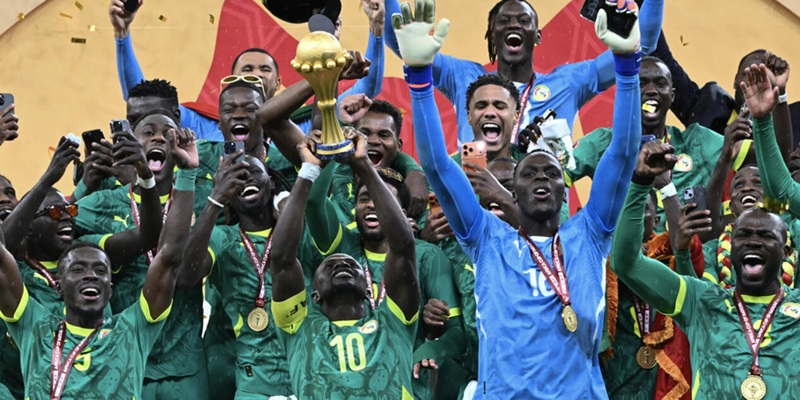
TDWhen Senegal lifted the AFCON 2025 trophy in Rabat, it was more than a football triumph—it was a symbol of resilience, unity, and African pride.

Yet, in a move that reeks of politics rather than sporting justice, CAF stripped Senegal of their hard‑earned victory and handed the crown to Morocco.
Now, Senegal has refused to surrender the trophy, and rightly so.
This is not just about football—it is about dignity, sovereignty, and the credibility of African institutions.
CAF’s ruling was as blunt as it was brazen: Senegal’s walk‑off protest against a dubious penalty was deemed a “forfeit,” retroactively erasing their 1–0 extra‑time win.
By bureaucratic fiat, Morocco was awarded a 3–0 victory and declared champions.
But let’s be clear—Morocco did not win on the pitch. They were handed the title in a boardroom.
That distinction matters, because football is played with sweat and blood, not with pens and politics.
Senegal’s refusal to return the trophy is more than defiance—it is a moral stand against what many see as CAF’s compromised governance.
President Augustin Senghor’s fiery denunciation of the ruling as “the worst system in the world” captures the outrage of a nation that feels robbed not just of a title, but of respect.
In Dakar, the trophy remains a symbol of resistance, a reminder that legitimacy cannot be manufactured by decree.
The political undertones are impossible to ignore.
Morocco’s long‑standing influence within CAF, coupled with the tournament being hosted on Moroccan soil, raises uncomfortable questions about favoritism and power dynamics.
Was this decision about enforcing rules, or about appeasing powerful stakeholders?
The optics are damning: a continental body bending under political weight, undermining the very competition it is meant to safeguard.
This debacle has left AFCON’s reputation in tatters.
For the first time in history, a team has been stripped of a title after lifting the trophy.
Fans across Africa are asking: if results can be overturned so easily, what is the point of the competition?
CAF has not just alienated Senegal—it has eroded trust in African football itself.
Senegal’s defiance is therefore not just about holding onto a piece of silverware.
It is about exposing the rot within CAF, about demanding accountability, and about reminding Africa that football belongs to the people, not to politicians.
Until CAF confronts its credibility crisis, every future AFCON will carry the shadow of Rabat 2025.
This piece leans into Senegal’s defiance and frames CAF’s decision as politically tainted, while highlighting the broader implications for African football governance.