THIS DAWN — Nigeria’s legislative and political landscape has been shaken by revelations that the 2025 tax reform laws published in the Official Gazette, contained discrepancies from the versions passed by the National Assembly.

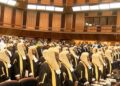
The Senate, therefore, directed the Clerk of the National Assembly to re‑gazette the affected Acts and issue Certified True Copies.
The directive has ignited a storm of debate.
Legal experts, civil society, and commentators warn that the issue goes beyond routine correction and points to deliberate tampering with the lawmaking process.
Background: Dasuki’s Disclosure
The controversy first came to light on December 17, when Hon. Abdussamad Dasuki raised concerns on the floor of the House of Representatives.
He disclosed that the gazetted versions of the tax reform laws did not align with the Votes and Proceedings of the National Assembly.
This discrepancy, he argued, was not cosmetic but substantive, altering the meaning and application of the laws.
The intervention of Dasuki prompted the leadership of the National Assembly to order a re‑gazette of the Acts to reflect the versions actually passed by lawmakers.
The leadership of the National Assembly said the intended the move to restore legislative integrity.
Meanwhile, critics argue that it simultaneously confirms that the enablers of Nigeria’s laws unlawfully altered it after due process had ended.

Legal Fault Lines
According to commentary from Barrister Street Nigeria (BSN), the issue is not a matter of clerical error but of criminality.
Under Nigeria’s Criminal Code, making or altering a document to pass as genuine law constitutes forgery.
Publishing or acting on such an altered document amounts to uttering.
Where multiple officials participate in or enable the process, conspiracy arises.
And where public officers abuse entrusted authority, misconduct in public office applies.
BSN emphasized that once an Act has been debated, amended, voted on, transmitted, and assented to by the President, it ceases to be a working document.
Any post‑assent insertion or alteration of substantive provisions is unlawful and undermines the legitimacy of enforcement.
Constitutional Breach
The constitutional implications are equally grave. Section 4 of the 1999 Constitution vests legislative power solely in the National Assembly.
Any tampering with laws after assent usurps that authority, violates the principle of separation of powers, and creates parallel and conflicting legal regimes.
Such actions erode the legitimacy of governance and weaken public trust in democratic institutions.
BSN noted that while some Nigerians have described the act as treason, the legal definition of treason requires intent to overthrow the state or wage war.
Instead, the situation represents deliberate institutional subversion of the lawmaking process—a danger no less severe for Nigeria’s constitutional democracy.
Altered Provisions in the Gazette Order
Among the controversial changes identified in the gazetted laws were:
- Removal of judicial oversight for asset seizures by tax agents.
- Empowering law enforcement agencies to arrest and detain suspected tax offenders during investigations.
- Mandating individuals appealing tax penalties to pay 20 percent of the disputed amount upfront.
These provisions were absent in the versions passed by lawmakers.
It significantly shifted the balance of power between citizens, the judiciary, and tax authorities.
Critics argue they undermine constitutional safeguards and impose punitive burdens on Nigerians.
Accountability Demands
BSN stressed that re‑gazetting may repair the legislative record but does not resolve liability.
The central questions remain unanswered:
- Who authorized the insertions?
- Who executed them?
- And why is implementation still being pushed while the breach is under investigation?
If the matter passes without consequences, BSN warned, it sets a dangerous precedent that any statute can be quietly rewritten after lawmakers have voted and the President has assented.
Such a precedent is incompatible with constitutional democracy and undermines decades of democratic progress.
Public Reaction to Re-Gazette Order
Civil society groups, legal experts, and opposition parties have echoed calls for accountability.
Some have demanded suspension of the tax reform laws pending investigation.
Meanwhile, others have urged impeachment proceedings if the President is implicated.
The Nigerian Bar Association has also expressed concern, emphasizing the need for transparency and adherence to due process.
The Senate’s re‑gazette order has exposed a fault line in Nigeria’s legislative process, raising questions about the integrity of governance and the rule of law.
While the directive seeks to restore accuracy, it simultaneously confirms that unlawful alterations occurred.
For many Nigerians, the issue is not about tax policy but about whether the rule of law remains binding on those in power.
As BSN concluded, “those responsible for altering our laws must face consequences for abusing our laws and attempting to undermine years of democratic progress through greed.”
The unfolding investigation will determine whether Nigeria confronts this breach decisively or allows it to become another normalized episode of impunity.