TDFactional Chairman of the African Democratic Congress (ADC), Hon. Nafi’u Bala, has deleted a series of social media posts made between January and July 10, 2025.

In some of the deleted posts, he publicly acknowledged the party’s new leadership under Distinguished Senator David Mark as National Chairman and H.E. Ogbeni Rauf Aregbesola as National Secretary.
The deleted posts had previously shown Bala aligning himself with the leadership structure.
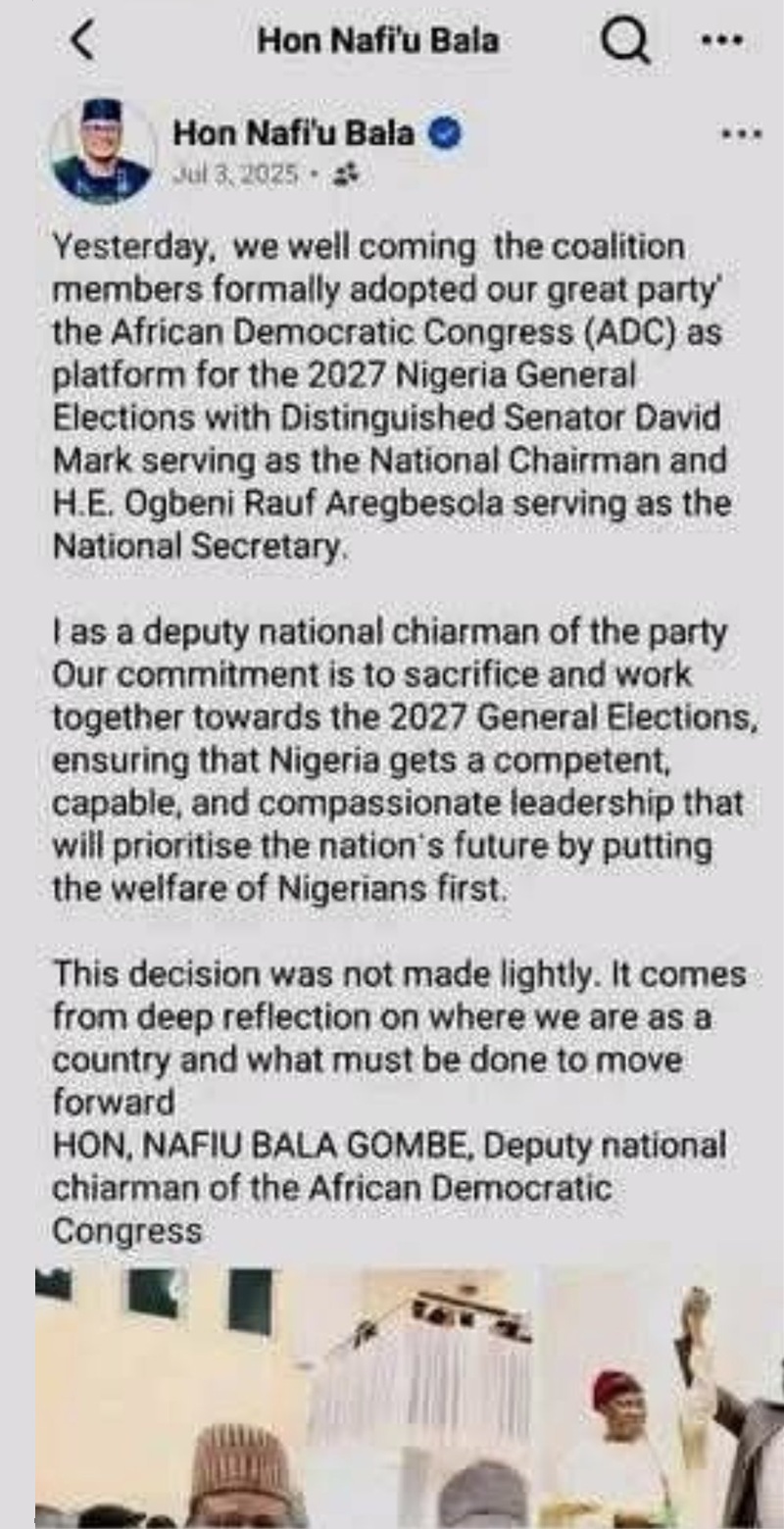
In one of the posts, he identified himself as Deputy National Chairman and pledged commitment to sacrifice and collaboration ahead of the 2027 general elections.
See a screenshot of the post below:
How Bala Contradicted Himself
In the post, dated July 3, 2025, Bala wrote that the coalition members had “formally adopted our great party, the African Democratic Congress (ADC), as platform for the 2027 Nigeria General Elections.”
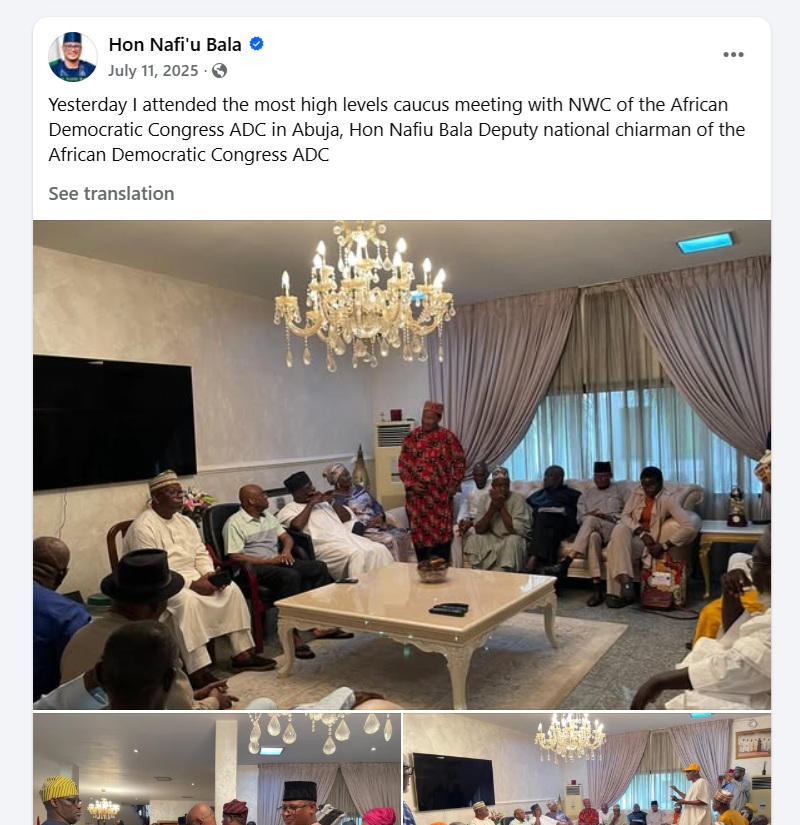
However, on July 11, 2025, Bala made a fresh post on Facebook, stating:
“Yesterday I attended the most high levels caucus meeting with NWC of the African Democratic Congress ADC in Abuja, Hon Nafiu Bala Deputy national chairman of the African Democratic Congress ADC.”
Present at that caucus meeting was the new ADC leadership under David Mark, further underscoring Bala’s involvement with the faction.
The deletion of earlier posts has raised questions among party members and observers about Bala’s current stance.
The stance is especially in light of his recent denial of a purported resignation letter, which he claimed was forged.
The contrasting actions—first acknowledging the leadership, then deleting those acknowledgments—have added to the uncertainty surrounding the ADC’s internal dynamics as the party prepares for the 2027 elections.
Bala Disowns Resignation Letter, as Past Post Resurfaces
In a separate development, Bala has disowned a purported resignation letter circulating in political circles, insisting that his signature was forged.
Bala, who currently leads one of the party’s factions, described the document as fake.
He said it is a deliberate attempt to undermine his position and destabilize the ADC ahead of the 2027 general elections.
Bala categorically rejected the letter, stressing that he remains committed to his role and has not stepped down from his responsibilities.
He accused unnamed political actors of orchestrating the forgery to sow confusion within the party.
When he took the matter to court in August 2025, the Bala ADC faction declared that David Mark, a former senate president, is not a legitimate member of the party.
In a statement, Aminu Alhassan, special assistant on public affairs to Bala, described the formation of a new national working committee (NWC) led by Mark as a “clear violation” of the party’s constitution.
However, Bala’s denial has reignited scrutiny of his earlier public statements.
Previous Acknowledgements
On July 3, 2025, Bala posted on Facebook acknowledging the adoption of the ADC as the platform for the 2027 elections.
In that post, he recognized Distinguished Senator David Mark as the National Chairman and H.E. Ogbeni Rauf Aregbesola as the National Secretary, while identifying himself as the Deputy National Chairman.
He pledged sacrifice and collaboration to ensure competent and compassionate leadership for Nigeria.
He emphasized that the decision was made after “deep reflection on where we are as a country and what must be done to move forward.”
The resurfacing of Bala’s post has fueled debate among party members and the wider political community.
Critics argue that his current denial contrasts sharply with his earlier endorsement of the ADC leadership structure.
Meanwhile, his supporters maintain that the alleged resignation letter is a clear case of forgery aimed at discrediting him.
Analysis
As the ADC continues to grapple with internal divisions, Bala’s shifting public posture underscores the turbulent dynamics within opposition politics in Nigeria.
His deletion of posts acknowledging the David Mark-led leadership was coupled with his rejection of the resignation letter.
They paint a picture of a politician caught between factional pressures and questions of legitimacy.
With the 2027 elections drawing closer, the party faces mounting pressure to resolve its leadership disputes and present a unified front to the electorate.
Bala’s actions—both online and offline—will likely remain a focal point in the unfolding struggle for control within the ADC.