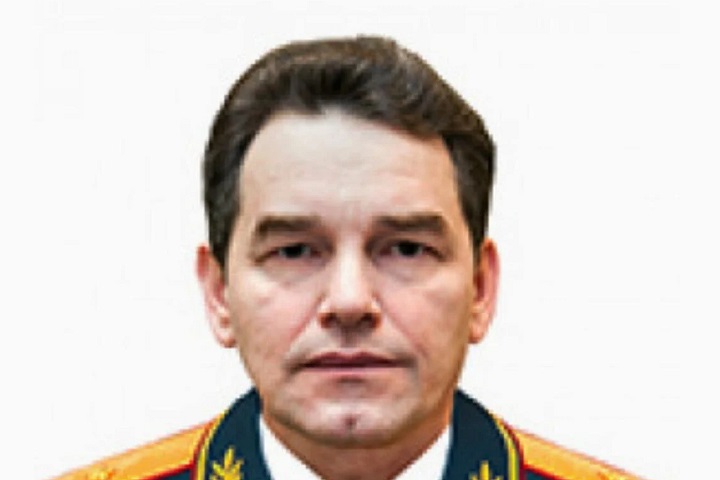
THIS DAWN — A senior Russian military officer, Lt. Gen. Fanil Sarvarov, was killed in a car bombing in the capital on Monday.

The bombing marked the third high-ranking casualty in a string of targeted attacks against the country’s military leadership this year.
Lt. Gen. Sarvarov was head of the Operational Training Directorate of the Russian Armed Forces’ General Staff.
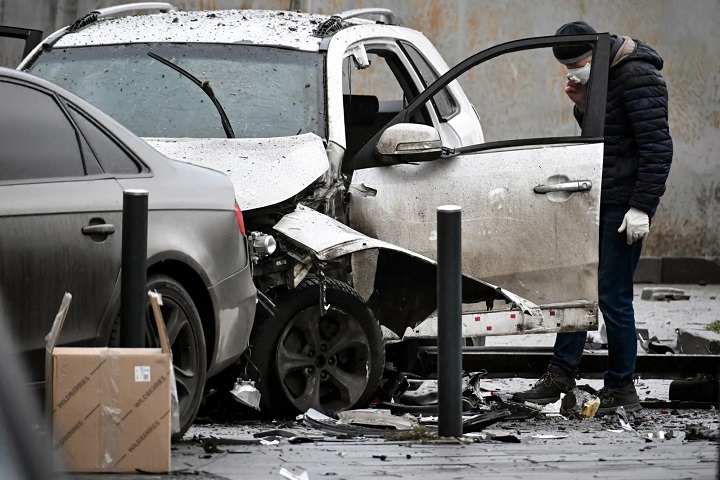
He succumbed to injuries sustained when an explosive device detonated beneath his vehicle in central Moscow.
Authorities confirmed his death late in the evening.
His death spark immediate speculation about the perpetrators and the broader implications for Russia’s security apparatus.
Details of the Attack
Witnesses reported a powerful blast near a busy intersection in Moscow’s Presnensky District around midday.
The explosion tore through Sarvarov’s official car, sending debris across the street and igniting nearby vehicles.
Emergency services rushed to the scene.
Medical personnel transported Sarvarov to a military hospital, however, despite rapid medical intervention, he died shortly thereafter.
Russian investigators have cordoned off the area and launched a criminal probe.
Preliminary reports suggest his assailants the bomb under the vehicle and detonated remotely.
This is a method consistent with previous attacks on Russian officials.
No group has claimed responsibility at the time of writing.
Profile of Lt. Gen. Sarvarov
Fanil Sarvarov was a career officer with decades of service in the Russian Armed Forces.
As head of the Operational Training Directorate, he oversaw the planning and execution of large-scale military exercises.
This includes joint drills with allied states and readiness assessments across Russia’s combat units.
Military analysts described him as a key figure in shaping Russia’s operational doctrine, particularly amid the country’s ongoing involvement in Ukraine.
His death represents not only a personal loss for the armed forces but also a disruption to the continuity of military training and strategic planning.
Pattern of Targeted Killings
Sarvarov’s assassination is the third bombing this year to claim the life of a senior Russian military officer.
Earlier incidents included the killing of a regional commander in St. Petersburg.
Another incident involved the death of a naval intelligence chief in Vladivostok.
The repeated targeting of high-ranking officers has raised alarm within Russia’s defense establishment.
Analysts suggest the attacks may be part of a coordinated campaign aimed at destabilizing military leadership and undermining morale.
Others point to possible internal rivalries or organized crime networks exploiting the current climate of instability.
Official Response Sarvarov Killing
The Kremlin has condemned the attack, with President Vladimir Putin reportedly briefed within hours of the incident.
A statement from the Ministry of Defense vowed to bring those responsible to justice, emphasizing that such acts would not deter Russia’s military operations.
Security has been tightened across Moscow, with checkpoints established near government buildings and military installations.
Intelligence agencies are reportedly investigating potential links to foreign actors, though officials have not publicly named suspects.
Broader Implications
The killing of Sarvarov underscores the vulnerability of Russia’s senior military leadership at a time when the country faces mounting external and internal pressures.
The attacks highlight gaps in protective measures for high-ranking officials.
It also raised questions about the effectiveness of counterintelligence and security protocols.
International observers note that the string of assassinations could have ripple effects on Russia’s military readiness.
The loss of experienced commanders may hinder operational planning and complicate efforts to maintain cohesion across the armed forces.
For Moscow residents, the bombing is a stark reminder of the capital’s exposure to violence once largely confined to conflict zones.
The attack has fueled anxiety among civilians, many of whom witnessed the explosion firsthand.
The death of Lt. Gen. Fanil Sarvarov marks a significant escalation in the wave of targeted violence against Russia’s military elite.
As investigators search for answers, the incident raises pressing questions about who is behind the attacks and what their ultimate objectives may be.
For Russia’s armed forces, the loss of a senior strategist is both a symbolic and practical blow.
With three generals killed in bombings this year alone, the country’s military leadership faces an unprecedented challenge.
It must device means to safeguard its commanders while continuing to project strength at home and abroad.