TDThe geopolitical lines around Iran are hardening as what began as another regional confrontation risks evolving into something far larger: a strategic alignment between Russia, China, and Iran on one side, and the United States and Israel on the other.

Russia’s reaction to recent developments signals how seriously Moscow views the situation.
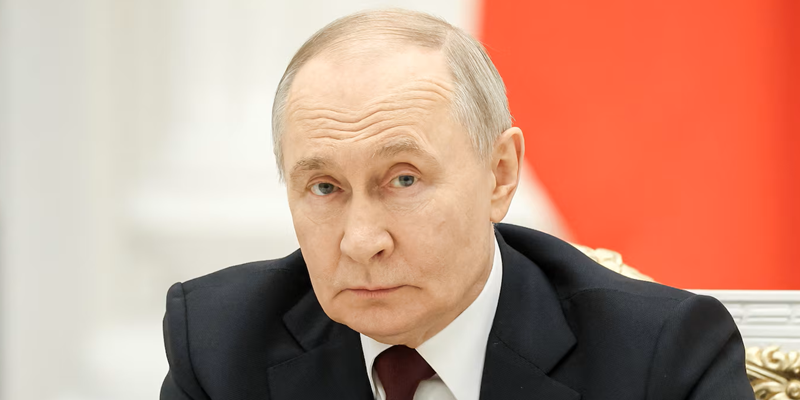
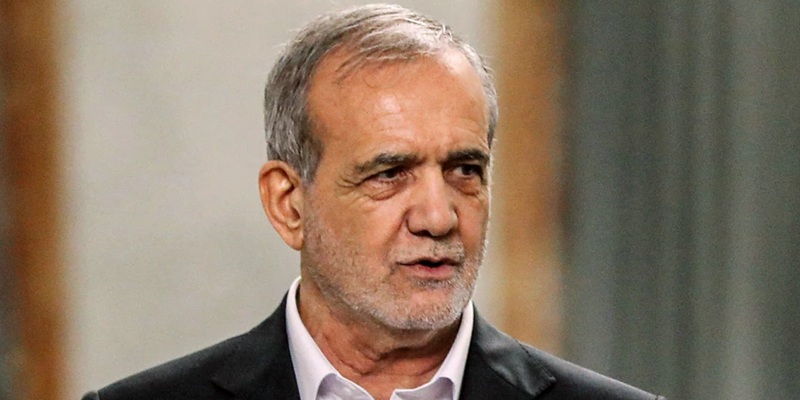
Russian President Vladimir Putin condemned the situation in a call with Iranian President Masoud Pezeshkian.
Kremlin’s Huncho described it as Israeli-American aggression against Iran and called for an immediate ceasefire.
Steps in Russia
Moscow’s language is not accidental.
It reflects a broader strategic posture: positioning Russia as a political shield for Tehran while framing Western military pressure as destabilising the Middle East.
Behind the diplomacy lies a deeper strategic reality.
Russia and Iran have steadily expanded military cooperation in recent years, particularly since the war in Ukraine.
Joint naval exercises in the Gulf of Oman and the northern Indian Ocean are a visible signal that this relationship is no longer purely transactional.
It is evolving into something closer to a strategic partnership.
Then China…
China’s role, meanwhile, could prove even more consequential.
There are reports that Iran is negotiating to purchase the CM-302 supersonic anti-ship missile, an export variant of the YJ‑12 anti‑ship missile.
This highlights Beijing’s quiet but growing involvement in the region’s military balance.
Designed to travel at roughly Mach 4 and strike large naval vessels, the missile is often described by analysts as a potential “carrier killer.”
If deployed by Iran, such weapons would complicate the ability of the US Navy to operate freely in the Persian Gulf and Arabian Sea.
That matters because the United States is assembling one of its largest concentrations of naval power in the region since the Iraq War.
The carrier strike group centred on the USS Abraham Lincoln (CVN‑72) is already positioned in the Arabian Sea.
Meanwhile, the USS Gerald R. Ford (CVN‑78) is moving toward the Eastern Mediterranean and potentially beyond.
These deployments are designed both as deterrence and as preparation should diplomacy fail.
Implications for Iran
Yet deterrence cuts both ways.
The loss—or even serious damage—of a US carrier would represent an unprecedented strategic shock and a political crisis in Washington.
For Iran, acquiring supersonic anti-ship capabilities would dramatically raise the risks for US forces operating near its coastline.
Meanwhile, Tehran has been signalling its readiness for confrontation.
The Islamic Revolutionary Guard Corps has conducted multiple exercises involving drones, missiles and rockets in southern Iran and across Gulf islands.
Live-fire drills in the Strait of Hormuz briefly disrupted traffic through a waterway that carries roughly 20 percent of the world’s oil supply.
These actions serve two purposes: deterrence and messaging.
Tehran is demonstrating that any conflict would threaten not only regional stability but also global energy markets.
War forward
China’s political messaging reinforces this emerging alignment.
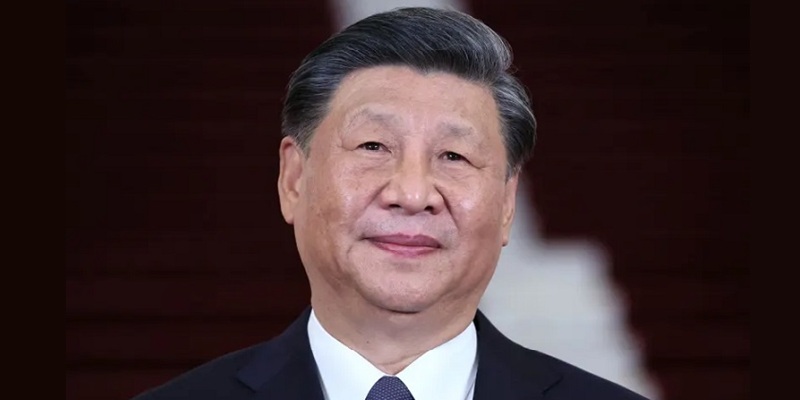
During a meeting in Beijing last year, Chinese President Xi Jinping stated that China supports Iran in safeguarding its sovereignty and territorial integrity.
While Beijing is unlikely to intervene militarily, its diplomatic backing—and potential arms transfers—help ensure that Iran is not strategically isolated.
The result is an increasingly familiar pattern in global politics: blocs taking shape around competing visions of order.
Russia and China are positioning themselves as defenders of state sovereignty against Western intervention.
The United States and its allies see Iran’s missile and nuclear ambitions as a threat to regional and global security.
For now, the confrontation remains indirect.
But with naval forces massing, missile capabilities expanding, and great powers staking political positions, the Middle East once again risks becoming the stage for a much larger geopolitical contest.
And if the current trajectory continues, the next crisis may not remain regional for long.