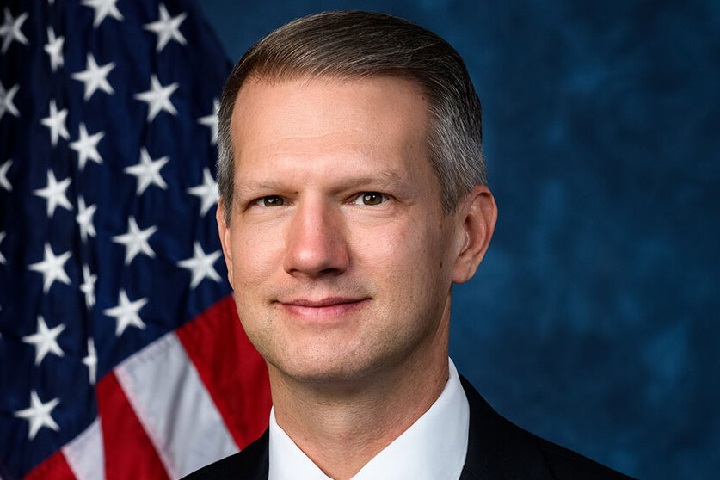
THIS DAWN — U.S. Congressman Rep. Riley M. Moore have cleared himself and his audience of “any remaining doubts that Christians in Nigeria are being” persecuted for their faith. following the recent attacks by the Islamic State West Africa Province (ISWAP) in Adamawa State.

Rep. Moore took to social media to denounce the assaults, describing them as clear evidence that Christians are being targeted for their faith.
The persecution of Christians in Nigeria has once again drawn international attention after a series of violent attacks by ISWAP.
His remarks came amid reports of villages burned, churches destroyed, and dozens of lives lost in recent raids.
“Christians in Nigeria Are Being Targeted” — Riley Moore
Rep. Moore, a vocal advocate for religious freedom, declared that the attacks should end any remaining debate about whether Nigerian Christians are being persecuted.
“If there were any remaining doubts that Christians in Nigeria are being targeted for their faith in Jesus Christ, this should end that debate,” Moore wrote.
He dismissed alternative explanations such as land disputes or climate change, insisting the violence is rooted in religious persecution.
Moore highlighted ISIS propaganda offering Christians the chance to “spare their blood” if they convert to Islam.
He stressed that believers will not “bend the knee to anyone but our Lord and Savior.”
Moore also praised President Donald Trump’s administration for cooperating with the Nigerian government to combat extremist groups.
He noted the ongoing U.S. support in counterterrorism operations.
ISWAP’s Campaign in Adamawa
Reports from Adamawa State detail a string of ISWAP attacks over several days:
- Timboa Village Attack:
ISWAP claimed responsibility for killing four Christians, destroying 50 houses and three motorcycles, and abducting five individuals.
- Second Raid:
The group killed 11 Christians described as “hostile,” destroyed a church, and razed over 100 houses.
This marked the first time ISWAP adopted the term “hostile Christians,” echoing language used by its affiliate ISCAP.
- Higa Village Burning:
In a third assault, ISWAP set ablaze the village of Higa, destroying more than 50 houses.
No deaths were reported, but the attack was seen as retaliation for recent U.S. airstrikes against IS‑Sahel militants in Sokoto State.
Images released by ISWAP showed villages engulfed in flames.
See below:
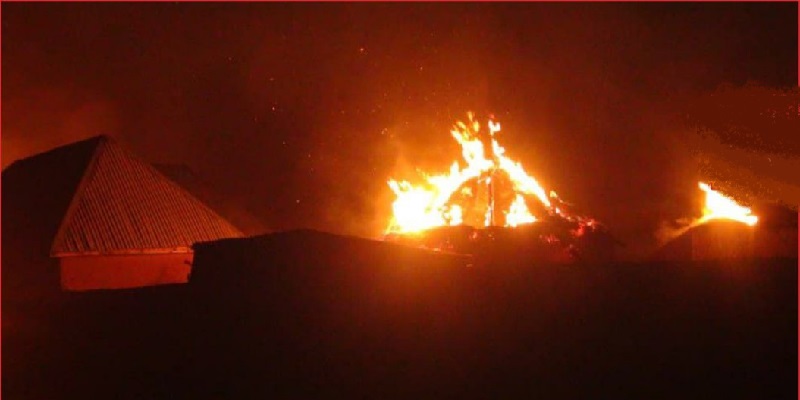
The images were accompanied by statements declaring all Christians in Nigeria “legitimate targets” unless they convert or pay the jizyah tax imposed on non‑Muslims under extremist rule.
International and Domestic Reactions
Moore’s comments reflect growing concern in Washington over the plight of Nigerian Christians.
Religious freedom advocates have long warned that extremist violence in Nigeria’s northeast is escalating.
ISWAP and Boko Haram keep targeting communities based on faith.
In Nigeria, civil society groups have condemned the attacks and urged the government to intensify security operations in Adamawa and neighboring states.
The raids highlight the vulnerability of rural communities, where limited military presence leaves villages exposed to extremist incursions.
The Nigerian government has pledged to strengthen cooperation with international partners, including the United States, to counter ISWAP’s expanding influence.
President Tinubu’s administration faces mounting pressure to deliver tangible security improvements amid rising casualties.
Broader Context of Riley Moore’s Claims
ISWAP’s recent rhetoric mirrors tactics used by ISIS affiliates elsewhere, framing Christians as “hostile” and offering conditional survival through conversion or taxation.
Analysts warn that such language signals a shift toward more systematic targeting of religious minorities.
The attacks also underscore the regional dimension of extremist violence.
ISWAP’s operations in Adamawa appear linked to broader conflicts in Sokoto and the Sahel, where U.S. airstrikes have disrupted militant networks.
Retaliatory raids in Nigeria suggest coordination across ISIS affiliates, raising concerns about cross‑border insurgency.
The latest ISWAP attacks in Adamawa State have reignited debate about religious persecution in Nigeria.
Rep. Riley Moore’s unequivocal condemnation frames the violence as plain persecution of Christians.
He rejected alternative narratives and calling for continued U.S. support to Nigeria.
As villages mourn their dead and rebuild from destruction, the challenge for Nigeria’s government is to restore security and reassure vulnerable communities.
For international observers, the attacks serve as a stark reminder that extremist violence in West Africa is not only a geopolitical crisis.
It is also a profound human tragedy rooted in faith and identity.