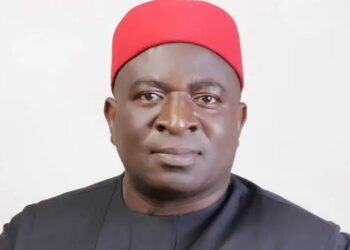
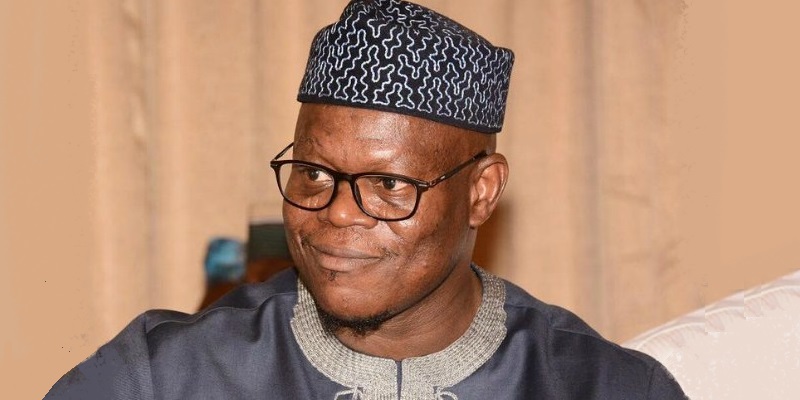
THIS DAWN — The political tension between the All Progressives Congress (APC) National Secretary, Senator Ajibola Basiru, and the Minister of the Federal Capital Territory (FCT), Nyesom Wike, has escalated into a public confrontation.

In a strongly worded statement issued on Monday, January 5, 2026, Senator Basiru called on Wike to resign his ministerial position and focus on what he described as Wike’s “obsession with Rivers politics.”
The remarks highlight the growing friction within the ruling party and raise questions about Wike’s role in APC affairs despite not being a registered member of the party.
Senator Basiru explained that his initial comments, which triggered Wike’s response, were rooted in the principle that sitting governors must be accorded respect as leaders of the party in their respective states.
According to him, this position is consistent with the APC’s internal structure and the responsibilities of the National Working Committee (NWC).
He expressed shock that such a “simple and innocuous statement” could provoke what he described as “uncouth responses” from a serving minister.
Basiru emphasized that his role as National Secretary extends beyond his home state of Osun, giving him the mandate to protect the interests of the party nationwide.
Wike’s Legitimacy Questioned
Basiru categorically stated that Nyesom Wike is not a member of the APC, and therefore lacks the authority to interfere in the party’s internal matters.
He argued that Wike’s involvement in APC affairs, particularly in Rivers State, is illegitimate and destabilizing.
“Millions of Nigerians who are not APC members support President Bola Ahmed Tinubu,” Basiru noted.
He added that Wike’s support for the President does not automatically confer party membership.
He warned that Wike’s attempt to “import the spirit of PDP into APC” would not be tolerated.
The APC National Secretary took strong exception to Wike’s reference to an alleged N600 billion largesse in Rivers State, which Wike claimed APC leaders were scrambling to access.
Basiru dismissed the allegation as “cheap blackmail” and challenged Wike to provide evidence.
He described his own track record as one of “unquestionable integrity” and threatened legal action if Wike failed to substantiate his claims.
This accusation, Basiru argued, is part of Wike’s “stock-in-trade” of political manipulation and smear tactics, which he vowed not to succumb to.
Call for Resignation
Basiru also addressed what he interpreted as veiled threats from Wike.
He declared that his faith in God makes him immune to intimidation, reminding Wike that he is “not God” and may be overplaying his political hand.
He recalled his own history as a young activist who fought against military rule in Nigeria, contrasting it with Wike’s absence from such struggles.
This historical reference was intended to underscore Basiru’s democratic credentials and resilience in the face of political confrontation.
In his concluding remarks, Basiru advised Wike to resign from his ministerial position in the Federal Executive Council.
He argued that it is dishonourable for Wike to hold office in an APC-led government while simultaneously sowing confusion within the party.
“The honourable thing to do is to resign his appointment as Minister,” Basiru declared.
He insisted that Wike cannot leverage his ministerial position to interfere in APC structures at any level.
Implications for APC and Rivers Politics
This exchange between Basiru and Wike underscores the fragile balance of power within the APC, particularly in Rivers State where political loyalties remain divided.
Wike, a former governor of Rivers and a prominent figure in the opposition Peoples Democratic Party (PDP), has been a controversial ally of President Tinubu.
His role in the APC government has long been questioned by party loyalists who view his influence as disruptive.
Basiru’s statement reflects growing unease among APC leaders about Wike’s involvement in party affairs.
By calling for his resignation, Basiru has effectively drawn a line in the sand, signaling that Wike’s dual role as minister and political actor in Rivers State is untenable.
The confrontation also highlights broader tensions between party structures and individual political ambitions.
As APC seeks to consolidate its hold on Rivers State, the clash between Basiru and Wike may foreshadow deeper internal struggles that could shape the party’s future in the region.
Basiru’s fiery response to Wike marks a significant escalation in intra-party disputes within the APC.
By questioning Wike’s legitimacy, dismissing his allegations, and calling for his resignation, Basiru has positioned himself as a defender of party integrity against external interference.
Whether Wike heeds this advice or continues to assert influence in Rivers politics remains to be seen.
What is clear, however, is that the battle for control of Rivers State within APC is far from over.
Also, the fallout from this confrontation could reverberate across Nigeria’s political landscape in the months ahead.