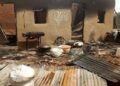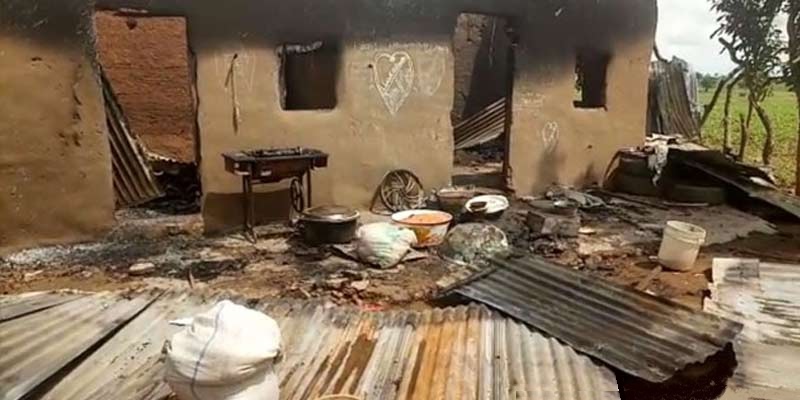
TDA government fact-finding committee has revealed that at least 420 communities across 13 local government areas — notably in Bokkos, Barkin Ladi, and Riyom — were attacked between 2001 and 2025.

The violence claimed over 11,000 lives, painting a grim picture of insecurity in Plateau State.
Governor Caleb Mutfwang emphasized that the crisis is not simply a farmer-herder conflict.
Rather, he stressed it’s an “organised crime by malicious elements who do not want peace to reign in the state.”
Kidnapping Complicates Plateau Insecurity Saga
Kidnap-for-ransom has evolved into a citywide menace in the Jos-Bukuru metropolis.
The menace affects communities in Jos North and Jos South despite the presence of military checkpoints and police posts.
Recent occurrences:
- September 2025: NYSC member Allwell Nelson was abducted in Dong while preparing for her wedding.
She and her cousin spent three nights in captivity before ransom secured their release.
- January 2026: Three daughters of Plateau State Water Board MD Apollos Samchi were kidnapped in Rantya, Jos South.
- March 2026: Sunday Agang, chairperson of ECWA’s Board of Trustees, was abducted in Faringada, Jos North.
- Other victims include a retired army colonel, Plateau State legislator Laven Jacob, and civil society leader Chris Iyama.
- According to Iyama, they were being beaten and marched through forests before ransom freed him.
These incidents highlight how abductions have shifted from isolated attacks to a systemic crisis engulfing the city.
Informants and Insider Threats
Community elders and security officials warn that informants within neighborhoods are enabling kidnappings:
-
Criminals rely on insider knowledge to identify wealthy or influential targets.
-
In December 2025, troops arrested three alleged informants in Dong.
-
Police also detained suspects supplying food to kidnappers in Mazah, Jos North.
This insider dynamic has fueled mistrust among residents, who fear that neighbors may be complicit in the violence.
Victims often report kidnappers calling out their names, suggesting prior knowledge of their identities and routines.
Cycles of Violence in Plateau State
Kidnappings frequently intersect with communal tensions.
Victims recount being taken through areas where herders keep cattle, sometimes sparking deadly confrontations.
In one case, abductors shot herders who questioned them, raising fears of reprisals.
Development workers caution that such incidents risk triggering cycles of revenge attacks, deepening mistrust between communities and herders.
The Miyetti Allah Cattle Breeders Association of Nigeria (MACBAN) has admitted that “bad elements” infiltrate their ranks.
MACBAN stated that these are committing crimes under the guise of herding.
National Context
Kidnap-for-ransom is one of Nigeria’s most persistent security crises:
- Between July 2024 and June 2025, at least 4,722 people were abducted nationwide.
- Kidnappers demanded about ₦48 billion in ransom, while families paid an estimated ₦2.57 billion.
- At least 762 people were killed in abduction-related violence.
These figures underscore how Plateau’s crisis is part of a larger national epidemic, with ransom payments often treated as the only viable option due to slow or ineffective state responses.
Poor Government Response in Plateau
Authorities have attempted to strengthen security:
- A police outpost was launched in Dong in January 2026, hailed as a “symbol of resolve.”
- However, when visited in March, the facility was deserted, with no officers present.
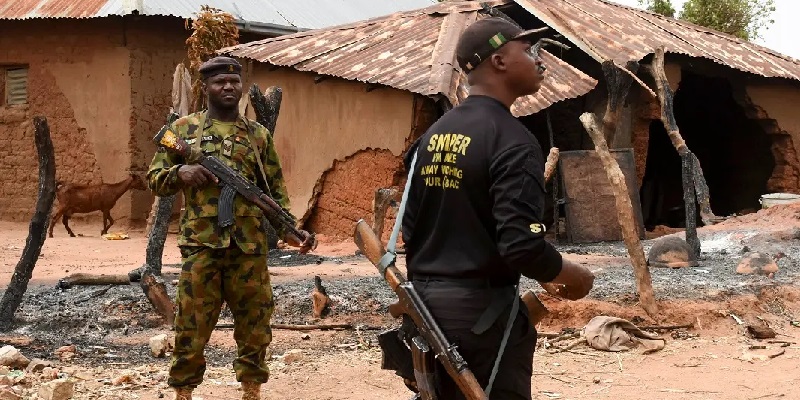
- Residents continue to rely on local hunters and vigilantes, while curfews remain in place.
Despite these measures, many residents say they still feel unsafe, noting that official communication rarely reflects the true scale of the crisis.
Bottom Line
According to HumAngle, the Plateau crisis reflects a dangerous evolution.
Kidnapping has shifted from isolated incidents to a citywide threat, compounded by insider collusion, cycles of violence, and weak state response.
With thousands already killed in broader communal conflicts, ransom-driven abductions now deepen insecurity and erode public trust in authorities.
The question remains: can Plateau State break the cycle of violence and restore confidence in its security institutions?
Or will kidnap-for-ransom continue to entrench itself as a grim feature of daily life?