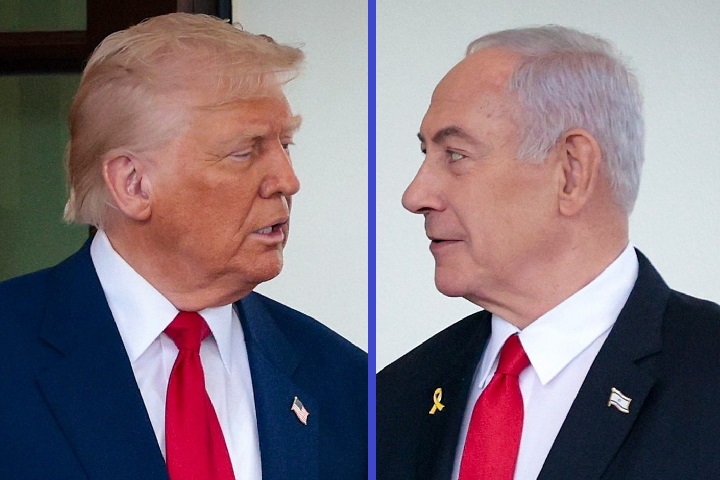
THIS DAWN — United States President Donald Trump has issued a pointed warning to Israel, cautioning the country against what he described as “interference” in Syria.

The remark has stirred diplomatic conversation across the Middle East and among U.S. foreign-policy observers.
It comes alongside Trump’s renewed praise for what he called America’s “very satisfactory” accomplishments in Syria during his administration.
In a brief statement, Trump declared: “The United States is very satisfied with the results displayed, through hard work and determination, in the country of Syria.”
He insisted that Israel must avoid taking any actions that could disrupt the “stability” he claims was achieved under U.S. oversight.
Trump also wrote on the social-media platform Truth Social:
“It is very important that Israel maintain a strong and true dialogue with Syria, and that nothing takes place that will interfere with Syria’s evolution into a prosperous State.”
While Trump did not provide additional context or details, the comments have generated speculation about the specific actions by Israel that prompted the warning.
Why the warning?
Israel has frequently carried out airstrikes in Syria targeting Iranian-backed militias, weapons convoys, and military infrastructure.
Israel argues that its actions are essential for preventing Tehran’s military entrenchment near its borders.
Trump’s statement, however, suggests concern that further Israeli military engagement could complicate the fragile dynamics in the region.
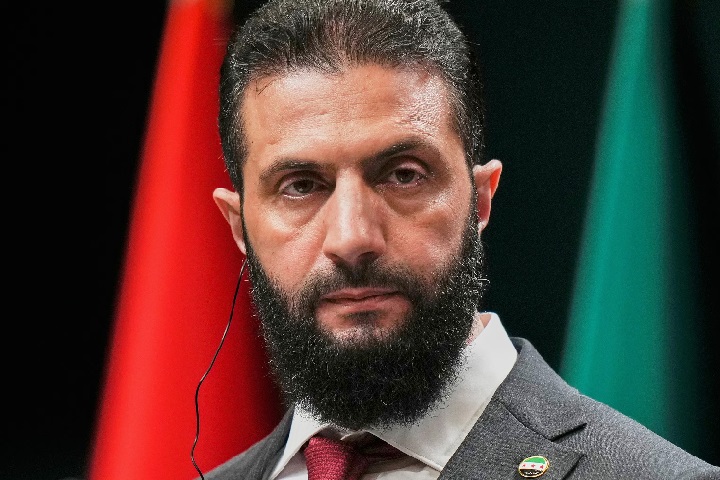
Analysts note that Trump’s remarks align with his longstanding critique of prolonged U.S. military entanglements abroad.
Trump is also known for his insistence that his administration achieved “unprecedented success” in diminishing ISIS and stabilizing parts of northern Syria.
Nonetheless, his suggestion that Israel refrain from deeper engagement marks a rare public admonition of a close American ally.
Israeli officials have not issued an immediate response.
Security experts say such a warning—though informal and issued outside official government channels—may still reverberate in Jerusalem, especially given the sensitivity surrounding Israel’s counter-Iran operations.
Foreign-policy commentators add that Trump’s statement may also reflect shifting geopolitical narratives as global tensions rise across the Middle East.
In the meantime, Syria is still a battleground of competing interests involving Russia, Iran, Turkey, Kurdish forces, and remnants of extremist groups.
The region remains volatile and susceptible to renewed escalations.
For now, Trump’s remarks inject a new layer of diplomatic friction between Israel and its neighbours..
It raises questions about how Israel’s leadership will interpret and react to the unusual caution from a U.S. president known for his traditionally strong pro-Israel stance.