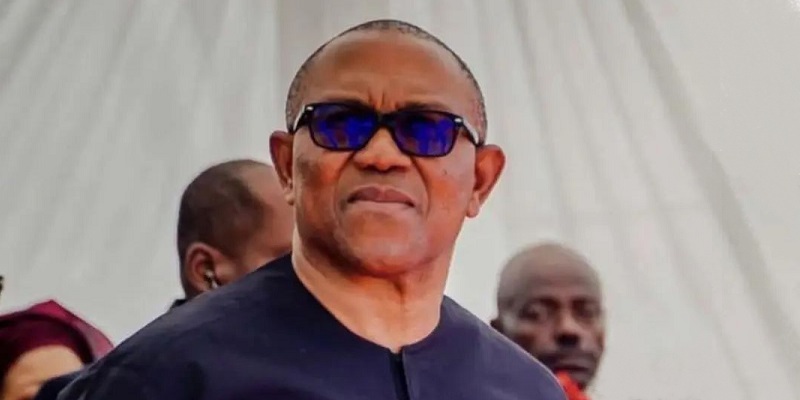
TDPeter Obi is poised to run for president again in 2027.

His supporters remain convinced that the 2023 election was stolen from him—a belief that carries real weight in politics.
After all, if Donald Trump can sustain claims of being rigged out of the 2020 U.S. election years later, no one can credibly deny Obi the right to hold firm on his 2023 grievances.
His performance that year was no fluke: defeating Bola Ahmed Tinubu in Lagos, the president’s longstanding stronghold, sent a powerful political message that cannot be waved away.
Yet belief and symbolism, however potent, do not deliver presidential victories.
Nigerian elections are not won on emotion, rallies, or viral enthusiasm alone.
They are won through cold, hard logistics—what amounts to war-level organization and supply chains.
Consider what it truly takes to mount a credible national campaign:
- Over 176,000 polling unit agents deployed nationwide.
- Robust state coordinators and local structures in every corner.
- Legal teams ready to litigate at every stage.
- Media dominance across television, radio, print, and digital platforms.
- Coalition brokers negotiating alliances.
- Transportation networks to move people and materials.
- Real-time data collation systems to monitor and respond on election day.
This infrastructure demands massive, sustained capital.
Nigerian presidential contests are not debates; they are resource-intensive operations fueled by money—“Aje!” as the saying goes.
Obi has legitimate grounds to critique Tinubu’s economic stewardship.
Many Nigerians are enduring unprecedented hardship, squeezed by inflation, unemployment, and policy missteps that have pushed millions into deeper poverty.
But hardship alone rarely topples incumbents.
Elections are not referendums on sympathy; they are battles of organization where incumbency enjoys built-in advantages: incumbency structure, federal resources, and entrenched networks.
Before facing Tinubu nationally, Obi must first secure his own pathway.
He has shifted to the African Democratic Congress (ADC) after leaving the Labour Party, amid claims of sabotage and non-recognition of LP leadership.
Yet the ADC presents its own challenges. Atiku Abubakar, a seasoned operator who calculates, waits, and positions masterfully, is also in the mix.
Securing the presidential ticket in a field where Atiku is active will be far from straightforward.
Internal battles over zoning, ticket allocation, and leadership could fracture the coalition before it even confronts the ruling party.
Even a return to the Labour Party would not erase the broader electoral realities.
Obi commands narrative strength—his message of frugality, competence, and anti-corruption resonates deeply with millions, especially the youth.
But Tinubu wields structural depth through decades of networking, while Atiku brings transactional patience and experience in deal-making.
In Nigerian politics, victory hinges on three essential currencies: narrative, structure, and capital. Obi holds the first in abundance. Tinubu dominates the second. Atiku excels at the patient deployment of the third.
Tinubu may appear physically frail, but politically he is disciplined, networked, and ruthless in power retention.
Obi can fight—and fight hard—but without a war chest comparable to a general preparing for siege warfare, the effort risks devolving into noise, rallies, and post-election lamentation.
Politics is not therapy. It is organized competition. Four years ago, the same realities held true. They still do today.
If Nigerians truly want Peter Obi as president, the time for chants and hashtags must give way to concrete action.
Fund the structure. Build the war chest. Mobilize donors in Kano, Gombe, Sokoto, Ibadan, Abeokuta, Akure, and beyond—not just for rallies, but for sustained, organized investment in agents, logistics, legal defense, and media reach.
Enthusiasm is fuel. Capital is the engine. Without both, even the strongest narrative stalls.
The 2027 contest will reward preparation, not passion alone. For Obi to turn belief into victory, his supporters must match their faith with funding.
Anything less hands the advantage to those who already control the machinery of power.