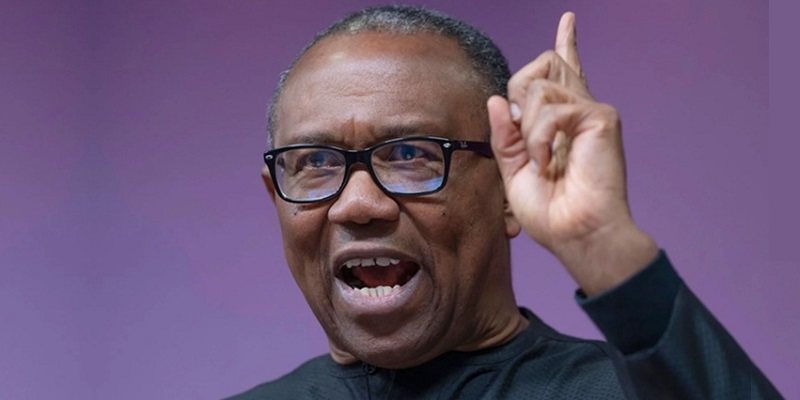

Former presidential candidate Peter Obi has strongly criticized President Bola Ahmed Tinubu for what he described as a lack of compassion and presence in the aftermath of the Palm Sunday attack in Plateau State.
Obi’s remarks, shared on social media, came after Tinubu’s visit to Jos.
The president, it could be recalled, had addressed stakeholders from the airport rather than visiting the affected communities.
Obi argued that such an approach reflects “a complete absence of leadership”.
He stressed that Nigerians expect empathy, visibility, and direct engagement from their leaders during moments of national tragedy.
“Leadership Without Compassion is Not Leadership,” Obi declared.
“For citizens who have just lost loved ones, homes, and their sense of safety, being addressed from an airport tarmac is profoundly inadequate,” he added.
A Pattern of Missed Engagements
Obi drew parallels between Tinubu’s Jos visit after Palm Sunday attack and his earlier trip to Benue State in June 2025.
During the visit, the president stopped at the Government House but did not go to the actual scene of violence.
According to Obi, these repeated choices highlight a troubling pattern of leadership that prioritizes optics over genuine connection with victims.
He emphasized that true leadership requires presence, empathy, and compassion.
He noted that Nigerians who have endured cycles of violence feel abandoned when leaders fail to meet them where their pain lies.
Obi said: “Plateau deserves more than distant words.
“It requires urgent action and a clear commitment to ending the insecurity that continues to claim innocent lives.”

The Palm Sunday Attack
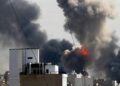
The Palm Sunday attack in Plateau State left dozens dead and many more displaced, reigniting concerns about Nigeria’s persistent insecurity.
Communities in Plateau have long been vulnerable to violent clashes, often involving armed groups targeting villages and religious gatherings.
The attack has intensified calls for stronger government action.
Citizens are demanding not only security measures but also visible solidarity from national leaders.
Obi’s criticism underscores the growing frustration among Nigerians who feel that their suffering is met with inadequate responses from those in power.
Palm Sunday Attacks: Calls for Compassionate Leadership
Obi’s statement went beyond criticism of Tinubu’s visit following the recent Palm Sunday attacks.
It offered a broader reflection on the qualities of leadership Nigeria needs.
He insisted that leadership must be both visible and tangible, standing with victims, listening to survivors, and acknowledging the depth of their grief.
He warned that addressing citizens from afar exacerbates feelings of abandonment and undermines trust in government.
For Obi, leadership is not merely about issuing statements but about demonstrating presence in the most difficult moments.
“In such moments, leadership must not only be visible but also tangible—standing with victims, listening to survivors, and acknowledging the depth of their grief,” he said.
Political and Social Implications
Obi’s remarks are likely to resonate with many Nigerians who have grown weary of repeated cycles of violence and what they perceive as inadequate government responses.
His critique also highlights the political stakes of insecurity, which remains one of the most pressing challenges facing Nigeria.
The Tinubu’s administration has pledged to strengthen security and rebuild trust among the citizenries.
However, critics argue that symbolic gestures without direct engagement risk alienating communities further.
Obi’s intervention adds pressure on the government to rethink its approach to crisis management and prioritize compassion alongside policy.
A Call for a “New Nigeria”
Obi concluded his statement with a rallying cry for a better Nigeria, insisting that leadership must be present, responsive, and responsible at all times.
He reiterated his vision of a “new Nigeria” built on empathy, accountability, and genuine connection between leaders and citizens.
“If we truly desire a better Nigeria, we must demand leadership that is present, responsive, and responsible at all times.
A new Nigeria is POssible,” Obi affirmed.
The Palm Sunday attacks has once again exposed the fragility of Nigeria’s security landscape and the urgent need for compassionate leadership.
Obi’s sharp criticism of Tinubu underscores the growing demand for leaders who do more than issue statements from afar.
As Plateau mourns its losses, the debate over what true leadership looks like in times of crisis is likely to intensify.
It will also shape both public sentiment and political discourse in the months ahead.