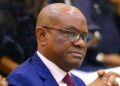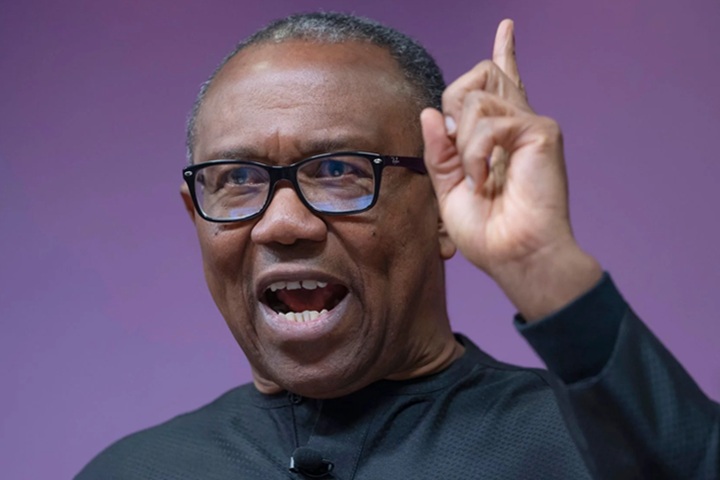
THIS DAWN — On December 31, 2025, former Governor of Anambra State and Labour Party presidential candidate in Nigeria’s 2023 election, H.E. Peter Obi, delivered a powerful address in Enugu titled “It is Now Time for National Unity and Prosperity.”

The speech marked the end of the year and a call to action as Nigeria approaches the 2027 general elections.
Obi’s remarks combined a critique of Nigeria’s current socio-political challenges with a vision for national unity, institutional reform, and inclusive prosperity.
He framed his speech around the urgency of Nigeria’s situation, describing the country as adrift, distressed, and plagued by poverty, corruption, insecurity, and disunity.
He argued that Nigeria’s crisis is not due to a lack of resources or potential.
Rather, he said, it is the failure of leadership and deliberate sabotage by a political class that thrives on division.
His central message was clear: Nigeria must unite under honest and competent leadership to achieve socio-economic transformation.
Peter Obi Parallels Electoral Integrity and Democratic Reform
A significant portion of Peter Obi’s address focused on electoral integrity.
He criticized the Independent National Electoral Commission (INEC) for weaknesses that contributed to Nigeria’s democratic crisis.
He demanded urgent reforms, including:
- strict adherence to electoral laws,
- credible transmission of results, and,
- enforcement of educational qualifications for candidates.
Obi warned that attempts to manipulate or rig the 2027 elections would be resisted by Nigerians through lawful means.
He, thus, emphasized that the will of the people is “sacrosanct and non-negotiable.”
Comparative Lessons from Other Nations
Obi drew extensively from his global engagements and studies to highlight how leadership and unity drive national transformation.
He referenced Rwanda’s remarkable recovery under President Paul Kagame, noting the rise in GDP per capita from $200 in 1995 to over $1,000 in 2025.
In contrast, Nigeria’s GDP per capita declined from $1,225 in 1995 to below $1,000 in 2025.
He also cited Indonesia’s success, with a GDP surpassing $1.4 trillion and per capita income of $5,300, compared to Nigeria’s $240 billion GDP.
These comparisons underscored his argument that Nigeria’s underdevelopment stems from poor leadership and disunity rather than lack of potential.
Obi mentioned influential works such as Growing Apart by Professor Peter Lewis, From Third World to the First by Lee Kuan Yew, and Why Nations Fail by Acemoglu and Robinson.
He stressed that Nigeria knows what to do to prosper but refuses to act.
His consultations with global leaders and scholars reinforced his conviction that unity and competent leadership are indispensable for transformation.
Critique of Fiscal Policy and Governance
Obi condemned Nigeria’s fiscal policies, particularly the controversial tax regime, which he described as exploitative and dishonest.
He criticized the government for taxing poverty and relying on forged tax laws, arguing that such practices undermine national unity and prosperity.
For Obi, taxation should be a social contract that enriches both the people and the state, not a tool for deepening poverty.
He further accused the ruling class of rewarding mediocrity, recycling failure, and perpetuating corruption.
According to him, Nigeria is not poor but “looted into poverty.
He said the average Nigerian is hardworking and resilient, but trapped in a system rigged against merit and competence.
Peter Obi Calls for National Unity
Peter Obi’s speech repeatedly emphasized unity as the foundation for Nigeria’s renewal.
He argued that dishonest and divisive leadership has fractured the nation.
However, with unity, Nigeria can overcome insecurity, unemployment, inflation, and corruption, he said.
He envisioned a Nigeria that shifts from consumption to production, with agriculture and manufacturing as key drivers of GDP growth.
Obi stressed that transformative leaders must be honest, transparent, and committed to telling the people the truth.
He echoed George Orwell’s view of governance as “the art of telling the people the truth.”
Political Declaration
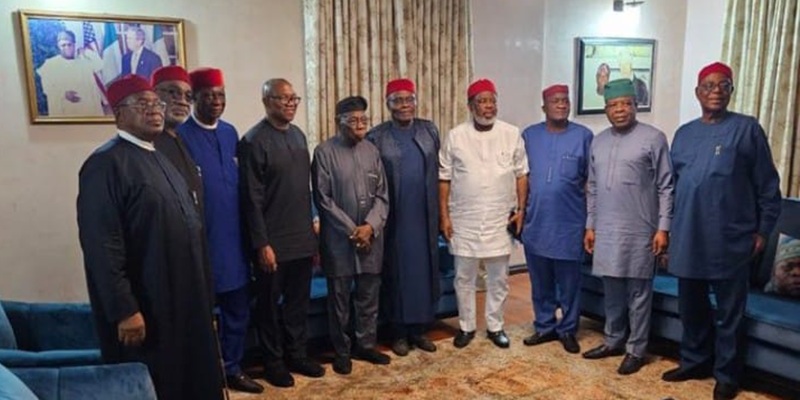
In a decisive political move, Obi announced his alignment with a broad national coalition under the African Democratic Congress (ADC), led by Senator David Mark.
He called on opposition leaders, the Obidient Movement, and patriotic Nigerians to unite under this coalition to rescue the country.
He rejected the ruling party’s attempts to create a one-party state and urged Nigerians to vote them out in 2027.
Obi declared that democracy offers the opportunity to reject failed leadership.
Peter Obi’s Enugu speech was both a lamentation of Nigeria’s current state and a rallying cry for unity, reform, and prosperity.
He combined personal experiences, global lessons, and scholarly insights, arguing that Nigeria’s tragedy is rooted in leadership failure and disunity.
His declaration to join a national coalition under the ADC signals a strategic political realignment aimed at building consensus across opposition parties.
Ultimately, Obi’s message was one of hope: that with courage, unity, and effective leadership, a new, inclusive, and productive Nigeria is possible.