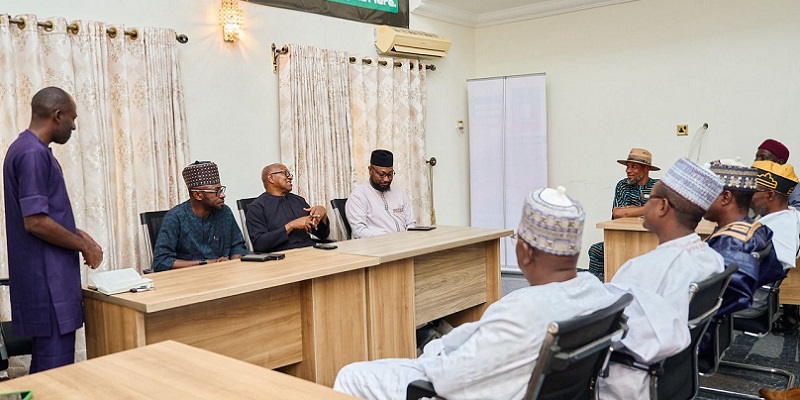
THIS DAWN — In a significant political development, 36 State Chairmen of the African Democratic Congress (ADC) convened a strategic meeting with Mr. Peter Obi at the Obidient Headquarters in Abuja yesterday.

The aim of the gathering was to deepen internal party cohesion and chart a forward-looking roadmap for national relevance ahead of the 2027 general elections.
The meeting, initiated by the ADC State Chairmen, served as a platform for:
- In-depth deliberations on pressing national and state-level development challenges, and,
- Drawing insights from grassroots realities across the Federation.
Discussions centered on repositioning the party as a formidable national political platform capable of offering credible alternatives to Nigeria’s current governance trajectory.
In his address, Mr. Obi emphasized the need for discipline, integrity, transparency, accountability, and people-oriented leadership.
These, he said, are the foundational values of the ADC.
ADC: “Issue-Based Politics”
Obi urged party leaders to embrace issue-based politics and reject ethnic and patronage-driven agendas.
He also consistently prioritized the welfare, dignity, and aspirations of Nigerians over personal or sectional interests.
“We must build a party that reflects the hopes of ordinary Nigerians—not one that mirrors the failures of the past,” Obi stated.
The State Chairmen, speaking collectively, reaffirmed their unwavering commitment to party unity, internal democracy, strategic collaboration, and ideological clarity.
They pledged to work together to build a strong, credible, and nationally acceptable political alternative that can effectively address Nigeria’s developmental challenges.

The Evolution of ADC
The meeting is seen as a key moment in the ADC’s evolution, especially following Obi’s recent alignment with the party and the formation of a broader opposition coalition.
Political observers note that the engagement signals growing momentum within the ADC ranks and a renewed focus on grassroots mobilization and national strategy.
The party is currently led by an interim national structure headed by David Mark as Chairperson and Rauf Aregbesola as Secretary.
The party is positioning itself as a unifying opposition platform ahead of the 2027 elections.
It has drawn in figures like Atiku Abubakar and Peter Obi to strengthen its national appeal.
Leadership Structure
- National Chairperson: Former Senate President David Mark assumed leadership in 2025 after Ralph Nwosu stepped down during coalition talks.
- National Secretary: Former Osun State Governor Rauf Aregbesola was appointed alongside Mark to provide organizational and strategic direction.
- Founder: The party was founded in 2005 by Ralph Nwosu, who served as National Chairman until 2025.
- Legislative Representation: The ADC currently has one member in the House of Representatives, Leke Abejide.
Abejide represents Yagba East/Yagba West/Mopa Moro constituency in Kogi State) and no senators.
- State-Level Leadership: The party maintains state chairmen across Nigeria’s 36 states.
These play a critical role in grassroots mobilization and coalition-building.

Evolving Role in Nigeria’s Opposition
- Coalition Building: In late 2025, Atiku Abubakar joined the ADC after leaving the PDP.
The move signaled the party’s ambition to consolidate Nigeria’s fragmented opposition.
- Strategic Repositioning: The ADC has branded itself as a “big tent” party.
This emphasizes inclusivity, transparency, and accountability, while rejecting domination by political “godfathers” and money-driven elites.
- Opposition Platform: With figures like Peter Obi aligning with the ADC, the party is positioning itself as a credible alternative to the ruling APC.
It focuses on issue-based politics and grassroots realities.
- 2027 Elections: The party tasked the interim leadership under Mark and Aregbesola with:
- Unifying diverse opposition voices,
- strengthening internal democracy, and,
- presenting the ADC as a nationally acceptable political alternative.
The ADC’s leadership transition to David Mark and Rauf Aregbesola marks a turning point in its evolution.
It has attracted heavyweight opposition figures, emphasizing grassroots-driven politics.
The party is working to reposition itself as a serious contender in Nigeria’s opposition landscape ahead of 2027.