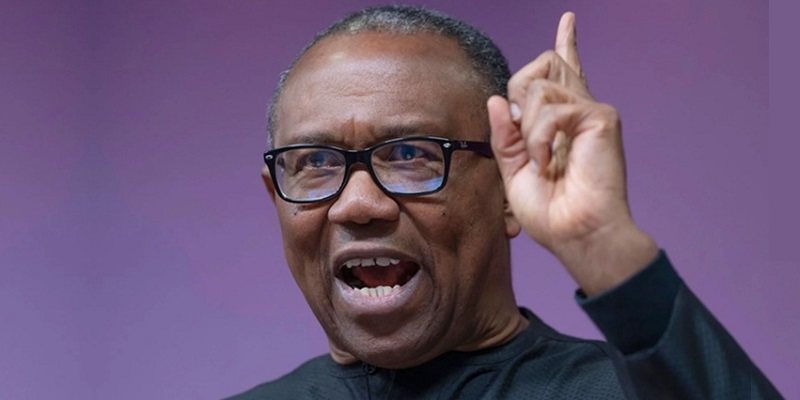
TDFormer presidential candidate, Mr. Peter Obi has strongly criticized recent legislative actions, describing them as a “troubling contradiction” that undermines Nigeria’s democratic integrity.

In a statement released on Friday, Obi condemned lawmakers for proposing a fine of ₦10 million and up to two years in prison for dual political party membership.
However, at the same time, the same lawmakers removed certificate forgery, age falsification, and false declarations as valid grounds for challenging an election in a tribunal.
Implications of Lowering Election Qualification Standards
Obi argued that this legislative shift runs contrary to the provisions of the 1999 Constitution (as amended), which emphasizes truth and accountability in public office.
He warned that prioritizing punishment for party alignment over sanctioning forgery and deception erodes the moral foundation of Nigeria’s democracy.
“Submitting false documents, falsifying one’s age, forging certificates, and making dishonest declarations to electoral authorities are among the most serious offenses in any democracy.
“Such actions not only lead to automatic disqualification but also warrant criminal prosecution,” Obi stated.
Obi Insists on Electoral Integrity
The former governor of Anambra State stressed that in advanced democracies, electoral integrity is non-negotiable.
He noted that leaders found guilty of falsification face immediate disqualification and legal consequences.
He lamented that Nigeria’s current system appears more concerned with protecting political structures than defending truth.
Obi further noted that laws should serve as instruments to strengthen democracy, not weaken it.
A Call to Action
He urged lawmakers to enact legislation that promotes ethical leadership, transparency, and accountability, rather than lowering standards for those seeking public office.
“A nation cannot rise above the integrity of its leaders,” Obi cautioned.
“If we truly want a better Nigeria, our laws must defend truth, character, competence, and accountability.
“We cannot continue to tolerate criminal behavior,” he emphasised.
Concluding his statement, Obi reiterated his vision for reform and renewal: “A New Nigeria is POssible.”
This intervention adds to ongoing debates about electoral reforms in Nigeria.
It highlights the tension between political expediency and democratic principles.
It is likely to spark further scrutiny of legislative priorities and intensify calls for reforms that safeguard electoral integrity.