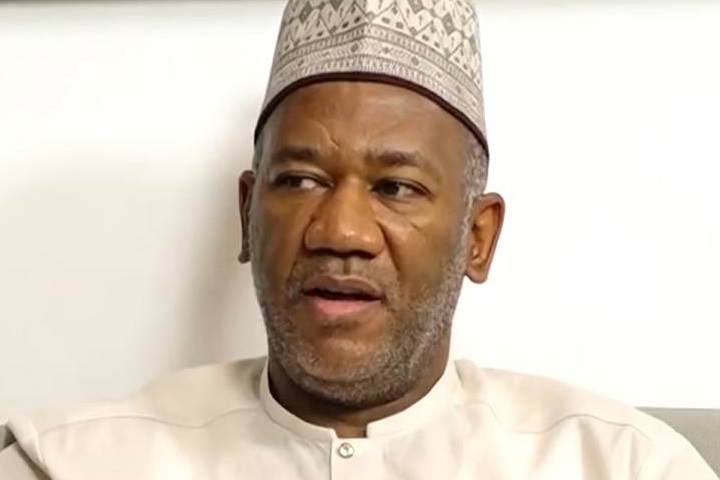
THIS DAWN — Yusuf Datti Baba-Ahmed’s recent remarks on Peter Obi’s purported defection from the Labour Party to the African Democratic Congress (ADC) offer more than a personal clarification.

They expose the deeper fault lines within Nigeria’s opposition politics as the country inches toward the 2027 general elections.
At the heart of the matter is a distinction Baba-Ahmed insists must not be glossed over: the difference between aligning with a coalition and formally defecting to a political party.
According to him, Peter Obi publicly declared support for a coalition but did not, at least in explicit terms, announce a defection to the ADC.
This distinction, while seemingly semantic, is politically and legally consequential in Nigeria’s electoral environment.
Rhetoric or Rally Appearances
In Nigerian politics, defection is not merely a matter of rhetoric or rally appearances. It is a procedural act governed by party constitutions and, indirectly, by electoral law.
Resignation letters, surrender of party membership cards, and official notifications are not bureaucratic trivialities.
They are the evidentiary foundation upon which candidacies, internal party disputes, and even court challenges are built.
Baba-Ahmed’s insistence on these formalities suggests a deliberate attempt to anchor the discussion in legality rather than emotion.
Yet the narrative is complicated by reports that Obi “officially joined” the ADC at a rally in Enugu in December 2025.
There he openly invited members of other opposition parties to see the ADC as a political family committed to rescuing Nigeria from misrule.
If this account is accurate, then Baba-Ahmed’s skepticism does not necessarily deny Obi’s political alignment with the ADC but rather questions whether the Labour Party exit process has been conclusively completed.
“Strategic Ambiguity”
The absence of clarity on this point is not accidental; it is a hallmark of strategic ambiguity.
Such ambiguity has precedent in Nigerian politics.
Political actors often keep multiple options alive, especially when party structures are unstable and coalition arrangements fluid.
By aligning publicly with the ADC-led coalition while leaving unresolved questions about his Labour Party status, Obi preserves room for maneuver.
Should the ADC coalition fracture… or should internal power dynamics deny him its presidential ticket, a procedural foothold in the Labour Party could prove invaluable.
Baba-Ahmed’s own positioning is equally strategic.
He refrained from following Obi into the ADC, emphasizing that he will support Obi in 2027 only if he returns to the Labour Party.
He, thus, signals continued loyalty to the LP as an institution rather than to any single political vehicle.
This is not defiance but hedging — a recognition that parties, not personalities alone, determine access to ballots, delegates, and legal standing.
Labour Party’s Struggle for Survival
Importantly, Baba-Ahmed takes pains to separate political divergence from personal animosity.
His repeated references to mutual respect and shared personal moments, including Obi’s attendance at a family wedding, serve a clear purpose: to neutralize any narrative of internal rupture or betrayal.
In a political culture prone to dramatizing disagreement, this restraint is notable.
What emerges from this episode is a portrait of an opposition still searching for structural coherence.
The Labour Party, weakened after its 2023 surge, is struggling to retain relevance in the face of broader coalition politics.
The ADC, for its part, appears less as an ideologically distinct party and more as a convenient platform for opposition convergence.
In such a landscape, procedural details become instruments of power, and ambiguity becomes a survival tactic.
Ultimately, Baba-Ahmed’s intervention underscores a central truth of Nigerian politics: clarity is often deferred until it becomes unavoidable.
Whether Peter Obi has defected in both form and substance may matter less in the short term than the fact that the question remains open.
As 2027 approaches, that ambiguity will either be resolved through formal declarations or exploited until the last possible moment.
Until then, the debate itself is a signal — not of confusion, but of calculation.
Ogbuefi Ndigbo, London