TDU.S. defense planners at the Pentagon are reportedly preparing contingency operations with Israel that could extend into the autumn, with Pentagon planning and force‑posture adjustments described as stretching “into September.”

Experts say these are precautionary steps rather than a formal declaration of war, but carry significant regional, political, and economic risks.
The risks, noted the experts, could reverberate far beyond the Middle East, including in energy‑dependent economies such as Nigeria.
What Did Pentagon Say?
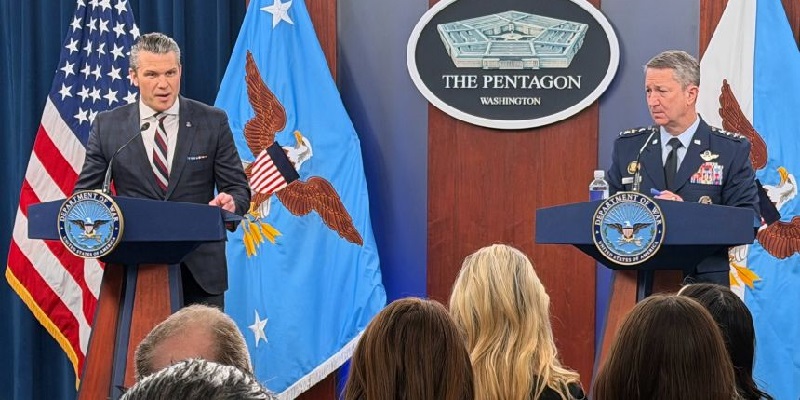
Media accounts and defense analysts suggest that the Pentagon has expanded intelligence and operational planning in response to escalating strikes between Israel and Iran.
U.S. Central Command has requested additional personnel and resources to sustain operations over a multi‑month horizon.
Some reports, however, frame these moves as contingency preparations designed to support allied operations.
These operations will deter further Iranian escalation, rather than act as authorization to commence sustained U.S. offensive operations.
Pentagon posture and activities
According to defense reporting, the U.S. has increased intelligence staffing, repositioned regional assets, and coordinated air‑defense and logistics planning with partners.
These are meant to ensure readiness for a protracted campaign if political leaders decide to escalate.
These measures include surge planning for analysts and planners, adjustments to force posture intended to sustain operations, and protective measures for U.S. forces and regional allies.
Such steps are consistent with standard contingency planning when conflict risks rise.
However, the scale and timeline being discussed—stretching into September—signal that Washington is bracing for the possibility of a drawn‑out confrontation.
Why planners are preparing for months
Analysts highlight Iran’s capacity to conduct sustained missile and drone strikes, as well as its ability to mobilize proxy forces across Iraq, Syria, Lebanon, and Yemen.
These capabilities complicate the prospect of a short, decisive campaign, analysts observe.
They maintain that sustained operations would require continuous intelligence collection, munitions resupply, and diplomatic coordination among allies.
The Pentagon’s modeling of scenarios that extend into the autumn reflects the recognition that Iran’s regional networks and asymmetric warfare tactics could prolong hostilities far beyond initial strikes.
Risks and likely consequences for the Pentagon
If Pentagon contingency planning evolves into active operations, the conflict could widen beyond direct strikes.
That may increase the risk of attacks on shipping lanes, regional bases, and partner forces.
A prolonged campaign would likely put upward pressure on global energy prices and disrupt trade routes, with knock‑on effects for import‑dependent economies such as Nigeria.
Humanitarian consequences could also be severe, with civilian casualties and displacement inside Iran and neighboring states.
Politically, a sustained campaign could dominate U.S. foreign policy debates, strain alliances, and complicate diplomatic efforts at the United Nations.
What to watch next
Official confirmation from the Pentagon, U.S. Central Command, and the Israeli government will be decisive in clarifying intent and scope.
Public statements regarding changes in force posture, announced deployments, and diplomatic initiatives at the UN and with regional partners.
This will provide insight into whether contingency planning is edging closer to active operations.
Independent analysis of Iranian responses and proxy activity will also be critical in gauging escalation dynamics.
Reports indicate credible U.S. contingency planning for a campaign that could extend into September, driven by operational realities and Iran’s capabilities.
These preparations are precautionary and subject to political decisions; they do not by themselves constitute a declaration of war.
The months ahead will reveal whether this remains a defensive posture or evolves into one of the most consequential conflicts in the region in recent years.