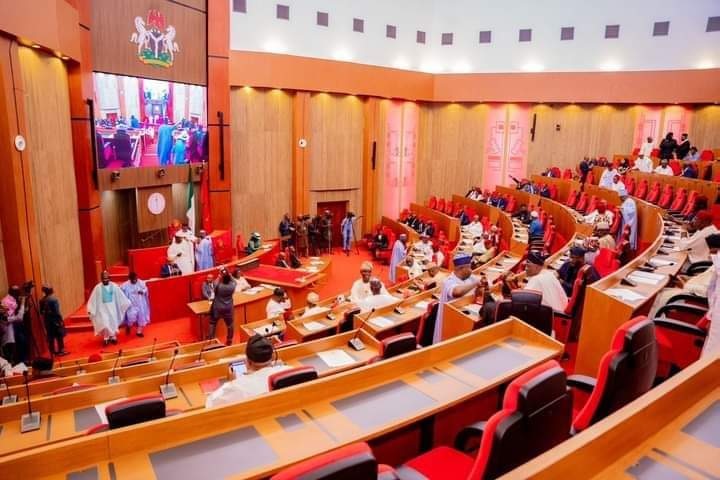
TDThe Peoples Democratic Party (PDP) has issued a strongly worded statement condemning the Nigerian Senate’s rejection of provisions mandating the electronic transmission of election results at polling units.

The party described the decision as “shameful, harmful to democratic consolidation, and a sad day for electoral democracy.”
The statement, signed by Comrade Ini Ememobong, National Publicity Secretary of the PDP, criticized the Senate for what it termed an intentional and protracted delay in passing amendments to the Electoral Act, only to ultimately block reforms that would have strengthened transparency and credibility in Nigeria’s elections.
PDP’s Position
According to the PDP, the rejection of electronic transmission undermines the sanctity of the ballot and disregards the wishes of Nigerians across all 109 senatorial districts who desire credible elections.
“We charge our lawmakers to remember that they are delegates of power invested in them by the voters in their various constituencies and must endeavour to mirror their desires and wishes at all times,” the statement read.
The party argued that electronic transmission of results would have eliminated the widespread practice of altering votes before they reach collation centers, a manipulation tactic that has plagued Nigeria’s electoral process for decades.
Electoral Integrity at Stake
The PDP emphasized that the Senate’s decision signals an unwillingness to legislate for electoral sanctity and democratic consolidation.
“This rejection is a clear indication that the National Assembly is not willing or ready to legislate for electoral sanctity and democratic consolidation.
“This is indeed a sad day for electoral democracy,” the party declared.
The statement warned that without reforms to strengthen transparency, voter apathy could worsen in the next general election, further eroding public trust in the democratic process.
Broader Context
Nigeria’s electoral system has long faced criticism over irregularities, manipulation, and lack of transparency in result collation.
Civil society organizations and democracy advocates have consistently called for reforms, including electronic transmission of results, to safeguard the integrity of elections.
The Independent National Electoral Commission (INEC) has previously piloted electronic transmission in select areas, with observers noting improvements in speed and credibility.
However, the Senate’s rejection of mandatory provisions has reignited fears that entrenched political interests are resisting reforms that would limit opportunities for manipulation.
PDP’s Call to Action
The PDP urged the National Assembly to immediately reconsider its position and pass the amendment approving electronic transmission of results.
The party described this as the minimum reform necessary to restore faith in the electoral process.
“This is the minimum amendment that can increase faith in the electoral process, without which the apathy will be worse than the last general election, which is greatly unhelpful to democracy,” the statement concluded.
Reactions and Implications
The Senate’s decision has already attracted condemnation from civil society groups, student organizations, and democracy advocates.
Many argue that rejecting electronic transmission is akin to rolling back progress in electoral reforms and undermines Nigeria’s credibility as Africa’s largest democracy.
Observers note that the divergence between the Senate and the House of Representatives—where lawmakers have supported more progressive reforms—sets the stage for a crucial debate in the Conference Committee, which will reconcile differences between both chambers.
The outcome of this legislative process will be pivotal in shaping the framework for the 2027 general elections, determining whether Nigeria moves toward greater transparency or continues to grapple with credibility crises.
The PDP’s condemnation of the Senate’s rejection of electronic transmission reflects growing frustration among Nigerians over perceived resistance to electoral reforms.
As the country prepares for another election cycle, the debate over transparency, accountability, and credibility in the electoral process is intensifying.
Whether the National Assembly reconsiders its position will determine not only the future of Nigeria’s democracy but also the confidence of millions of voters who demand that their ballots truly count.