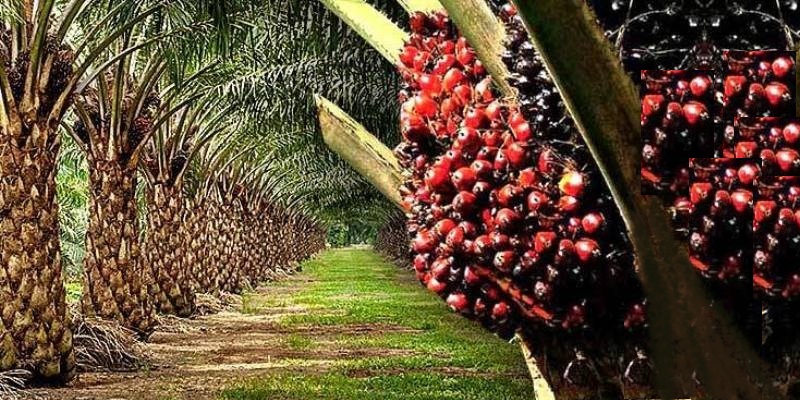
TDA Financial Engineer, Investment Banking Executive, and Development Economist, Mr. Nnaemeka Onyeka Obiaraeri, has reignited debate on Nigeria’s economic future, respecting palm oil, which he described as Nigeria’s untapped goldmine.
Obiaraeri argued that the country has been blinded by fossil fuel dependency and elite-driven corruption.
He insists that Nigeria ignored the foresight of Dr. Michael Iheonukara Okpara, who over six decades ago envisioned palm oil as a cornerstone of sustainable prosperity.
The Numbers Behind Palm Oil
According to Obiaraeri, a 15-million-hectare palm oil value chain could generate over $100 billion annually.
With global average yields, this scale would produce 54 million tons of crude palm oil (CPO).
Beyond CPO, palm kernel oil and downstream derivatives add significant value.
Local Opportunity for Farmers
Obiaraeri emphasizes that Nigerians don’t need to wait for government intervention:
- 10 hectares can yield ₦75 million annually from Fresh Fruit Bunch (FFB) sales.
- 100 hectares can generate ₦750 million annually from FFB alone.
- His initiative promises access to Wilmar super Tenera palm trees and expert agronomists to guide plantation management.

Policy and Governance Angle
Obiaraeri calls on Governors and LGA Chairmen in Nigeria’s four palm belt regions to act decisively under the MCDPPP framework.
He warns that deliberate violations of planning and resource allocation have stalled Nigeria’s agricultural transformation.
He laments that many developers and elites exploit loopholes, undermining long-term growth.
Dr. Michael Okpara, Premier of Eastern Nigeria in the 1960s, he recalled, championed palm oil as a strategic export and industrial raw material.
Obiaraeri argued that Nigeria’s fixation on crude oil sidelined this vision, costing the nation decades of potential wealth and food security.
Call to Action
Obiaraeri’s message is clear: “We don’t need to wait for any government. Set up your own plantation.”
He insists that private initiative, backed by technical expertise, can unlock Nigeria’s agricultural wealth and reduce dependence on fossil fuels.
Nigeria stands at a crossroads.
With palm oil offering a multi-billion-dollar opportunity, the choice is between continuing fossil fuel dependency or embracing a diversified, agriculture-driven economy.
Obiaraeri’s rallying cry is both a reminder of Okpara’s vision and a challenge to today’s leaders and citizens alike.
The focus is strongly on Nigeria’s palm oil industry, its untapped potential, and strategies for scaling plantations.

Major Global Palm Products Exporters and Earnings
Indonesia and Malaysia dominate global palm oil exports, earning billions annually.
while smaller exporters like Peru, the Philippines, and Ghana contribute modestly.
In 2025, Indonesia alone captured over half of the global market with more than USD 3.36 billion in exports.
Top Global Palm Oil Exporters (2025)
| Rank | Country | Export Earnings (H1 2025) | Market Share | Notes | |
|---|---|---|---|---|---|
| 1 | Indonesia | USD 3.36 billion | 54.66% | Largest producer/exporter; strong dominance in Asia-Pacific. | |
| 2 | Malaysia | USD 1.77 billion | ~28% | Second-largest exporter; key supplier to China, India, EU. | |
| 3 | Peru | USD 50 million | Small share | Emerging exporter in South America. | |
| 4 | Philippines | ~USD 40 million | Small share | Limited but growing exports. | |
| 5 | Ghana | USD 40 million | Small share | West Africa’s contribution to global supply. |
Global Market Context
Total global palm oil exports (2024): USD 41.4 billion.
This was slightly down from USD 44.1 billion in 2023, but still reflects robust demand in food, cosmetics, and biofuels.
Indonesia and Malaysia together accounted for over 81% of global exports in 2024, showing how concentrated the industry is.
Asia-Pacific remains the dominant region, with three of the top five exporters located there.
Key Insights
- Indonesia’s dominance: Its vast plantations and efficient production make it the undisputed leader.
- Malaysia’s role: Though smaller than Indonesia, Malaysia remains critical, especially for supplying refined palm oil to global markets.
- Emerging players: Countries like Peru, Ghana, and the Philippines are diversifying exports but remain marginal compared to Asia’s giants.
- Market trends: Compliance-driven trade (e.g., EU deforestation regulations) is reshaping exports, with traceability becoming as important as volume.
Ghana’s presence shows West Africa can compete globally, though scale is still limited.
Nigeria has the potential to join this list if it expands plantations and modernizes production.
Would you like me to prepare a Nigeria-focused comparative analysis showing how it could rival Ghana and Peru in exports?
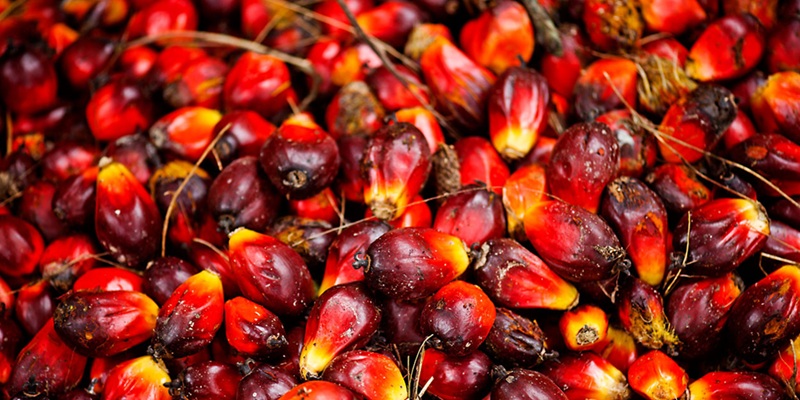
Nigeria’s Palm Oil Industry
Nigeria’s palm oil industry is valued at over USD 3 billion in 2025, but it lags far behind global leaders Indonesia and Malaysia.
These together control more than 80% of exports.
Nigeria currently produces about 1.5 million metric tons annually, leaving a supply gap of 450,000 MT.
Yet rising demand and biofuel trends position it for renewed export potential.
Global Palm Oil Export Leaders (2025)
| Rank | Country | Export Earnings (2025 est.) | Market Share | Notes |
|---|---|---|---|---|
| 1 | Indonesia | USD 3.36 billion+ | ~55% | Largest exporter; strong Asia-Pacific dominance. |
| 2 | Malaysia | USD 1.77 billion+ | ~28% | Second-largest; key supplier to China, India, EU. |
| 3 | Thailand | ~USD 500 million | ~5% | Growing regional player. |
| 4 | Colombia | ~USD 300 million | ~3% | South America’s main contributor. |
| 5 | Nigeria (potential) | USD 105 million (profits, not exports) | Industry forecast shows profitability growth but exports remain limited. |
Nigeria’s Position
- Historic dominance: In the 1960s–70s, Nigeria supplied 40% of global palm oil exports.
- Current production: ~1.5 million MT in 2024, while consumption hit 2.0 million MT, leaving a 450,000 MT deficit.
- Profitability: Leading firms (Presco Plc, Okomu Oil Palm Plc) projected USD 105M after-tax profit in 2025, driven by rising global crude palm oil prices.
- Constraints: Low mechanisation, fragmented land ownership, poor infrastructure, and limited access to finance hinder scaling.
-
Key Insights
Indonesia & Malaysia dominate exports, but both are diverting more palm oil into biofuels, tightening global supply and raising prices.

Nigeria has strong domestic demand but limited export presence; bridging the supply gap is the first step before re-entering global markets.
West Africa’s potential: Ghana and Nigeria could expand exports if they modernize plantations and improve yields.
Opportunity for Nigeria: With investment in mechanisation, improved seedlings, and rural infrastructure, Nigeria could rival mid-tier exporters like Colombia and Thailand within a decade.
Nigeria could reclaim its former global share through the following strategic roadmap (policy + private investment steps).
The roadmap outlines how Nigeria could move from USD 105 million profits today to multi-billion-dollar exports within 10–15 years.


Strategic Roadmap for Nigeria’s Palm Oil Export Growth
1. Policy & Governance
- Land reforms: Consolidate fragmented smallholder plots into larger, mechanized plantations.
- Export incentives: Tax breaks for palm oil exporters, subsidies for seedlings and fertilizers.
- Trade diplomacy: Negotiate favorable palm oil trade agreements with EU, China, and India.
2. Private Sector Investment
- Mechanisation drive: Encourage adoption of modern milling and refining technologies.
- Agro-industrial clusters: Develop palm oil processing hubs near plantations to reduce logistics costs.
- Public-private partnerships (PPP): Collaborate with firms like Presco Plc and Okomu Oil to scale production.
3. Infrastructure Development
- Transport networks: Improve rural roads and rail links to ports for export efficiency.
- Energy access: Expand renewable energy (solar, biomass) for mills and refineries.
- Storage facilities: Build modern silos and cold storage to reduce post-harvest losses.
4. Research & Innovation
- High-yield seedlings: Invest in R&D for disease-resistant, fast-maturing palm varieties.
- Sustainability certification: Align with RSPO (Roundtable on Sustainable Palm Oil) standards to access EU markets.
- Biofuel integration: Position palm oil as a feedstock for Nigeria’s renewable energy strategy.
5. Regional & Global Positioning
- West African hub: Lead ECOWAS in palm oil exports, leveraging regional trade agreements.
- Benchmarking: Replicate Indonesia’s and Malaysia’s plantation models, but tailor them to Nigeria’s climate and land tenure system.
- Target markets: Focus on Asia (China, India) and Africa (Egypt, South Africa) as primary buyers.
Growth Projection
- Short-term (2026–2030): Close domestic supply gap (450,000 MT), achieve self-sufficiency.
- Medium-term (2030–2035): Export surplus of 1–2 million MT annually, earning USD 2–3 billion.
- Long-term (2035–2040): Compete with Colombia and Thailand, aiming for USD 5–7 billion exports, reclaiming Nigeria’s historic role as a top 5 global exporter.