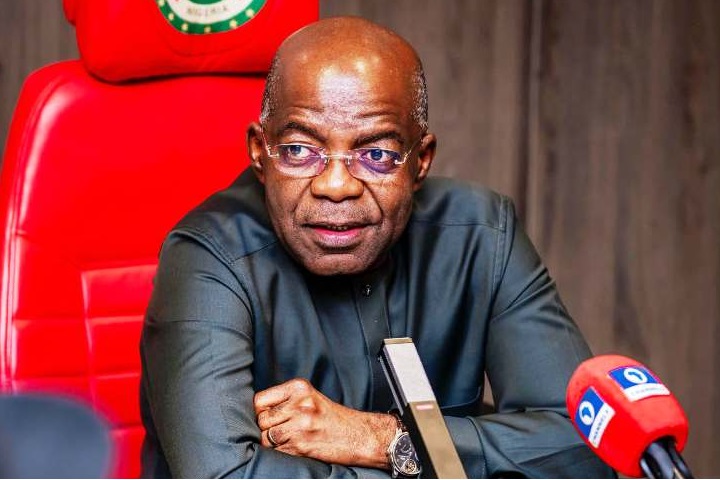
THIS DAWN — In a significant political development, Abia State Governor Alex Otti has publicly declared that he will not follow Peter Obi, the Labour Party’s 2023 presidential candidate, in defecting to the African Democratic Congress (ADC). Otti made the announcement during his monthly media briefing in Umuahia, the Abia State capital, on December 30, 2025, amid growing speculation about his political future following Obi’s exit.

Otti’s decision marks a pivotal moment for the Labour Party (LP), which has faced internal challenges and defections since the 2023 general elections. As the party’s only sitting governor, Otti’s stance is seen as a stabilizing force and a commitment to rebuilding the LP from within.
Obi’s Exit and Otti’s Response
Peter Obi, who led the LP’s presidential campaign in 2023, formally defected to the ADC on December 30, citing strategic realignment and broader coalition-building goals. According to Otti, Obi personally informed him of his intention to leave the party, and Otti responded with understanding and support.
“He has communicated to me that he is leaving the Labour Party. I gave him my blessings,” Otti said. “But I will remain in the Labour Party, and I told him that I would continue the struggle to rescue the Labour Party.”
Otti emphasized that his political journey with the LP began before Obi’s entry, clarifying that he did not join the party because of Obi. This distinction underscores his independent commitment to the LP’s ideals and his belief in its potential as a viable political platform.
Loyalty to the Party That Brought Him to Power
Governor Otti reiterated that the Labour Party was the platform that enabled his electoral victory in 2023, and he remains loyal to it. He described the party as a vehicle for change and reform, particularly in states like Abia where governance had long been plagued by inefficiency and corruption.
“Labour Party brought me to power. I’m not defecting,” Otti declared. “I believe in the values we campaigned on—transparency, accountability, and service to the people.”
His remarks signal a desire to strengthen the party from within, even as other prominent figures exit. Otti’s continued presence in the LP provides a measure of continuity and credibility for the party’s grassroots supporters.
Implications for Labour Party
Otti’s decision to stay is a critical lifeline for the Labour Party, which has struggled to maintain cohesion following the 2023 elections. With Obi’s departure, the LP risks losing national visibility and momentum. However, Otti’s governorship offers the party a chance to demonstrate effective leadership and governance at the state level.
Political analysts suggest that Otti could become the new face of the LP, especially if he succeeds in delivering reforms and development in Abia State. His refusal to defect may also inspire other members to recommit to the party’s rebuilding efforts.
ADC’s Position and Future Outlook
Obi’s move to the ADC is part of a broader strategy to form a coalition capable of challenging the dominance of the All Progressives Congress (APC) and the Peoples Democratic Party (PDP). While the ADC has welcomed Obi’s entry, the absence of Otti and other LP governors may limit its immediate reach.
Observers note that the ADC will need to build strong alliances and expand its grassroots base to capitalize on Obi’s popularity. Meanwhile, the LP must navigate its internal restructuring and prepare for future elections with Otti as its most prominent figure.
Governor Alex Otti’s decision to remain in the Labour Party, despite Peter Obi’s defection to the ADC, underscores his commitment to the party’s principles and his role in its future. As the LP’s only sitting governor, Otti’s loyalty offers hope for the party’s survival and transformation. His leadership in Abia State will be closely watched as a test case for the LP’s governance model and political relevance.
With Nigeria’s political terrain shifting rapidly ahead of the 2027 elections, Otti’s stance may prove pivotal in shaping the opposition landscape and redefining the Labour Party’s identity in the post-Obi era.