TDThe Nigerian Bar Association (NBA) has issued a stern rebuke of activist Omoyele Sowore following what it described as a breach of courtroom decorum at the Federal High Court, Abuja, on March 24, 2026.

This was contained in a statement signed by NBA President, Mazi Afam Osigwe, SAN.
Osigwe stressed that courtrooms are not arenas for political performance or media spectacle, but sanctuaries for the solemn administration of justice.
He underscored that openness of court proceedings is a hallmark of constitutional democracy.
However, such openness carries with it a duty of restraint, discipline, and respect for judicial authority.
Incident at the Federal High Court
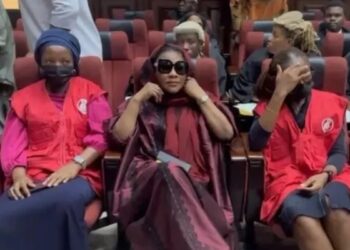
According to the NBA’s account, Sowore entered the courtroom accompanied by several individuals carrying camera phones and recording equipment.
He reportedly positioned himself within the inner bar, sat on a table, and began addressing cameras on what he termed “a range of national issues.”
His aides were seen fanning him and adjusting his appearance, creating what observers described as a broadcast-like setting.
Crucially, Sowore’s case was not listed for hearing on that day, and he was not accompanied by any legal practitioner.
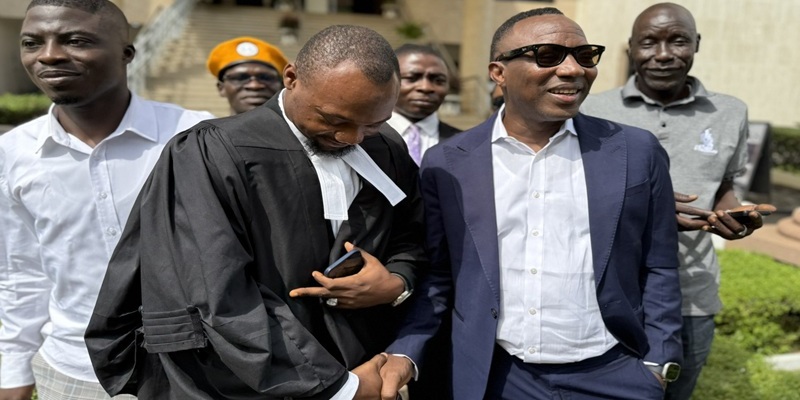
The unusual conduct sparked tension in the courtroom, culminating in a confrontation with Musibau Adetunbi, SAN.
Adetunbi objected to the disruption and insisted on preserving the solemnity of proceedings.
NBA’s Position
The Association condemned the incident as an affront to the rule of law and a violation of courtroom decorum.
Osigwe declared:
“Courtrooms are solemn spaces dedicated to the administration of justice.
“Any conduct that undermines the dignity of the court, intimidates legal practitioners, or disrupts proceedings constitutes a grave affront to the rule of law.”
The NBA expressed solidarity with Adetunbi and other lawyers who resisted the disruption.
It emphasized that the dignity of the court must be protected against acts of intimidation or disorder.
Broader Implications
The NBA’s statement reflects wider concerns about the growing trend of politicizing judicial spaces.
Legal analysts note that while public figures often seek visibility, the courtroom is not a platform for advocacy theatrics.
The Association’s intervention signals its determination to safeguard the sanctity of judicial proceedings and defend the integrity of the legal profession.
The NBA urged court authorities to enforce stricter measures ensuring that courtrooms remain protected spaces for adjudication, free from activities that could compromise order or intimidate practitioners.
Reaffirming its commitment, the Association concluded:
“The courtroom must remain a place of order, respect, disciplined advocacy, and responsible public access — not spectacle, confrontation, or disorder.”
This statement by the NBA not only censures Sowore’s conduct but also serves as a reminder of the delicate balance between transparency in judicial proceedings and the discipline required to uphold the dignity of the courts.
Odinkalu Disagrees with Osigwe
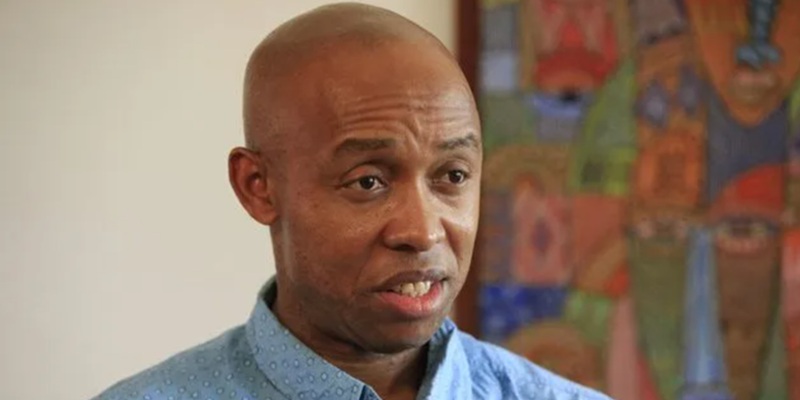
A former Chairman of the Nigeria’s National Human Rights Commission (NHRC), Prof. Chidi Anselm Odinkalu, however, disagrees with Osigwe.
Prof. Chidi saw the Sowore courtroom altercation as a lesson in democracy.
Taking to his X (formerly twitter) handle, Odinkalu quipped:
“I like the fact that Sowore is providing basic schooling to people who should know better.”
Where Osigwe saw disruption, Odinkalu sees pedagogy.
His point is that Sowore’s theatrics, however unconventional, are forcing the legal establishment and the public to confront uncomfortable questions:
- Who owns the courtroom space?
- Is it merely a cloistered sanctuary for lawyers and judges, or,
- Is it also a democratic arena where citizens can challenge authority and demand visibility?
- NBA’s View: The courtroom is sacred, insulated from spectacle, and must remain a disciplined space for adjudication.
- Odinkalu’s View: Sowore’s intrusion is a civic lesson — exposing how rigidly the establishment polices access and reminds that openness in democracy is not just procedural but participatory.
Highlights
This clash highlights a deeper tension in Nigerian democracy: Institutional Discipline vs. Activist Pedagogy.
The NBA insists on decorum to preserve judicial dignity.
Odinkalu suggests that dignity without openness risks becoming authoritarian ritual.
The real debate is whether Sowore’s act was a reckless breach or a necessary provocation.
If it was disorder, then the NBA is right to condemn it.
If, however, it was democratic intervention, then Odinkalu is right.
Odinkalu maintained that Sowore is “schooling” the system by dramatizing the gap between constitutional ideals and lived reality.
In conclusion, Odinkalu’s comment reminds observers that democracy is not tidy.
Sometimes, its lessons arrive in disruptive form, challenging institutions to prove they are not just open in theory but resilient in practice.