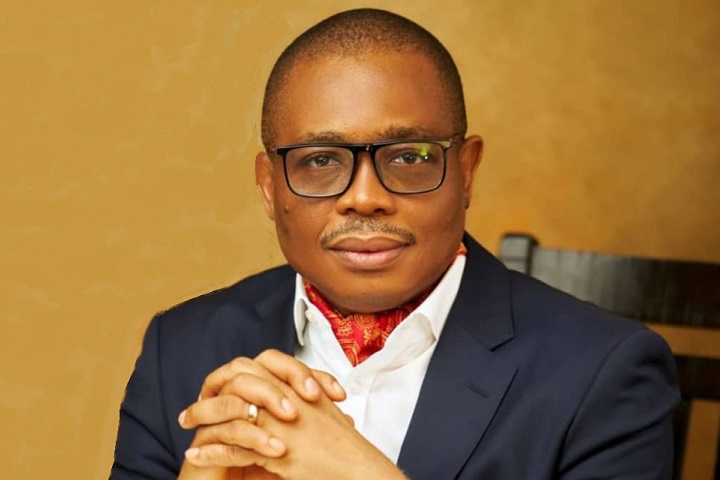
THIS DAWN — The Nigerian Bar Association (NBA), led by its President, Mazi Afam Osigwe, SAN, has raised alarm over what it describes as grave concerns about the integrity, transparency, and credibility of the country’s lawmaking procedures.

Nigeria’s legislative process came under intense scrutiny following controversies surrounding the recently enacted Tax Reform Acts.
At the heart of the controversy is the manner in which the Tax Reform Acts were passed.
Legal experts, civil society groups, and business stakeholders have questioned whether due process was followed.
Others allege irregularities in the legislative procedures that culminated in the enactment of the laws.
The NBA insists that these developments strike at the very foundation of constitutional governance.
The association, thereby, cast doubt on the sanctity of Nigeria’s democratic institutions.
Osigwe Calls for Investigation
In a strongly worded statement, the NBA emphasized that the controversies cannot be ignored.
“It is imperative that a comprehensive, open, and transparent investigation be conducted to clarify the circumstances surrounding the enactment of the laws and to restore public confidence in the legislative process,” Osigwe declared.
The association further urged the executive to suspend all plans for the implementation of the Tax Reform Acts until they fully examine and resolve the issues.
According to the NBA, proceeding with implementation under such a cloud of uncertainty would undermine public trust.
It will also risk destabilizing Nigeria’s fragile economic environment.
Analysts warn that the uncertainty generated by the controversy could have far-reaching consequences.
Legal and policy unpredictability, they argue, unsettles the business environment and erodes investor confidence.
It also creates confusion for individuals, businesses, and institutions required to comply with the law.
Nigeria, already grappling with economic challenges ranging from inflation to foreign exchange instability, can ill afford additional uncertainty.
“Such unpredictability is inimical to economic stability and should have no place in a system governed by the rule of law,” Osigwe noted.
Business leaders have echoed similar concerns, stressing that clarity and consistency in tax policy are essential for investment planning.
Without confidence in the legislative process, both local and foreign investors may hesitate to commit resources, further weakening Nigeria’s economic prospects.
Constitutional Concerns
Beyond the economic implications, the controversy raises fundamental constitutional questions.
Nigeria’s democracy demands that laws emerge from processes that are transparent, accountable, and beyond reproach.
This is especially so with those with profound economic and social consequences,
Anything short of this, the NBA argues, undermines public trust and weakens the very foundation upon which lawful governance rests.
Observers point out that the controversy is not merely about taxation but about the credibility of Nigeria’s democratic institutions.
If the legislative process is perceived as compromised, it could erode citizens’ faith in governance and fuel broader disillusionment with the political system.Their
The NBA called on all relevant authorities, including the National Assembly and executive agencies, to act swiftly and responsibly in addressing the controversy.
The association insisted that the overriding interest must be the preservation of constitutional order, economic stability, and the rule of law.
Civil society organizations have also joined the call, urging transparency and accountability in the handling of the matter.
Some suggested independent panels or judicial inquiries to unravel the circumstances surrounding the passage of the Tax Reform Acts.
Osigwe Looks Ahead
As Nigeria awaits clarity, the controversy underscores the delicate balance between governance, lawmaking, and economic stability.
The coming months will be critical.
They determine whether the Tax Reform Acts controversy marks a temporary setback or a deeper crisis in Nigeria’s democratic process.
For now, the spotlight remains firmly on the National Assembly and the executive branch.
Their actions will either restore confidence or deepen public skepticism.
The NBA’s intervention, led by Afam Osigwe, SAN, has amplified the urgency of the matter.
It reminded Nigerians that democracy thrives only when laws are made in a manner that is transparent, accountable, and beyond reproach.
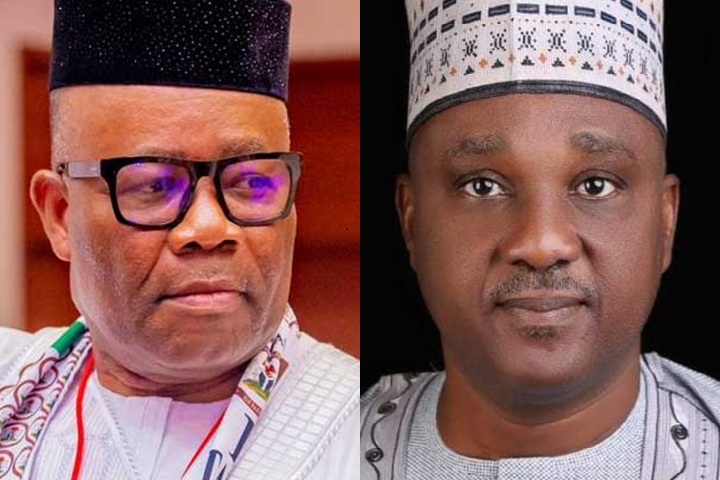
Watch Hon. Dasuki’s Tax Law revelation that resulted in constitutional earthquake below: