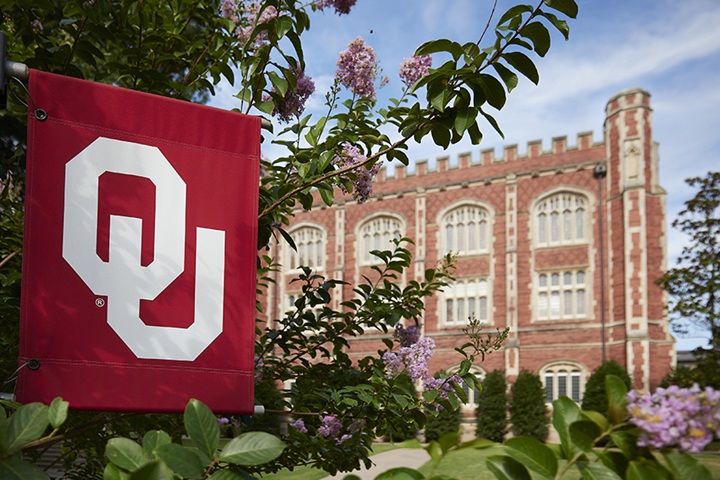
THIS DAWN — The University of Oklahoma (OU), United States, has announced that a graduate instructor who failed a student for citing the Bible in an essay will no longer be teaching at the institution.

The decision follows weeks of heated debate, national media coverage, and student protests.
The activities thrust the university into the center of a broader conversation about academic freedom, religious expression, and campus culture.
The Incident
The controversy began when Samantha Fulnecky, a junior psychology student, submitted an essay on gender roles in society.
In her paper, she argued that traditional gender roles were not stereotypes.
She noted that eliminating them would be detrimental because it would move people “farther from God’s original plan for humans.”
Fulnecky cited the Bible to support her position.
Her graduate instructor, whose name has not been officially released by the university, gave her zero out of 25 points.
He stated that the essay lacked empirical evidence and contained offensive material.
The grade sparked immediate backlash, with Fulnecky filing a religious discrimination complaint and a formal grade appeal.

Oklahoma University’s Response
In early December, OU ruled in Fulnecky’s favor on the grade appeal, deciding that the essay would not count toward her final grade.
On December 22, the university confirmed that the graduate instructor would no longer be teaching at OU.
OU officials emphasized that they made the decision to uphold fairness and maintain confidence in the institution’s commitment to both academic standards and student rights.
“We take seriously our responsibility to ensure that students are treated with respect and that their academic work is evaluated fairly,” a university spokesperson said.
National Attention and Student Protests
The case quickly gained national attention, with millions of comments on social media platforms and coverage by major outlets.
Student-led protests erupted on campus, with demonstrators carrying placards demanding religious freedom and academic fairness.
Some students argued that the instructor’s actions reflected bias against religious perspectives.
Others, however, defended the importance of empirical evidence in academic writing.
The protests highlighted the tension between maintaining rigorous academic standards and respecting diverse viewpoints in higher education.
The incident comes amid a wider debate in the United States over academic freedom and campus culture.
This is particularly so regarding how universities handle issues of religion, gender, and diversity.
Critics of OU’s initial handling of the case accused the institution of failing to protect religious expression.
Meanwhile, supporters of the instructor argued that scholarly evidence must augment academic work, rather than religious texts.
The controversy also coincides with national political debates over diversity, equity, and inclusion (DEI) initiatives.
Some commentators frame the case as part of a larger struggle over how universities address sensitive social issues.
Implications for University of Oklahoma
By removing the graduate instructor from teaching duties, OU has sought to restore confidence among students and parents.
However, the case has left lingering questions about how the university will balance academic rigor with respect for religious perspectives in the future.
Legal experts note that universities have the right to enforce academic standards.
However, they must also ensure that students are not penalized for expressing sincerely held beliefs, provided those beliefs are presented respectfully and within the scope of assignments.
The University of Oklahoma’s decision to remove the graduate instructor marks a significant development in a controversy that has sparked national debate.
For Samantha Fulnecky, the ruling represents vindication after weeks of uncertainty.
For OU, it is a reminder of the delicate balance institutions must strike between academic freedom, religious expression, and student rights.
As the dust settles, the case is likely to remain a reference point in discussions about higher education, fairness, and the role of personal beliefs in academic settings.