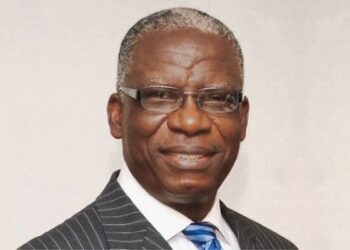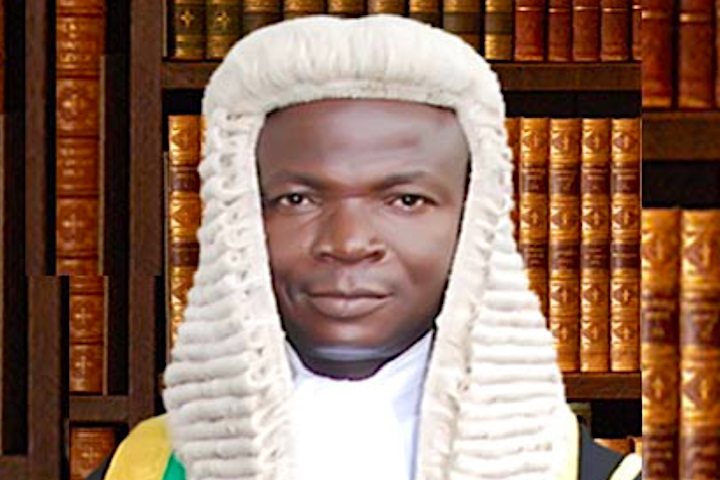
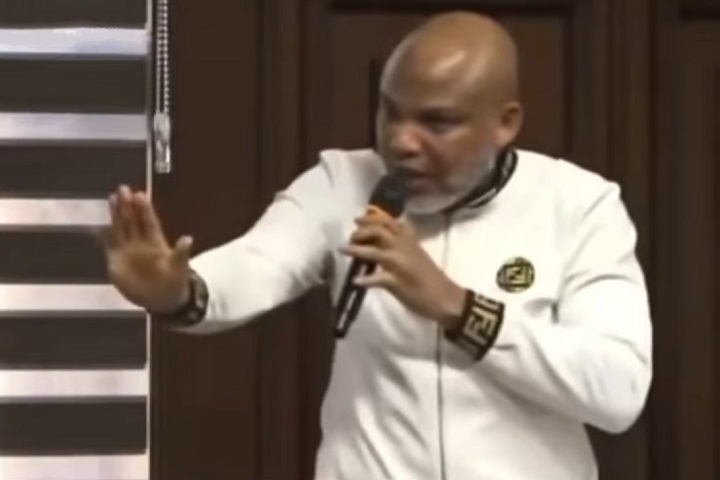
THIS DAWN — A former federal commissioner of the Public Complaints Commission (PCC), Chief Obunike Ohaegbu, has berated Judge James Omotosho of the Federal High Court, Abuja, for failure to cite the convicted leader of the Indigenous People of Biafra (IPOB), Mazi Nnamdi Kanu, for contempt.

Chief Ohaegbu made the remarks in a strongly worded statement issued on Monday and made available to THIS DAWN.
Ohaegbu raised alarm over what he described as a “grave judicial lapse” in the handling of proceedings involving the convicted IPOB leader.
The former PCC Ombudsman berated Judge Omotosho over his failure of to cite Kanu for contempt—despite what he terms open, repeated and deliberate misconduct.
According to him, it poses a significant threat to the integrity of Nigeria’s judicial system.
Ohaegbu stresses that a courtroom is not just a legal arena, but a “temple of justice” governed by rules of discipline, decorum, and respect.
Judges, he argues, are constitutionally obligated to enforce order and preserve the dignity of proceedings.
Legal precedents
Citing extensive legal provisions, Ohaegbu notes that Nigerian judges possess broad authority to punish contempt committed directly in their presence.
He explains that under Nigerian law—including inherent judicial powers under Section 6(6)(a) of the 1999 Constitution—courts are empowered to maintain decorum, punish disruptive behaviour, and enforce obedience to their directives.
Supreme Court precedents such as R v. Adebanjo (1935) and Ibrahim v. State (2014), he recalls, clearly affirm a judge’s power to summarily punish contempt committed in facie curiae.
Given these established legal standards, Ohaegbu argues that Justice Omotosho had both the constitutional mandate and moral responsibility to sanction Kanu immediately when his conduct became disruptive.
A Dangerous Precedent
The statement warns that by failing to exercise these powers, Justice Omotosho set a very bad precedent.
He noted that such precedent could embolden disorderly behaviour in future court proceedings—particularly by high-profile defendants with strong political followings.
According to Ohaegbu, such inaction risks reducing Nigerian courtrooms to “theatres for theatrics, intimidation, and mob psychology.”
He expressed concern that youths observing these proceedings may internalise the wrong lesson.
They may conclude that disrupting the court or openly defying a judge is permissible if one enjoys public sympathy or political weight.
“This is how nations lose respect for their judiciary,” he warns.

Call for NJC Investigation
Ohaegbu urges the National Judicial Council (NJC) to launch an inquiry into the episode, as the constitutionally empowered body overseeing judicial discipline and integrity.
NJC, he argues, must investigate why a superior court judge failed to enforce well-established standards of courtroom conduct.
He insists that the NJC must ask critical questions:
- Why were constitutional powers not exercised?
- Why was open defiance tolerated?
- What message does this send to Nigerians and the international community?
A judge’s first loyalty, he asserts, is to the judicial institution—not to political sensitivities or public sentiment.
Consequences for Nigerian Society
The wider implication, according to the statement, is the gradual erosion of societal respect for law and order.
If a high-profile defendant can flout courtroom rules without consequence, Ohaegbu argues, ordinary citizens may begin to see judicial authority as optional.
In such an environment, he warns, “society begins to descend into lawlessness.”
Ohaegbu concludes that Omotosho’s failure to sanction Kanu’s visible misconduct represents a serious dereliction of judicial duty.
The former Ombudsman calls for firm corrective action to safeguard the dignity of the courts.
He insisted that Nigeria’s judicial system must never be allowed to become a stage for political drama.
“A nation where courts are not respected is a nation inching toward anarchy,” he concluded.