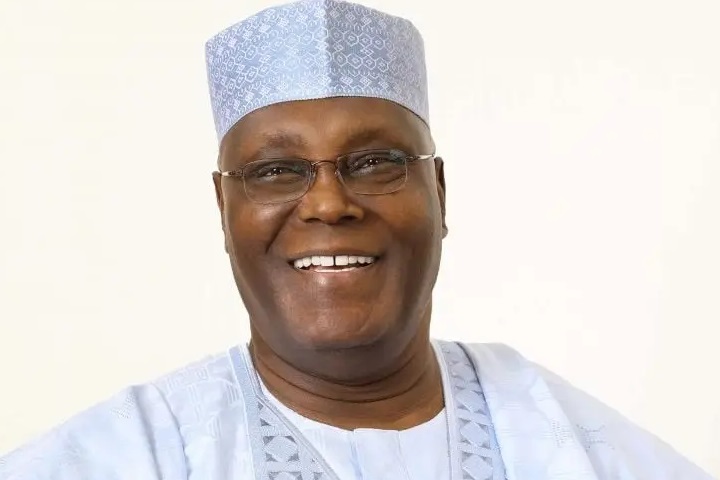
A former Public Complaints Commission (PCC) commissioner and public affairs commentator, Chief Obunike Ohaegbu has pledged unflinching support for former Vice President Atiku Abubakar.

In an essay titled “The Atiku Abubakar I Support”, Ohaegbu outlines his reasons for backing the Waziri Adamawa, citing Abubakar’s record in education, business, and politics, and addressing perceptions of his relationship with Ndi Igbo.
Concerns Over Igbo Perceptions
Ohaegbu expressed concern over what he described as a mindset among some Igbo groups that views Atiku as being in competition with Ndi Igbo.
He argued that such perceptions are misplaced, noting that Atiku’s values and worldview align closely with those of the Igbo people, differing only by parentage.
Early Life and Education
Atiku Abubakar was born on 25 November 1946 in Jada, Adamawa Province, to Garba Abubakar, a trader and farmer, and Aisha Kande.
Despite his father’s opposition to Western education—a stance that led to Garba’s arrest under colonial laws—Atiku pursued schooling with determination.
He attended Jada Primary School, Adamawa Provincial Secondary School, and later the Nigeria Police College, Kaduna.
His leadership qualities were evident early, serving as President of the Students’ Union at the School of Hygiene, Kano.
He later studied at the Ahmadu Bello University Institute of Administration, laying the foundation for his professional career.
Professional Career
Abubakar joined the Nigeria Customs Service (NCS), rising to the rank of Deputy Director before retiring honorably.
According to Ohaegbu, during his tenure, when many of Nigeria’s importers were Igbo, there were no credible allegations of discrimination against Igbo business interests.

Business Ventures
The essay highlights Atiku’s extensive business empire, describing him as one of the largest individual employers of labour in Adamawa State and among Nigeria’s political class.
Estimates suggest his enterprises provide direct and indirect employment to over 100,000 people nationwide.
His ventures include:
- American University of Nigeria (AUN), Yola – Sub-Saharan Africa’s first American-style university, where tuition is reportedly subsidised to improve access.
- Adama Beverages (Faro Water and Faro Juices) – A major beverage facility in Yola, distributing products nationwide and sustaining hundreds of families.
- Gotel Communications, feed mills, agro-allied facilities, microfinance banking, and Chicken Cottage franchise – Diversified investments contributing to regional development.
Ohaegbu noted that despite decades of political rivalry, no corruption charges have been successfully brought against Abubakar.
Policy Positions on Igbo Interests
Atiku’s policy positions were cited as evidence of his alignment with Igbo economic aspirations.
He has endorsed the creation of a regional gas distribution network linking Aba, Nnewi, Onitsha, Awka, Enugu, Abakaliki, and Owerri.
Other proposals include:
- Dredging the River Niger to Lokoja and Makurdi.
- Reviving Eastern Ports—Port Harcourt, Warri, Onne, and Calabar.
- Securing international waterways to decongest Lagos.
These initiatives, Ohaegbu argued, would benefit the North, South-East, and South-South regions.
Political Context
The essay referenced historical precedent, noting that Dr Nnamdi Azikiwe aligned the East with the North rather than the West, citing economic logic.
Ohaegbu contended that the South-West benefits significantly from Lagos port monopolies, while the North presents opportunities for partnership with the South-East.
He also criticised attempts to link Atiku to ethnic conflicts, describing such narratives as politically motivated.
The essay cautioned against weaponising ethnicity, drawing parallels with how Peter Obi has sometimes been unfairly associated with IPOB activities.
Conclusion
In his closing remarks, Ohaegbu described Atiku Abubakar as experienced, tested, and detribalised, with a national economic vision that transcends sentimental politics.
He argued that rejecting him on the basis of “Southern turn” does not serve Igbo interests, insisting that the South-East gains little from current power arrangements.
The essay concludes with a call to Ndi Igbo to embrace Atiku as a partner rather than a rival, stressing that history demands wisdom over sentiment.