THIS DAWN — A sharp public debate has erupted over the scale and characterization of violence against Christians in Nigeria, following remarks attributed to Catholic Bishop Matthew Kukah.

Bishop Kukah, it could be recalled, had dismissed claims of genocide or systemic persecution during a public presentation.
The comments have drawn strong criticism from Emmanuel Ogebe, a Washington-based human rights lawyer and international advocate.
Ogebe argued that Kukah’s position undermines documented atrocities and silences vulnerable communities, particularly in northern Nigeria.
In a lengthy opinion essay titled “Genocide: When Rocks Kukah (Cry)”, Ogebe accused the prominent cleric of abandoning his long-held role as a moral voice for victims of violence.
Kukah was quoted as saying there was “no genocide or persecution of Christians in Nigeria“.
He contended that economic influence and educational attainment among Christians negate claims of systemic oppression.
He reportedly added that even the killing of millions would not necessarily amount to genocide.
Indefensible remarks
Ogebe described the remarks as historically, morally, and legally indefensible.
He argued that genocide, under international law, includes not only mass killings but also the systematic destruction of a people, their culture, and their presence in specific territories.
Citing precedents such as the Rwandan genocide and the Biafran war, Ogebe said the destruction of Christian communities in parts of Nigeria’s Middle Belt and northeast fits this definition.
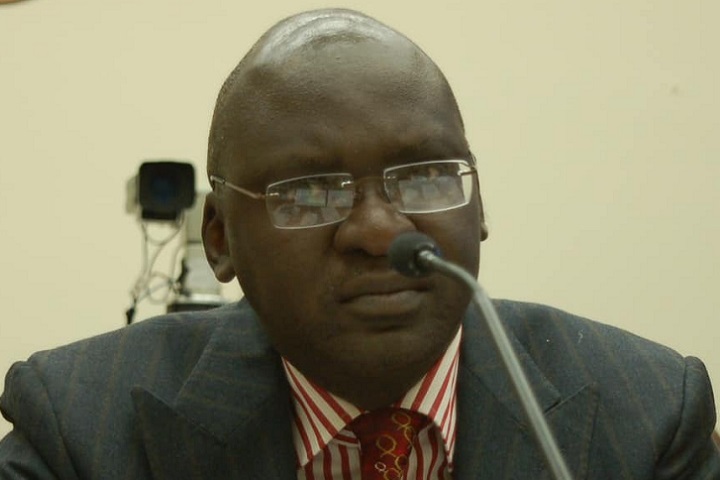
The lawyer pointed to testimony by Dr. Bitrus Pogu, president of the Middle Belt Forum, who recently told a gathering of Christian traditional rulers that Gwoza Local Government Area in Borno State had been effectively “de-Christianized.”
According to figures referenced by Ogebe, only 28 of the area’s original 176 churches remain intact.
He added that while nearby Chibok has endured repeated attacks, it has avoided total destruction due to sustained community vigilance.
Christians dominate Nigeria’s economy?
Ogebe challenged Kukah’s assertion that Christians dominate Nigeria’s economy, calling it a fabrication that ignores regional inequality and minority marginalization.
He listed several of Nigeria’s wealthiest individuals from the predominantly Muslim north as evidence that economic power is not monopolized by Christians.
He noted that General Theophilus Danjuma, a Christian and one of the few northern Christian billionaires, has himself publicly lamented the killings of his people.
He wrote: “The Igbos of Nigeria are exceptionally prosperous, but they’ve been marginalized and excluded from governance.
“No Igbo has been in the presidency or vice since 1983 – 42 years ago in the 3rd Republic.
“But the Fulanis who have occupied either for 23 out of the last 26 years of the 4th Republic are slaughtering them and hundreds of other Nigerian tribes.
“The fact is that the north is severely destitute as are its minority Christians.
“Aliko Dangote Africa’s richest man is a northern Muslim as are Dantata and numerous others.
“Here are some of the top billionaires from Northern Nigeria:
- Aliko Dangote ($12.8 billion) – Cement, sugar, oil refining (Dangote Group)
- Abdul Samad Rabiu ($8.2 billion) – Cement, flour, oil (BUA Group)
- Mohammed Indimi ($1.5 billion) – Oil & gas (Oriental Energy)
- Dahiru Mangal ($2.1 billion) -Aviation, construction, oil,
- Atiku Abubakar ($1.4 billion) – shipping, business, etc. Adamawa
- Aminu Dantata ($1.2 billion) – Construction, trading, real estate.”
Systematic exclusion of Christians
Ogebe further alleged systematic political exclusion of Christians in several northern states.
He claimed that Christians are often denied senior political appointments, including deputy governorships and local council leadership, even in Christian-majority areas.
He cited Kaduna State, Kukah’s home state.
There, he said, Christian chiefdoms in the southern region were dismantled and replaced with new structures favoring Fulani Muslim leadership during the administration of former governor Nasir El-Rufai.
Ogebe accused successive state governments of policies that deepened insecurity, alleging that negotiations with armed groups normalized large-scale kidnapping and violence.
He argued that such developments disproportionately affected Christian rural communities, forcing displacement and eroding traditional authority.
The Cardinal Onaiyekan debacle
Beyond domestic politics, Ogebe criticized what he described as a broader pattern among senior Catholic figures of minimizing violence when speaking internationally.
He recalled a previous controversy involving Cardinal John Onaiyekan.
Cardinal Onaiyekan reportedly told audiences abroad that there was no persecution of Christians in Nigeria.
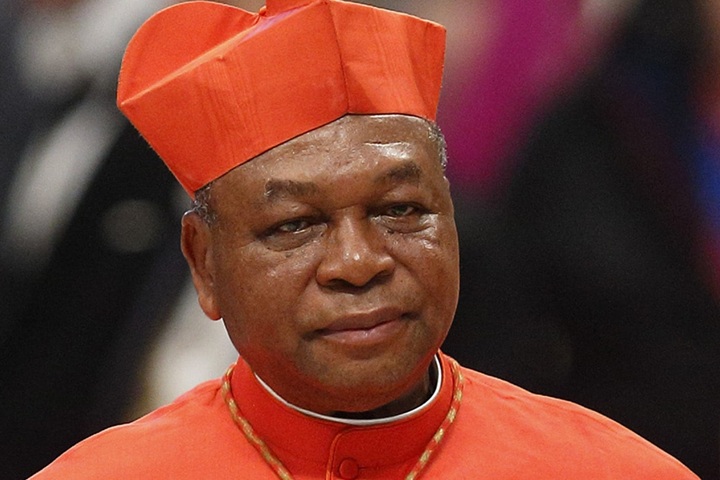
That was shortly after Christian Association of Nigeria leaders had testified before the United States Congress on Boko Haram atrocities.
The essay also raised questions about the operations of the Kukah Centre, an Abuja-based policy and dialogue institution founded by the bishop, which has received funding to support victims of conflict.
Ogebe asked how Kukah could deny persecution while heading an organization that assists victims of violence, though no evidence of wrongdoing was presented.
Elite silence
In contrast to what he described as elite silence or equivocation, Ogebe highlighted growing international attention to Nigeria’s insecurity.
He noted that public figures abroad, including entertainers and sports organizations, have recently drawn attention to the plight of Nigerian Christians.
He portrayed them as “unexpected voices” speaking where local leaders have faltered.
Domestically, Ogebe praised Pastor Sarah Omakwu, founder of the Family Worship Center, as a leading advocate for victims.
He said her church has supported thousands of widows over three decades, including widows of slain pastors.
She has also provided long-term care for orphans affected by violence in northern Nigeria.
He framed her work as emblematic of grassroots responses to the crisis.
Disputed controversy
The opinion piece concludes with a call for Bishop Kukah to reassess his stance and to use his influence to document and confront abuses, rather than dispute their existence.
Ogebe argued that Kukah’s recent apologies over his remarks leave open the question of whether he will return to advocacy for affected communities or continue a path critics see as politically expedient.
Neither Bishop Kukah nor the Kukah Centre issued an immediate response to the criticisms at the time of publication.
Nigerian security agencies and federal authorities have consistently maintained that violence across the country is driven by criminality, insurgency, and communal conflicts rather than religious targeting.
The position has been disputed by many local and international rights groups.
As the debate continues, the controversy underscores deep divisions over how Nigeria’s complex security crisis is framed — and who gets to define the suffering of its victims.