THIS DAWN — Nigeria’s judiciary, constitutionally mandated to be impartial and independent, has recently come under scrutiny following public declarations by judges that raise questions about judicial ethics and conduct.

In a provocative essay, “Nigerian Judges and the Judicial Code of Conduct“, legal scholar and former Chairman of Nigeria’s National Human Rights Commission (NHRC), Prof. Chidi Anselm Odinkalu, draws parallels between the self-styled bravado of some Nigerian judges and the defiant persona of reggae legend Peter Tosh, whose 1977 anthem “Steppin’ Razor” proclaimed: “I’m dangerous, don’t you watch my size.”
Odinkalu argues that while musicians may indulge in artistic license, judges cannot afford such theatrics.
Their role demands restraint, impartiality, and adherence to the Judicial Code of Conduct.
Yet recent episodes suggest that some judges are more interested in projecting themselves as “Mr Justice Steppin’ Razor” than in upholding the dignity of their office.
Judges as “Steppin’ Razor”
Odinkalu highlights two recent examples.
Justice Flora Azinge
In August 2023, Justice Flora Azinge of the Delta State High Court, presiding over election petitions in Kano, publicly alleged that a senior lawyer offered her staff a ₦10 million bribe. On an earlier occasion, she claimed another lawyer had asked for her bank account details to send a “seasonal gift.”
Rather than exercising her powers to punish contempt or report the matter for investigation, Azinge chose to issue public threats, declaring she would no longer tolerate attempts to bribe judges. Odinkalu criticizes this approach, noting that by refusing to act decisively, she undermined her own office and invited disrepute.
Justice Polycarp Emeka Nwite
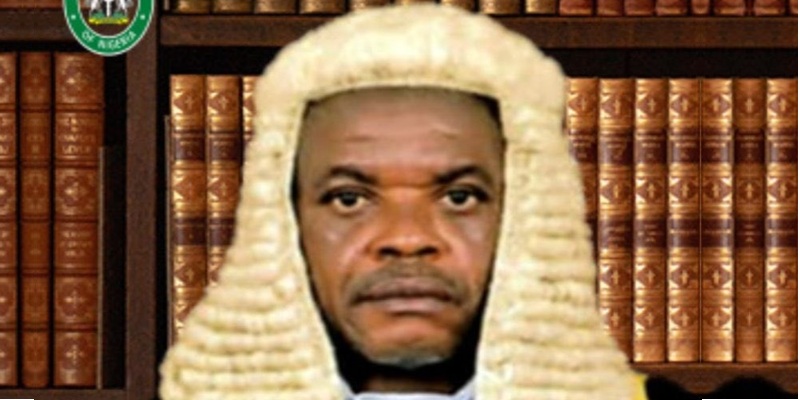
More recently, Justice Polycarp Emeka Nwite of the Federal High Court in Abuja, presiding over the bail hearing of former Attorney-General Abubakar Malami, his wife, and son on money laundering charges, declared himself “dangerous.”
After granting bail, Nwite launched into a monologue, warning lawyers not to approach him for favors:
“When I am handling any case, please don’t approach me… I have sworn before Almighty God and man that I am going to do my duty without fear or favour. Any attempt to try this will be vehemently resisted.”
Odinkalu describes this as a “pathetic audition” for the role of Steppin’ Razor, arguing that such grandstanding only advertises the judge’s vulnerability to influence rather than his independence.
Constitutional and Ethical Standards
Nigeria’s 1999 Constitution guarantees that all courts must be “independent and impartial.”
The Judicial Code of Conduct requires judges to preserve the integrity and independence of the judiciary transparently.
Internationally, the United Nations Basic Principles on the Independence of the Judiciary stipulate that judges must decide cases impartially, free from improper influences, inducements, or pressures.
Against this backdrop, Odinkalu insists that judges who face attempts at bribery or influence have clear remedies:
- Report to law enforcement – Judges can refer matters to the police or Attorney-General for investigation.
- Punish contempt – Judges have powers to summarily punish attempts to pervert justice as criminal contempt.
- Refer for professional discipline – If the perpetrator is a lawyer or public servant, judges can refer the case to disciplinary bodies.
- Name and shame – Judges can expose culprits in open court, forcing accountability.
By failing to use these tools, Odinkalu argues, judges who resort to anonymous allegations and theatrical threats compromise judicial integrity.

The Problem of Judicial Grandstanding
Odinkalu’s central critique is that judges who indulge in public declamations without action transform serious allegations into spectacles. Instead of reinforcing confidence in the judiciary, they erode it.
- Anonymous allegations breed suspicion and undermine trust.
- Threats without consequences suggest weakness rather than strength.
- Failure to act signals availability to be influenced, contrary to claims of independence.
In the case of Justice Nwite, Odinkalu notes that by refusing to name those who allegedly sought to compromise him, the judge effectively advertised his openness to future manipulation.
Judicial Independence Under Strain
The essay situates these episodes within a broader crisis of judicial independence in Nigeria.
Judges face pressures from politicians, lawyers, and vested interests, particularly in high-profile cases involving elections or corruption.
Yet the judiciary’s credibility depends on its ability to resist such pressures transparently.
Odinkalu warns that when judges choose theatrics over substance, they risk becoming complicit in the erosion of democratic governance.
The judiciary, meant to be a bulwark against abuse of power, instead becomes a stage for personal performance.
Lessons from the Code of Conduct
The Judicial Code of Conduct is clear: judges must act with integrity, impartiality, and transparency. This means:
- Disclosing improper approaches rather than hiding them.
- Sanctioning misconduct rather than issuing vague threats.
- Recusing themselves if compromised, rather than continuing under suspicion.
Odinkalu insists that judges who fail to meet these standards engage in judicial malpractice. Their actions not only damage their own reputations but also weaken public confidence in the rule of law.
The Symbolism of “Steppin’ Razor”
By invoking Peter Tosh’s Steppin’ Razor, Odinkalu underscores the danger of judges adopting personas of defiance without substance.
Tosh’s song was a declaration of self-assertion in a hostile environment.
For musicians, such artistic license is legitimate. For judges, however, it is reckless. Judges cannot afford to be “walking razors.”
Their legitimacy derives not from bravado but from adherence to law, procedure, and ethical standards.
When judges posture as dangerous but fail to act, they trivialize the seriousness of judicial office.
Chidi Odinkalu’s essay is a stark reminder of the responsibilities that come with judicial office.
Nigerian judges, entrusted with safeguarding democracy and justice, must resist the temptation to grandstand.
Allegations of bribery or influence must be addressed through established legal mechanisms, not through anonymous threats or theatrical declarations.
The judiciary’s credibility depends on transparency, impartiality, and accountability. Judges who indulge in “Steppin’ Razor” performances risk undermining the very foundations of justice.
As Odinkalu concludes, Peter Tosh’s title remains secure: Nigeria’s judicial aspirants have failed the audition.