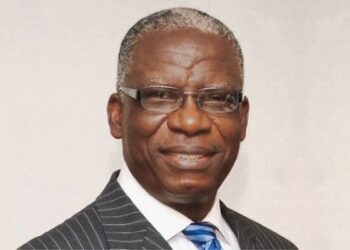
THIS DAWN — Former Chairman of Nigeria’s National Human Rights Commission (NHRC), Prof. Chidi Anselm Odinkalu, has issued a powerful and unflinching critique of the Nigerian judiciary, questioning its moral independence after a controversial episode at the 2025 All Nigeria Judges Conference in Abuja.

His essay, titled “On Whose Mandate Do You Stand?” draws on history, judicial ethics, and recent political theatre to deliver a sobering warning to the nation’s judges.
Odinkalu anchored his analysis in the writings of Atanda Fatayi Williams, Nigeria’s fourth Chief Justice, who warned decades ago that politicians often profess judicial independence only in words, not in practice.
Fatayi Williams, sworn in just seven days after independence, famously emphasised that judges must remain aloof from political actors because “familiarity… breeds obligation.”
Odinkalu uses this historical lens to assess what he describes as a disturbing lapse in judicial detachment at the 2025 conference.
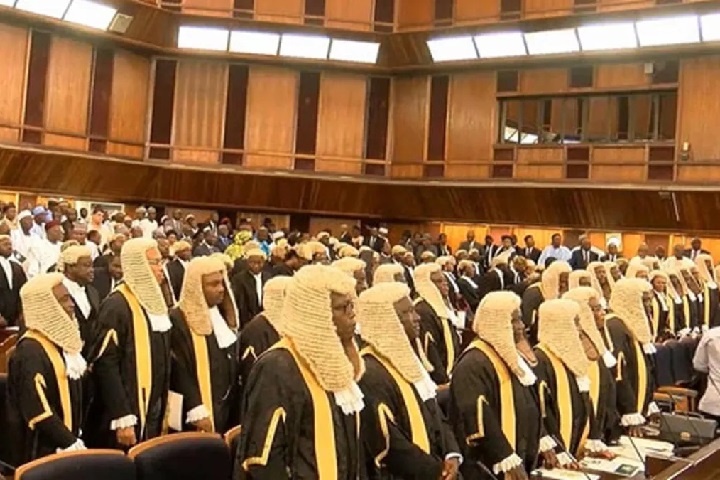
The conference was traditionally a solemn convocation aimed at introspection, learning, and institutional strengthening.
It opened with Chief Justice Olukayode Ariwoola’s appeal for judges to defend democracy and restore public trust in the bench.
She openly acknowledged the public’s perception that parts of the judiciary were vulnerable to “external influences,” a diplomatic reference to corruption and political capture.
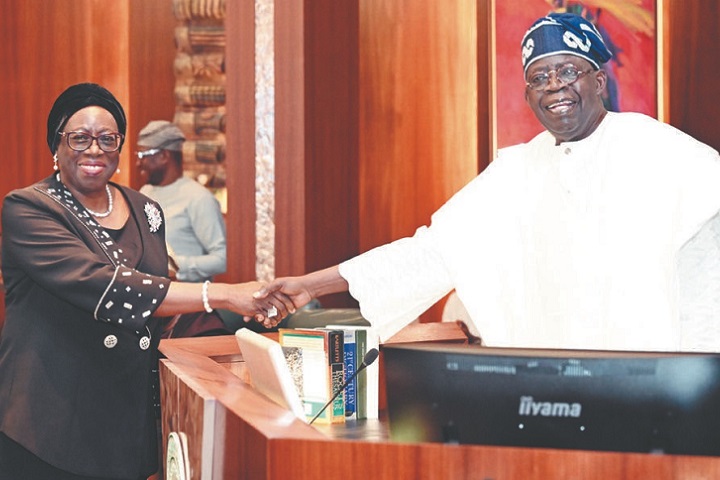
However, these reflective calls were overshadowed minutes later when President Bola Ahmed Tinubu rose to address the audience.

A Political Anthem in a Judicial Sanctuary
According to Odinkalu, what followed was a shocking breach of institutional propriety.
As the judges stood to receive the president, the Guards Brigade band broke into an instrumental version of “On Your Mandate We Shall Stand”—President Tinubu’s well-known political campaign anthem.
After Tinubu completed his speech, the band played the same anthem again.
For Odinkalu, this was no accident.
“If the first was an error, the second surely was comfort,” he wrote.
He argued that the repetition signified not a mistake but a deliberate projection of personal political dominance into a judicial gathering.
The symbolism, he insisted, was unmistakable: the president sought to reposition the judiciary’s loyalty from the Constitution to himself.
Some participants even sang along. Others remained silent. The moment, however, left an indelible mark.
Official Denials and Institutional Evasion
Rather than confront the impropriety, the judiciary’s leadership retreated into denial.
Over 48 hours later, the National Judicial Institute (NJI) issued a statement—not signed by a judicial principal but by a mid-level public relations officer—claiming the allegations were unfounded.
Odinkalu described the statement as “mangled in syntax,” evasive, and lacking ownership.
Most striking, he argues, was what the statement avoided: any recognition that a partisan anthem played—twice—inside Nigeria’s most important judicial conference.
TVC, the president’s own broadcaster, offered an apologetic defence, arguing that the singing came from “people who came with the president” and therefore should not be questioned.
They even compared the incident to conferences of the Nigerian Guild of Editors, a comparison Odinkalu dismissed as absurd and institutionally insulting.
One judge, he noted, privately claimed the anthem was “AI-generated”—a response he interpreted as evidence of discomfort and denial within the judiciary.
The Real Damage: Judicial Confidence Undermined
For a conference built around the theme “Building a Confident Judiciary,” Odinkalu believes the episode accomplished the opposite.
Judicial independence, he argues, is built on perception as much as action.
Allowing a partisan anthem to echo through the hall where judges convene sends a chilling message about the expectations of political loyalty.
Odinkalu warns that the judiciary cannot ignore the symbolism:
“President Tinubu sought to relocate the source of the judicial function from its constitutional foundation to personal loyalty to him.”
The critical question now, he insists, is simple and unavoidable: On whose mandate do Nigeria’s judges stand — the Constitution’s or the President’s?
A Lesson from History
Odinkalu concludes by returning to Fatayi Williams’ ethos of judicial distance.
The former CJN understood early the risks of political intimacy and cautioned judges to guard their independence fiercely.
The 2025 conference, in Odinkalu’s analysis, revealed just how fragile that independence has become.
The judiciary, he argues, must confront this moment with honesty.
Institutional dignity cannot be maintained through denial or evasive press releases.
Instead, he calls for a judiciary mature and confident enough to admit wrongdoing, learn from it, and ensure such incidents never recur.
His message is unmistakable: if Nigerian judges fail to reclaim their independence, the country’s democracy may soon find itself standing on collapsing ground.