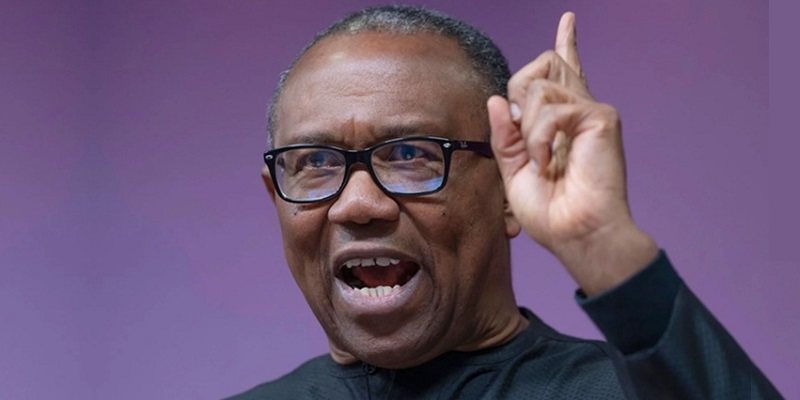
TDFormer Anambra State Governor and 2023 presidential candidate Peter Obi has sounded the alarm over Nigeria’s worsening poverty crisis, describing it as “disturbing” and a direct consequence of recent economic reforms.

According to a new policy study by Agora Policy, supported by the Nigeria Economic Stability and Transformation Programme and the UK’s Foreign, Commonwealth and Development Office, Nigeria’s poverty rate has escalated from 40% before the current reforms to over 63% today.
With Nigeria’s population estimated at 220 million, this means that well above 140 million citizens now live in poverty—a staggering figure that underscores the depth of the crisis.
Daily Struggles of Nigerians
The report paints a grim picture of everyday survival across the six geopolitical zones:
- Families are cutting down on meals, often skipping food to stretch limited resources.
- Many now trek long distances instead of paying for public transport.
- Households are living without electricity, unable to afford bills or fuel for generators.
- Citizens are borrowing money simply to meet basic needs like rent, healthcare, and school fees.
Small businesses, which traditionally serve as the backbone of Nigeria’s economy, are collapsing under the weight of inflation, dwindling consumer demand, and rising operational costs.
This decline further worsens unemployment and deepens poverty.
Leadership and Accountability
Obi condemned what he described as the lavish and insensitive spending patterns of politicians, contrasting them with the harsh realities faced by ordinary Nigerians.
“You cannot ask the citizens to fast while you feast. Sacrifice must begin from the top,” he declared.
He argued that genuine reform must be people-centred, protecting the most vulnerable while pursuing fiscal sustainability.
Policies that deepen poverty, widen inequality, and crush small businesses cannot be celebrated as progress.
Nigeria’s Untapped Potential
Despite the bleak statistics, Obi highlighted Nigeria’s immense human and natural resources as a foundation for recovery.
He called for leadership that embodies:
- Prudence in financial management.
- Compassion for struggling citizens.
- Accountability in governance.
He stressed that success should be measured not by the comfort of the elite but by the well-being of ordinary Nigerians.
The Way Forward
Obi urged the urgent adoption of policies that:
- Expand production capacity and industrial growth.
- Strengthen and sustain small businesses.
- Protect vulnerable households from the shocks of reform.
He concluded that Nigeria’s path to stability lies in inclusive growth and equitable development, not reforms that push millions deeper into poverty.
Broader Implications
This warning comes at a time when Nigeria faces mounting economic pressures, including inflation, currency devaluation, and rising unemployment.
The contrast between citizens tightening their belts and leaders indulging in extravagance has sharpened public frustration.
Obi’s remarks reflect a growing demand for responsible leadership that prioritizes the welfare of the people over political comfort.
The challenge now is whether policymakers will heed the call and recalibrate reforms to ensure that economic transformation does not come at the expense of human survival.