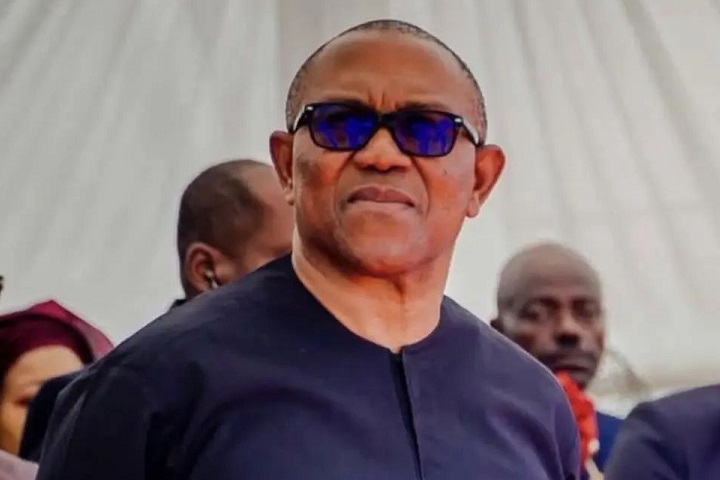
THIS DAWN — Former presidential candidate Peter Obi has raised alarm over Nigeria’s worsening poverty crisis, lamenting that while politicians scramble for positions and control of party structures, millions of citizens are being pushed deeper into hardship.

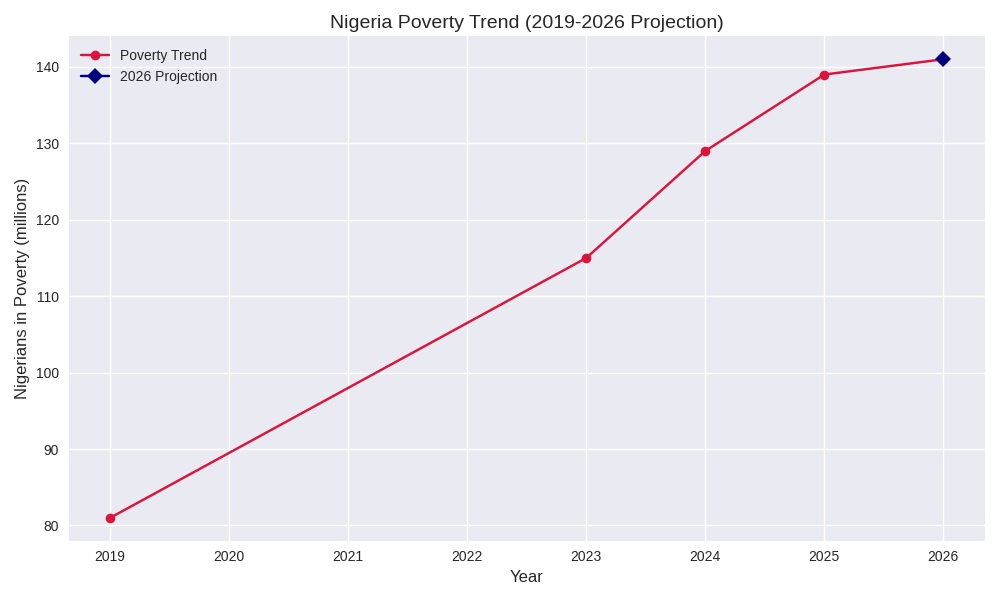
His remarks come against the backdrop of new projections showing that 141 million Nigerians—62% of the population—will be living in poverty by 2026.
In a statement shared on social media, Obi criticized the political elite for prioritizing power struggles over governance.
“As we politicians scramble for positions and vie for control of party structures—often sharing posts even before elections are concluded—a harsh truth confronts our nation: a staggering 62% of Nigerians, roughly 141 million people, are ensnared in poverty,” he wrote.
Obi lamented that while other nations are lifting millions out of poverty, Nigeria is regressing.
He described the situation as a national emergency that demands urgent structural reforms.
Nigeria Poverty Trend (2019–2026 Projection)
According to World Bank data, Nigeria’s poverty levels have surged dramatically. See table below:
Year |
Nigerians in Poverty (millions) |
Notes |
| 2019 | 81 | Baseline figure |
| 2023 | 115 | Sharp rise after four years |
| 2024 | 129 | Increase of 14 million in one year |
| 2025 | 139 | Continued upward trend |
| 2026 | 141 | Projection, 62% of population |
This trajectory highlights Nigeria’s regression compared to global peers, with poverty rising instead of declining.
The graph below shows Nigeria Poverty Trend from 2019 to 2026 Projection:
Economic Outlook 2026
The Nigeria Economic Outlook 2026 report, titled “Turning Macroeconomic Stability into Sustainable Growth”, reinforces these grim projections.
It warns that weak real income growth and persistently high living costs will continue to exacerbate poverty.
Key findings include:
- Income stagnation: Most Nigerians will not experience income growth sufficient to offset rising costs.
- Inflation pressures: Energy, logistics, and exchange‑rate fluctuations will keep prices high despite moderating headline inflation.
- Food vulnerability: Low‑income households, which spend up to 70% of their income on food, remain acutely exposed to inflation and price shocks.
Impact on Households and Businesses
The rising tide of poverty has far‑reaching consequences:
- Purchasing power collapse: Households are struggling to afford basic goods and services.
- MSME strain: Micro, small, and medium‑sized enterprises reliant on local consumers face shrinking demand.
- Fiscal pressure: A sustained increase in poverty could unravel public finances and erode human capital.
- Economic recovery risks: Without robust job creation and productivity growth, recovery efforts will stall.
Global Comparisons
Obi contrasted Nigeria’s trajectory with countries such as India and Indonesia, which have made significant progress in reducing poverty:
- India reduced extreme poverty from 35–40% in 2000 to just 5.3% today.
- Indonesia cut poverty from around 30% in 2000 to roughly 8%.
Both nations achieved these gains through sustained investments in education, health, and social protection. Nigeria, by contrast, has seen poverty rise from about 40% in 2000 to 62% today.
In 2000, Nigeria shared similar Human Development Index (HDI) scores with peer nations:
- India: 0.49
- Bangladesh: 0.47
- Indonesia: 0.60
- Nigeria: 0.45
By 2025, India and Bangladesh had surged to 0.685, Indonesia rose to 0.74, while Nigeria stagnated at 0.53—remaining entrenched in the low human development category after 25 years.
Call to Action
Obi warned that the fact 141 million Nigerians are living in poverty is not merely a statistic but a threat to the nation’s future.
“Can we continue to tolerate the reality that a child born in Nigeria today faces one of the highest risks of being born into poverty anywhere in the world?” he asked.
He called for urgent structural reforms, including:
- Macroeconomic stability to restore confidence.
- Investment in agriculture and food supply chains.
- Improved logistics and infrastructure to lower costs.
- Expanded education and health systems to build human capital.
- Large‑scale job creation and productivity growth to lift households out of poverty.
Peter Obi’s lament highlights the stark disconnect between Nigeria’s political elite and the lived realities of ordinary citizens.
As politicians jostle for power and positions, poverty continues to deepen, threatening the country’s stability and future.
With 141 million Nigerians projected to be impoverished by 2026, Obi insists that complacency is no longer an option.
The time for decisive action has come, and only bold reforms can reverse Nigeria’s trajectory.