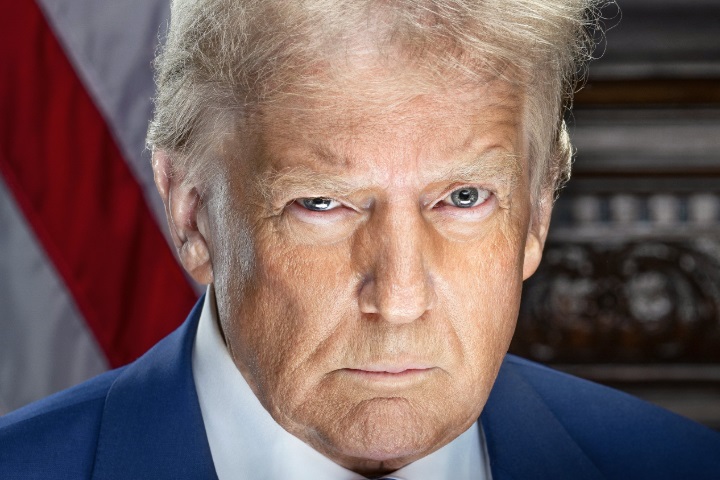
THIS DAWN — U.S. President Donald Trump has issued a stark warning to Iran, declaring that any future American military action against the country would be “far worse” than the recent Operation Midnight Hammer.

The statement was delivered during a press briefing at the White House.
It has reignited tensions between Washington and Tehran, raising fears of a new escalation in the already volatile Middle East.
President Trump’s remarks came in response to questions about Iran’s nuclear program and its refusal to enter negotiations on dismantling its uranium enrichment activities.
“If Iran refuses to make a deal without nuclear weapons, the next attack will be far worse than Operation Midnight Hammer,” Trump said.
He thus emphasized that the United States would not tolerate what he described as Tehran’s “continued defiance.”
Operation Midnight Hammer, carried out last year, involved precision strikes on Iranian military infrastructure, including suspected weapons storage facilities.
While U.S. officials hailed the operation as a success, Iranian authorities condemned it as an act of aggression, vowing retaliation.
Background to the Conflict
The U.S.–Iran relationship has been fraught for decades, but tensions have intensified under Trump’s administration.
The collapse of the 2015 nuclear deal, formally known as the Joint Comprehensive Plan of Action (JCPOA), set the stage for renewed confrontation.
Trump withdrew the U.S. from the agreement in 2018, arguing that it was “deeply flawed” and allowed Iran too much leeway.
Since then, Washington has pursued a “maximum pressure” campaign, imposing sweeping sanctions on Iran’s economy and targeting its military assets.
Tehran, in turn, has expanded its nuclear activities, insisting that it has the right to pursue peaceful energy development.
Western intelligence agencies, however, claim Iran is edging closer to weapons-grade enrichment.
Operation Midnight Hammer
Operation Midnight Hammer marked one of the most significant U.S. military actions against Iran in recent years.
Conducted with advanced drones and long-range missiles, the strikes reportedly disabled several Iranian radar systems and destroyed weapons depots.
Pentagon officials described the mission as “surgical” and aimed at reducing Iran’s capacity to threaten U.S. forces and allies in the region.
Iranian state media, however, reported civilian casualties and damage to infrastructure, fueling anger among the population.
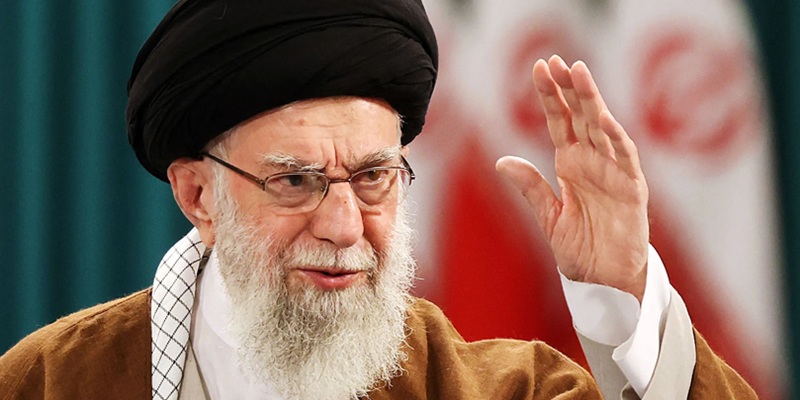
Supreme Leader Ayatollah Ali Khamenei vowed that Iran would “respond at a time and place of its choosing”.
His comment raises concerns of retaliatory attacks against U.S. interests in the Middle East.
In a post shared on X (formerly Twitter), The White House quoted President Trump as saying:
“…Hopefully Iran will quickly “come to the table” and negotiate a fair and equitable deal – no nuclear weapons – one that is good for all parties.
“Time is running out, it is truly of the essence! As I told Iran once before, make a deal…” –
It also shared the following screenshot of a post by Trump:

International Reaction
Global reaction to Trump’s latest warning has been mixed.
European allies, already uneasy about the collapse of the JCPOA, urged restraint and called for renewed diplomacy.
The European Union’s foreign policy chief stated that “escalation serves no one” and emphasized the need for dialogue.
Russia and China, both critical of U.S. actions in the region, condemned the threat as destabilizing.
Moscow warned that further strikes could “ignite a wider conflict,” while Beijing urged Washington to “exercise caution and return to negotiations.”
In contrast, Israel and Saudi Arabia welcomed Trump’s tough stance, arguing that Iran’s regional ambitions pose a direct threat to their security.
Both countries have long advocated for a stronger U.S. posture against Tehran.
Domestic Response
Within the United States, Trump’s comments have sparked debate.
Supporters argue that a firm approach is necessary to prevent Iran from acquiring nuclear weapons.
Critics, however, warn that escalating military action could drag the U.S. into another prolonged conflict in the Middle East.
Several members of Congress called for oversight, with some demanding that the administration seek approval before launching any new strikes.
“The American people deserve transparency about the risks of war,” one senator said.
What Comes Next
The future of U.S.–Iran relations remains uncertain.
Trump has insisted that he is open to negotiations but only if Iran agrees to abandon its nuclear ambitions entirely.
Tehran, however, has shown little willingness to compromise, insisting that Washington must first lift sanctions and respect its sovereignty.
Analysts suggest that the coming weeks will be critical.
If Iran retaliates for Operation Midnight Hammer, the U.S. may respond with even greater force, potentially triggering a cycle of escalation.
Conversely, backchannel diplomacy could still offer a path to de-escalation, though prospects appear slim.
President Trump’s warning that the next attack on Iran would be “far worse” than Operation Midnight Hammer underscores the fragile state of U.S.–Iran relations.
With both sides entrenched and global powers divided, the risk of a broader conflict looms large.
Whether diplomacy can prevail over confrontation remains the pressing question for the international community.