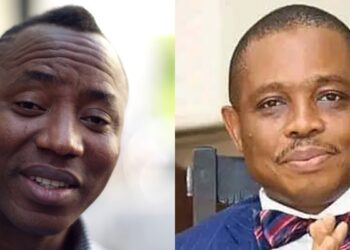
TDThe commercial town of Nnewi is facing a deepening political crisis as the Nzuko Ora Nnewi (Nnewi Town Union) delegates impeached their President General and Board of Trustees (BOT) Chairman over alleged constitutional violations.

Meanwhile, tension has escalated over the Nnewi North Local Government Chairman’s refusal to honour a long-standing community pact limiting tenure.
The twin developments have sparked outrage, raising fears of instability in one of Anambra State’s most influential towns.
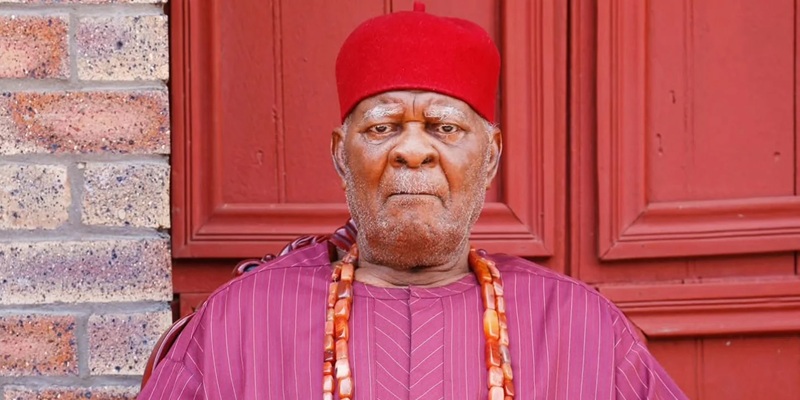
The tension has continued to fester despite the intervention of the town’s traditional ruler, His Royal Highness Igwe Kenneth Orizu III.
Watch the video footage below:
Background: Nzuko Ora Nnewi Crisis
On 1st February 2026, delegates of Nzuko Ora Nnewi, the parent socio-political body governing Nnewi Town, convened at the Nnewi Youth League Hall.
The delegates passed a motion of impeachment against Prince Jude Osumuo (President General), Sir Dennis Ofordeme (BOT Chairman), and Sir Chidi Anuligo (BOT Secretary).
The impeachment was anchored on a 14-count charge alleging:
- abuse of office,
- unconstitutional usurpation of powers,
- obstruction of lawful meetings, and,
- attempts to alter the union’s constitution to favour the sitting Nnewi North Local Government Chairman.
Delegates accused the leadership of colluding with the LG boss to undermine the town’s rotational leadership pact, thereby eroding communal trust and constitutional order.
Key Allegations Against Union Leaders
- Abuse of Office: Accused of arrogating powers not granted under the union’s constitution.
- Unconstitutional Communications: Issuing letters and communiqués without approval of the general assembly.
- Illegal Constitutional Amendments: Attempting to alter provisions to extend the influence of the LG Chairman.
- Obstruction of Meetings: Preventing duly announced congresses from holding.
- Gross Misconduct: Engaging in divisive actions that threatened unity and dignity of Nnewi.
Delegates resolved that the impeached officers be removed immediately and directed the Board of Patrons to assume interim oversight for six months pending lawful reconstitution.
Community Pact and LG Chairman’s Defiance
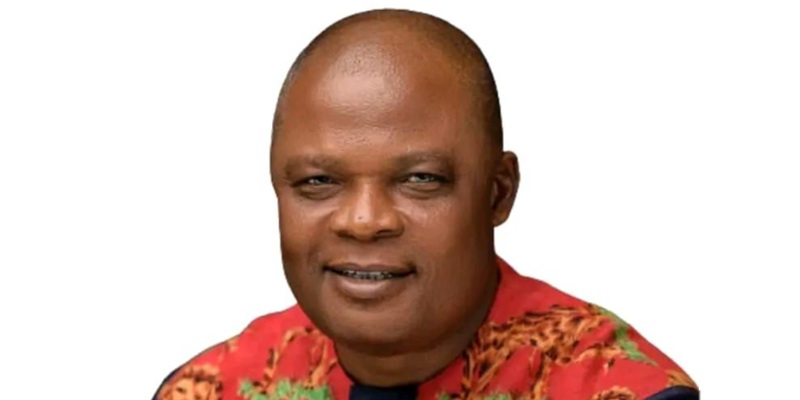
Parallel to the union crisis, tension has gripped Nnewi North following reports that the Local Government Chairman is plotting to elongate his tenure in defiance of the town’s 1997 rotational agreement.
The pact, established nearly three decades ago, stipulates that the LG chairmanship rotates among the four quarters of Nnewi — Otolo, Uruagu, Umudim, and Nnewichi — with each quarter entitled to a single term.
This arrangement was designed to ensure fairness, balance, and prevent domination by any single quarter.
However, the current LG Chairman, whose tenure is due to expire, has allegedly refused to step down.
He cited political manoeuvres and sought constitutional loopholes to extend his stay.
Community leaders warn that this defiance risks plunging Nnewi into chaos, undermining decades of peaceful power-sharing.
Reactions from Stakeholders
- Delegates and Elders: Expressed anger at both the union leadership and the LG Chairman, accusing them of betraying the spirit of Nnewi’s constitution and communal pact.
- Youth Leaders: Warned of mass protests if the LG Chairman continues to resist the rotational agreement, insisting that Nnewi’s unity cannot be sacrificed for personal ambition.
- Traditional Authorities: The Igwe of Nnewi and the four Obis have been urged to intervene decisively to prevent further breakdown of law and order.
- Civil Society Groups: Called for transparency and adherence to constitutional provisions, stressing that Nnewi’s governance model must reflect inclusivity and accountability.
Implications of the Crisis
- Erosion of Trust: The impeachment and tenure elongation plot have eroded public confidence in both union and local government leadership.
- Threat to Unity: Nnewi’s quartet structure — Otolo, Uruagu, Umudim, Nnewichi — is at risk of fragmentation if rotational agreements are disregarded.
- Political Fallout: The crisis could weaken Nnewi’s bargaining power within Anambra State politics, as internal divisions may be exploited by external actors.
- Legal Battles: The impeached officers may challenge their removal in court, while the tenure dispute could trigger litigation over constitutional interpretation.
Historical Context
Nnewi has long prided itself on its rotational leadership system, which has been credited with maintaining peace and balance among its quarters.
The 1997 pact was a landmark agreement that prevented political dominance and ensured equitable representation.
The current crisis is reminiscent of past disputes where attempts to override communal agreements led to prolonged tensions.
However, never before has the town union and local government leadership been simultaneously embroiled in such controversy.
Calls for Intervention
Delegates have appealed to Governor Charles Chukwuma Soludo and the Commissioner for Local Government and Chieftaincy Affairs to recognize only legitimate representatives of Nzuko Ora Nnewi and disregard communications from impeached officers.
They also urged the state government to enforce the rotational pact, warning that failure to act could destabilize Nnewi North and spill over into wider Anambra politics.
The Board of Patrons, now tasked with interim oversight, has pledged to restore constitutional order and unity.
The Board, however, faces the challenge of reconciling factions and ensuring compliance with the rotational agreement.
Analysis: What’s at Stake
- For Nzuko Ora Nnewi:
The impeachment underscores the fragility of communal institutions when leaders prioritize personal or factional interests over constitutional order.
- For Nnewi North LG:
The tenure elongation plot threatens to unravel decades of peaceful coexistence and could ignite inter-quarter rivalries.
- For Anambra State:
The crisis highlights the broader challenge of balancing traditional governance structures with modern political ambitions.
If unresolved, the crisis could weaken Nnewi’s socio-political cohesion, diminish its influence in state affairs, and set a dangerous precedent for other communities with rotational agreements.
The impeachment of Nzuko Ora Nnewi’s President General and BOT Chairman, coupled with the LG Chairman’s defiance of the rotational pact, has plunged Nnewi North into a constitutional and political crisis.
At its core, the dispute reflects a struggle between constitutional order and personal ambition, with far-reaching implications for unity, governance, and stability.
As tensions mount, the role of traditional authorities, state government, and civil society will be critical in steering Nnewi back to peace and constitutional fidelity.
The coming weeks will determine whether Nnewi reaffirms its commitment to communal harmony or succumbs to division and distrust.