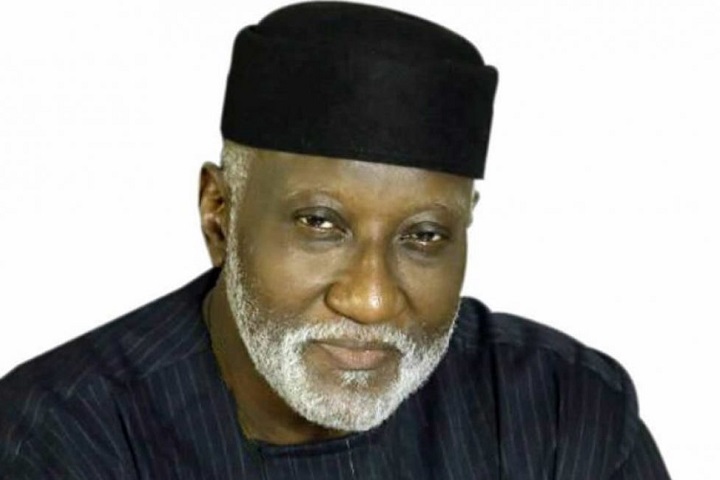
THIS DAWN — Former Anambra State governorship candidate and MD/CEO of Selonnes Consult, Mr. Oseloka H. Obaze, has raised alarm over Nigeria’s current political trajectory, warning that the nation may be heading toward what he describes as “The Year of Our Anger” in 2026.

Mr. Obaze — a policy consultant and former diplomat — expressed his reflections in a thought-provoking essay titled “Merits, Demerits and Remits of State Rewards”.
He blended his personal anecdotes with political analysis, highlighting the dangers of unmerited state rewards, systemic corruption, and the erosion of due process in governance.
Social Media Sparks Reflection
Obaze begins his essay with a meditation on the power of social media, which he calls an “inevitable tool” that shapes daily moods and perceptions.
A chilling message from a trusted friend set the tone for his reflections:
“I am angry. And so are millions of Nigerians. 2026 shall be named – The Year of Our Anger. In 2026 they will tax the poor. And the anger will overflow.
“But it will not overflow into the streets. Because it will be channeled. The straw shall break the camel’s back.”
For Obaze, these words were not mere rhetoric but a prophetic warning about the simmering discontent among ordinary Nigerians.
This is particularly so, as economic pressures mount and governance appear increasingly skewed toward rewarding loyalists rather than serving the public good.
Fast-Track Promotions and Political Privilege
The essay also touches on recent controversies surrounding fast-track promotions within the military and questionable ambassadorial nominations.
Obaze noted that while such rewards may appear as mere happenstance, they often reflect deeper systemic issues.
He mused on the doctrine of necessity and the privileges of proximity to power, observing that “membership has its privileges”. He regretted that those at the right place at the right time reap benefits, often at the expense of fairness and institutional integrity.
Lessons from Personal Experience
To underscore the importance of rewards and their timing, Obaze recalls a deeply personal story from the late 1990s, when his aunt, diagnosed with terminal cancer, insisted on returning to Nigeria to spend her final days.
Her decision allowed her to reward loyal staff and bid farewell to loved ones.
For Obaze, this episode illustrated the dignity of acknowledging service and loyalty, contrasting sharply with the political rewards system in Nigeria, which he argues often lacks merit and undermines accountability.
State Rewards as Exit Strategy
Drawing parallels between personal exit strategies and political maneuvers, Obaze suggests that Nigeria’s current leadership may be engaged in a form of “tidying up the profligate stable” in anticipation of uncertain political futures.
He argues that rewards are being dispensed hastily to loyalists and cronies, as if leaders fear there may be no tomorrow.
“When the odds begin to stack up against rogue leaders, they imprudently look for an egress, an exit strategy, and an off ramp,” he writes.
This perspective frames state rewards not as recognition of merit but as tools of survival for embattled leaders, who seek to secure loyalty and protect themselves against potential political or legal reckoning.
The Broader Implications
Obaze’s critique extends beyond individual cases to systemic issues.
He questioned why the government appears to be rewarding “scofflaws, converting opponents and transgressors, punishing critics, offloading national assets to cronies, taking foreign loans as if it was going out of fashion and outsourcing the national commonwealth.”
Such practices, he warned, erode trust in institutions and deepen Nigeria’s governance crisis.
He invoked historical and literary references—from James Bond’s notion of “enemy action” to Randy Pausch’s The Last Lecture—to emphasize that end-stage situations, whether personal or political, are often dramatic and laden with meaning.
For Nigeria, he suggests, the current wave of rewards and concessions may signal an approaching endpoint in the nation’s political titration.
Looming Anger and Uncertain Future
Central to Obaze’s essay is the warning that Nigeria may face a tipping point in 2026.
The anticipated taxation of the poor, coupled with widespread disillusionment, could trigger an overflow of anger.
While he predicts this anger may not manifest in street protests, he warns it will be channeled in other ways, potentially destabilizing the political order.
“Every titration has its endpoint,” he notes, asking rhetorically what Nigeria’s endpoint will be amid the present “national miasma.”
Merits, Demerits, and Remits of Rewards
Obaze acknowledges that rewards, when properly applied, can serve important purposes—recognizing loyalty, service, and merit.
His aunt’s final acts of gratitude exemplify the positive side of rewards.
However, he stresses that in Nigeria’s current context, rewards are often demerited, serving as instruments of patronage rather than justice.
The remit of such rewards, he argues, extends beyond individuals to the systemic subversion of the rule of law and the undermining of democratic governance.
A Nation at Crossroads
The essay concludes with a metaphor drawn from Nigeria’s motor parks, where both genuine buses and “one chance” buses load passengers in the same way, but with vastly different destinations.
For Obaze, this metaphor captures the peril of Nigeria’s current governance: citizens may find themselves unwitting passengers in a “one chance” political bus, where rewards are dispensed to criminals and cronies, and the destination is uncertain.
Yet he also offers a sobering reminder that luck and fate eventually run out, even for the most powerful leaders.
“Reward or no reward, if tomorrow comes, the anger will overflow. And then, there will be other forms of recompense,” he warns.
Conclusion
Obaze’s reflections serve as both a critique and a cautionary tale.
By weaving personal experiences with political analysis, he highlights the dangers of a reward system divorced from merit and accountability.
His warning of a “Year of Anger” underscores the urgency of reform and the need for leaders to prioritize justice, fairness, and sustainability over short-term survival strategies.
As Nigeria approaches 2026, the questions raised in “Merits, Demerits and Remits of State Rewards” resonate deeply:
- What is the endpoint of Nigeria’s current trajectory?
- Will the anger of the people be channeled constructively, or will it mark the collapse of a fragile political order?
For now, the answer, as Obaze suggests, may indeed be “blowing in the wind.”