THIS DAWN — Nigeria today is full of greengrocers. They are not selling onions beneath communist slogans, but survival beneath corruption. They are:

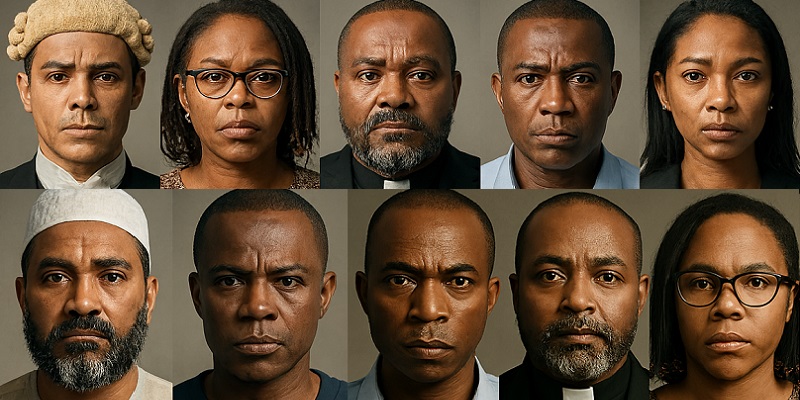
- Civil servants who know the budget has been looted but sign the voucher anyway.
- Journalists who know the election was rigged but write “keenly contested.”
- Pastors and imams who know politicians are thieves but pray them into legitimacy.
- Lawyers who know the process is unlawful but advise silence “for now.”
- Citizens who know fuel subsidies were stolen but repeat government talking points to avoid trouble.
Like Havel’s greengrocer, they do not necessarily believe the slogans. They display them because everyone else does, because resistance is costly, and because Nigeria punishes those who stand alone.
The Nigerian slogan is unspoken but universally understood:
“Keep your head down. Don’t be foolish. This is how things are done.”
No Nigerian would openly hang a sign saying, _I am afraid, therefore I comply._
Yet fear explains the silence better than ignorance ever could.
The Collusive Charade
Nigeria is not ruled primarily by brute force. It is ruled by a shared performance.
Politicians pretend to govern.
Institutions pretend to regulate.
Courts pretend to deliver justice.
Elections pretend to express the people’s will.
Citizens pretend to believe.
The lie is not maintained because everyone is convinced, but because everyone participates. As in Havel’s Czechoslovakia, power rests not only with the rulers but with the ruled who help sustain the fiction.
This is why corruption survives every exposé. Everyone already knows. What matters is not truth, but ritual.
Vote, even when the result is predetermined.
Clap at rallies you despise.
Defend your “own” thief against another man’s thief.
Explain injustice as “politics.”
Call looting “strategy.”
Call silence “wisdom.”
Thus Nigeria lives within the lie.
The Cost of Living in Truth
Now imagine Nigeria’s greengrocer snaps.
He refuses to inflate figures at work.
She refuses to falsify results.
He calls an election rigged, not “flawed.”
She declines to endorse a corrupt candidate from her ethnic group.
He publicly supports victims instead of power.
Nothing supernatural happens. No revolution begins. But something far more dangerous occurs: the lie is exposed.
The system reacts not because the act is illegal, but because it is intolerable. The punishment is swift and familiar: ostracism, stalled careers, threats, ridicule, blacklisting, sometimes worse. Not because the rulers are morally outraged, but because the performance has been interrupted.
The crime is not dissent.
The crime is revealing that obedience is optional.
Why Truth Is So Dangerous in Nigeria
Nigeria’s political establishment survives because it presents corruption as inevitable. The greatest threat is not protest, but example.
Once one person lives in truth, others are forced to confront their own cowardice. They must either follow or justify their submission. Most choose justification—and therefore attack the truth-teller.
This is why Nigerians who speak plainly are called:
“naïve”
“radical”
“attention-seeking”
“unrealistic”
“unpatriotic”
Truth destabilises because it strips power of its mystique. It reveals that rulers are not omnipotent, only enabled.
As Havel warned, the system collapses if living within the lie is no longer universal.
The Nigerian Tragedy
Nigeria’s tragedy is not that corruption exists.
It is that millions know, yet act as though they do not.
Cowardice here is rarely dramatic. It wears the face of prudence:
“I have children to feed.”
“Let me survive first.”
“This country cannot change.”
“Someone else should speak.”
Thus, dignity is postponed indefinitely. Freedom is deferred to a future that never arrives.
But every act of compliance strengthens the lie, and every refusal weakens it.
The Uncomfortable
Conclusion
Havel did not promise safety. He promised meaning.
Living within the truth does not guarantee victory. It guarantees consequence. But it also restores what corruption systematically destroys: human dignity.
Nigeria will not be transformed by slogans, elections alone, or foreign pressure. It will change only when enough greengrocers—ordinary people—decide that survival without dignity is too high a price.
Power fears truth more than anger.
Lies collapse not when challenged loudly, but when quietly refused.
And that is why, in Nigeria today, the most radical act is still the simplest one:
To say what is true, and live as if it matters.