THIS DAWN — In a move that has ignited widespread fury across Nigeria, President Bola Tinubu‘s administration has approved a $9 million contract with Washington-based lobbying firm DCI Group to “communicate” the government’s efforts in protecting Christian communities to U.S. policymakers.

The National Security Adviser (NSA), Malam Nuhu Ribadu, signed the deal on December 17, 2025, through Kaduna-based Aster Legal.
It involved an initial $4.5 million payment, with the balance due by July 2026, equating to a staggering $750,000 monthly retainer.
This comes against the backdrop of U.S. President Donald Trump’s threats of military strikes on Nigeria over alleged “Christian genocide” in the north.
Jihadist groups like Boko Haram and Fulani militants have wreaked havoc for years in that part of the country.
The contract’s revelation on January 13, 2026, via U.S. Department of Justice filings, has triggered a firestorm of criticism from Nigerians.
Some view it as a blatant misuse of scarce resources in a nation grappling with economic hardship, rampant insecurity, and inflation hovering above 30%.
Battleground on social media
Social media platforms, particularly X (formerly Twitter), have become battlegrounds for public discontent, with hashtags like #TinubuLobbyScam and #StopWastingOurMoney trending within hours.
Analysts and ordinary citizens alike decry the expenditure as emblematic of the All Progressives Congress (APC) government’s misplaced priorities.
They accuse APC of opting for expensive PR abroad instead of addressing root causes at home.
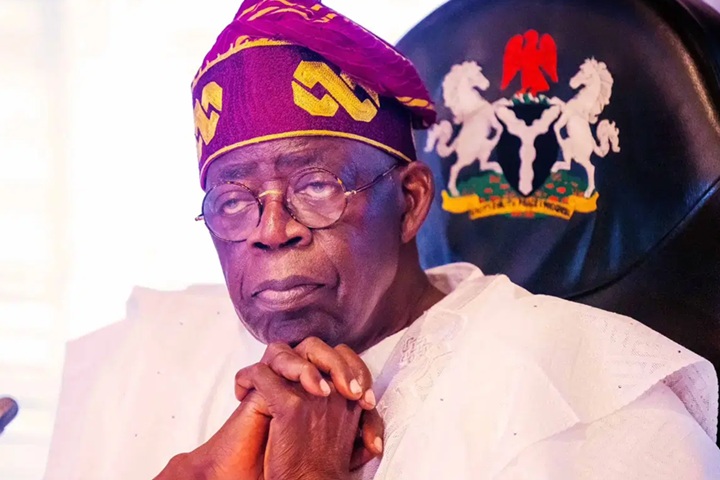
Public reactions have been overwhelmingly negative, blending outrage, sarcasm, and calls for accountability.
On X, user @drkenon2 captured the sentiment succinctly:
“So, Tinubu wants to convince Trump that he’s protecting Christians by trying to lobby US firm with $9 Million USD?
The amount of our money Tinubu will waste & steal may be inestimable by the time he’s done.”
This post, garnering over 757 likes and 666 reposts, reflects a common thread: skepticism that lobbying can mask Nigeria’s security failures.
Another user, @Abdulherphyz, lambasted the government for preferring to “spend ₦13,500,000,000 ($9m) to be in the good books of the US regime than to actually spend it on making Nigerians safer.”
Saving face abroad, killing Nigerians at home
Such comments highlight the irony—funds that could bolster local security forces or victim support are instead funneled to foreign lobbyists.
Media outlets have amplified these voices.
They frame the deal as a desperate bid to appease Trump and salvage Nigeria’s international image ahead of the 2027 elections.
Sahara Reporters detailed how the contract aims to counter narratives from pro-Biafran groups and Christian secessionists who have lobbied U.S. conservatives for years, outbidding them with Nigeria’s treasury.
Peoples Gazette described it as Tinubu “splurging $9 million on a Republican lobbyist” to prevent U.S. invasion threats from derailing his re-election.
Leadership Newspapers and TheCable emphasized the focus on “countering Christian genocide claims”.
They note that DCI Group’s Republican ties could influence Trump allies.
‘Optics” over action: symptoms of failed governance’
Critics argue this is symptomatic of broader governance failures under Tinubu.
Blogger Babatunde Gbadamosi (@BOGbadams) drew parallels to past economic blunders, warning that Tinubu’s “rapacious” approach is accelerating Nigeria’s decline.
Political commentator @SadiqMaunde echoed this, questioning:
“Instead of spending $9m (over N14 billion) on a Washington, D.C. lobbying firm to whitewash the allegations of killings in Nigeria, why not spend the money on fixing the crisis & stopping the killings?
Tinubu’s incompetence & cluelessness is on another level.”
Nairaland forums buzzed with similar disdain, users labeling it a “fraudulent and criminal move” prioritizing “optics” over action.
Religious and ethnic undertones add fuel to the fire.
In Nigeria’s polarized landscape, where northern Christians face disproportionate violence, the deal is seen as performative.
X user, @Ugo_KelechiPhD, a self-described conservative, noted:
“Mr Agbado Tinubu gave $9 million of Nigeria’s money to lobby US politicians to deny the Christian Genocide in Nigeria… Because it’s not working.”
“9m dollars down the drain”
Pro-Biafran activists like @UmuezeokaTV mocked it as futile, comparing Tinubu to Venezuela’s Nicolás Maduro for denying realities through cash.
Even APC supporters struggle to defend it; one Instagram commenter lamented, “They fail to realise that Trump has a mind of his own, he can’t be lobbied; 9m dollars down the drain.”
Economic context exacerbates the backlash.
With the naira at record lows and fuel prices soaring from N87 to over N750 per liter under Tinubu, citizens question why borrowed funds.
Nigeria’s debt exceeds $100 billion and squandered on lobbying rather than infrastructure or subsidies.
User @sparko_king1 highlighted: “The Nigerian government… is reportedly spending $9 million… to whitewash allegations of Christian genocide… instead of confronting and fixing the crisis.”
This resonates in forums like Facebook, where users decry it as “money to be wacked and shared.”
Defenders, though scarce, argue it’s a necessary diplomatic counter.
Hollow defence
Arise TV’s Reuben Abati suggested it’s “a good diplomatic move” to combat rival lobbies spending $60,000 monthly.
According to him, the move will ensure that Nigeria’s voice is heard in Washington.
Biodun Ajiboye, from the National Institute for Cultural Orientation, praised Tinubu’s broader reforms like importing tractors and NELFUND loans as evidence of easing hardships.
Yet, these voices are drowned out; even pro-Tinubu accounts like @dmightyangel focus on his decisiveness elsewhere, avoiding the lobbying issue.
The uproar underscores deeper disillusionment with Tinubu’s administration, elected amid controversy over certificate forgery and drug allegations.
As @afrisagacity shared, foreign investors have fled since his inauguration, citing lost trust.
Opposition figures like Senator Ndume have accused him of unapproved borrowings, fueling perceptions of fiscal recklessness.
In conclusion, this $9 million deal has unified Nigerians in condemnation, exposing fault lines in governance.
While intended to avert U.S. intervention, it may instead accelerate domestic unrest, with calls for probes intensifying.
As one X user quipped, “APC and Tinubu are menace!”
With elections looming, this scandal could prove politically costly, reinforcing narratives of a government more adept at spending than solving.