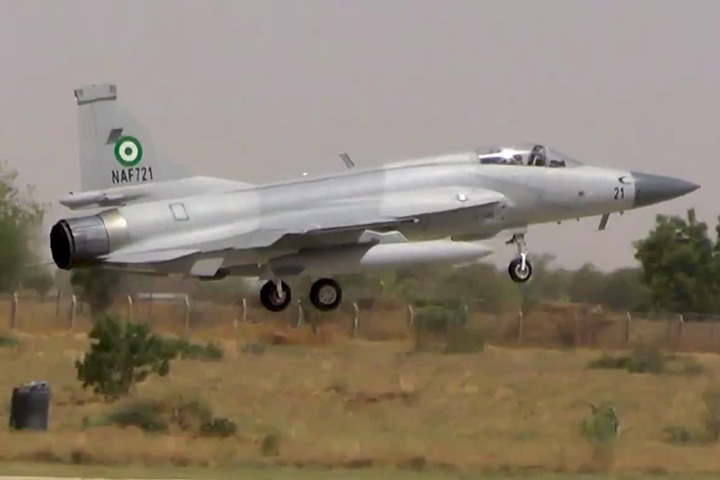
THIS DAWN — A wave of public anger erupted across Nigeria on Monday after the Bola Tinubu administration confirmed that Nigerian fighter jets were deployed into the Republic of Benin to help repel an attempted military coup against President Patrice Talon.

Many Nigerians, especially on social media, questioned how the government could mobilize air power beyond its borders within hours.
Yet, the government consistently claims that locating and neutralising bandits and terrorists inside Nigeria is “complex.”
The controversy followed an unprecedented statement issued by the Presidential Adviser on Information and Strategy, Bayo Onanuga.
Onanuga announced that Nigeria had scrambled Nigerian Air Force (NAF) fighter jets .
NAF later deployed ground forces into Benin Republic after receiving two urgent requests from the Beninese government.
Benin Requests Military Support — Tinubu Responds Within Hours
According to the State House statement, the Government of Benin sent two classified diplomatic notes to Abuja early Sunday.
The Government pleaded for immediate aerial intervention as soldiers loyal to Colonel Pascal Tigri seized the national television station and declared the overthrow of President Patrice Talon.
Benin’s Ministry of Foreign Affairs requested Nigeria’s assistance to “safeguard the constitutional order, protect national institutions, and ensure the security of the population.”
A second request asked for continued aerial surveillance and permission for Nigerian aircraft to operate inside Beninese airspace under Benin-led coordination.
The Benin government also requested Nigerian ground troops for limited missions approved by its command authority.
President Tinubu—current Chairman of ECOWAS—approved all requests without delay.
Nigeria’s Chief of Defence Staff, General Olufemi Oluyede, confirmed that NAF jets entered Benin’s airspace.
The ensuing strikes forced the coup plotters out of strategic locations.
Oluyede later deployed Nigerian soldiers on the ground.
“Ours is to comply with the order of the Commander-in-Chief,” the CDS said, noting that constitutional order had been restored.
Tinubu Praises the Military
Following the stabilization of the situation in Cotonou, President Tinubu praised the Nigerian military for “standing gallantly as a defender and protector of constitutional order.”
He added that Nigeria’s intervention was consistent with ECOWAS protocols on democracy.
According to him, defending Benin’s stability also protected Nigeria’s own security.
Public Outrage in Nigeria
But this explanation did little to calm angry Nigerians, who flooded social media with complaints that Abuja reacts faster to foreign crises than it does to domestic insecurity.
Across X (formerly Twitter), Facebook, and WhatsApp groups, thousands of Nigerians accused the government of “double standards,” noting that:
-
Bandits continue to operate freely in Kaduna, Niger, Zamfara, Katsina, Plateau, and Benue.
-
Terrorists have brought down military aircraft in the past.
-
Several communities have repeatedly begged the government for air support without success.
Many Nigerians questioned how fighter jets could be mobilized instantly for Benin Republic.
Yet the same urgency is rarely seen when bandits massacre villagers, abduct schoolchildren, or collect taxes from helpless rural residents.
Some commentators likened the Benin operation to “showmanship”.
They argued that the government is more concerned about preserving its image as ECOWAS chairman than addressing insecurity at home.
Others questioned the legality and long-term wisdom of deploying Nigerian forces into another sovereign state, warning that it may set a dangerous precedent.
A Region on Edge
The attempted coup in Benin adds to the growing instability across West Africa, where juntas have taken over in Niger, Mali, Burkina Faso, and Guinea.
Investigative journalist, David Hundeyin, wrote: “I think Nigeria is officially over tonight.”
Bombing your neighbour because a white guy in Paris told you to.
“Carrying out airstrikes against a fellow African country because Emmanuel Macron wanted you to.
“Only apartheid South Africa ever did something like this. It’s over.”
Nigeria has been under pressure to show leadership, particularly after the Niger coup humiliated ECOWAS and derailed the bloc’s threat of military intervention.
But at home, the optics of a swift foreign operation—contrasted with years of unrelenting insecurity—have left many Nigerians skeptical, angry, and demanding answers.