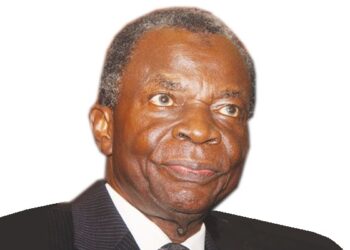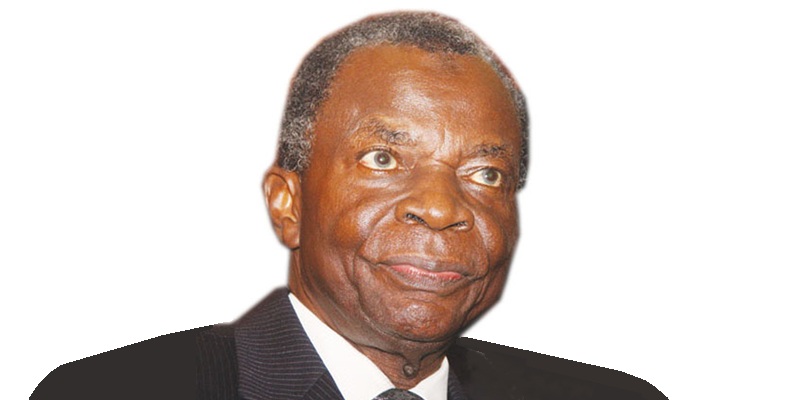
TDJustice Ayo Salami has once again stumbled into the public square with reckless commentary—this time targeting Peter Obi.

But Nigerians are not forgetting history.
Instead, they are digging up the skeletons in Salami’s judicial closet, reminding the nation of a man whose career was marred by scandal, perjury, and political entanglements.
Salami’s Legacy of Perjury and Misconduct
In August 2011, the National Judicial Council (NJC) found Justice Salami guilty of perjury (lying under oath) and judicial misconduct.
Perjury is no trivial matter—it is a criminal offense under Sections 117 and 118 of Nigeria’s Criminal Code, punishable by up to 14 years imprisonment.
Yet, instead of facing prosecution, Salami was shielded by a system that chose to trivialize criminality with a mere “apology” recommendation.
This decision was widely condemned as a betrayal of justice.
The NJC’s refusal to pursue criminal charges sent a dangerous message: that the judiciary could protect its own even in the face of clear wrongdoing.
For many Nigerians, this episode marked the beginning of a deep distrust in the judiciary’s ability to cleanse itself of corruption.
The Sokoto case, where Salami was accused of perjuring against the Chief Justice of Nigeria, became emblematic of how the judiciary often bends to protect insiders.
Instead of accountability, Nigerians witnessed a cover-up that mocked the very principles of justice.
Salami’s Political Interests Over Justice
Salami’s tenure was defined not by impartiality, but by entrenched political interests.
His close ties with powerful figures—including Bola Ahmed Tinubu—were exposed during tribunal cases in Osun and Ekiti.
Petitioners alleged injustice and denial of fair hearing, and evidence pointed to Salami’s unethical involvement.
Call logs released by MTN Nigeria to the police revealed suspicious communications between Salami and political actors during sensitive judicial proceedings.
These records suggested that judgments were not merely the product of judicial reasoning, but of backroom conversations with partisan interests.
Even more damning was the Ekiti case judgment of October 15, 2010, which was posted online by the Action Congress of Nigeria (ACN) an hour before Salami read it in court.
This raised serious questions about whether judicial outcomes were pre-arranged with political actors.
Yet, the NJC panel dismissed these critical pieces of evidence, claiming they lacked authentication.
The rejection of such evidence was seen as a deliberate cover-up.
Nigerians watched in dismay as the judiciary turned away from fact-finding and accountability, choosing instead to protect one of its own.
Salami’s actions, and the NJC’s complicity, further eroded public confidence in the courts.
Nigerians Remember
Now, as Salami attempts to disparage Peter Obi, Nigerians are reminding him of his own disgraceful past.
They recall how he was suspended for misconduct, how his name became synonymous with judicial compromise, and how his actions undermined confidence in the courts.

For many, his recent remarks are not the words of a respected elder statesman, but of a senile man chasing shadows.
Analysts say Salami is a relic of corruption who has no moral standing to lecture anyone on truth or justice.
His attempt to attack Peter Obi only reignites memories of his own betrayal of the judiciary and the nation.
The irony is glaring: a man once disgraced for lying under oath now presumes to question the integrity of others.
Nigerians are not buying it.
Instead, they are using his past as a reminder of how easily justice can be corrupted when individuals like Salami are allowed to wield unchecked influence.
Conclusion
Justice Ayo Salami’s history is not one of honor, but of betrayal.
His record shows a man who bent the law to serve political masters, who lied under oath, and who left the judiciary weaker than he found it.
Nigerians claim right to reject his hypocritical attacks on Peter Obi.
The real question is not what Obi represents, but why Salami still dares to speak after his own disgraceful fall from judicial integrity.
His past is a cautionary tale of how corruption corrodes institutions, and why voices like his should never again be allowed to masquerade as defenders of truth.