
In the fleeting, flattened world of social media, where only simple, singular ideas survive, politicians and media enjoy endless field days constructing and reconstructing reality, and bending it to suit their purpose. The custom of reducing complex public problems to one-line explanations routinely leads to confusion, chaos and policy failure in the long run; it does not create clarity.
Modern politics is addicted to oversimplification. Complex crises with deep historical, economic, religious and institutional roots are collapsed into slogans that fit on a phone screen or in a ten-second clip. The alchemy produces citizens who, while knowing less, feel more certain and understand much less.
Oversimplification does three kinds of damage well. It erases causality by recasting many-layered conflicts as if they sprang from a single grievance or villain. It dissolves responsibility, because when “everybody is a victim,” nobody is accountable. And it corrupts remedies, because a diagnosis that is wrong by design can yield only cosmetic or destructive “solutions.” This is particularly true in today’s social-media world, where reality competes with narratives that reward the neatest story, not the strongest evidence.
Nigeria’s handling of insecurity offers a casebook example of how states weaponise oversimplification of important issues to escape moral scrutiny. For years, Christian communities in the Middle Belt and the Northeast have documented patterns of attacks that resembled a deliberate attempt to exterminate them and dispossess them of their ancestral lands.
These are atrocities that can no longer be dismissed as random. Rather than treat these cries as a summons to sober investigation and decisive protection, the state took the easy path of narrative management.
The domestic script is disarmingly simple: allegations of anti-Christian violence are dissolved into neutral-sounding frames and categories like “farmer-clashes,” “banditry,” “communal violence.” “It is not persecution, it is insecurity,” and “everyone is affected.”
The government insists that “Muslims too are being killed,” without saying who is killing the Muslims. This position drains the discourse of vital distinctions between perpetrators and victims that any meaningful justice process requires.
For maximum effect, domestic oversimplification is paired with a more sophisticated manoeuvre abroad. Instead of deploying seasoned diplomats to acknowledge failures and outline reforms, the state spends millions to recruit foreign lobbyists and public relations firms.
Their job specifications are to “correct misconceptions,” counter “genocide narratives,” and advertise “efforts to protect Christians.” Simultaneously, Abuja proliferates defence and security agreements with foreign states, branding Nigeria as a frontline counter-terrorism partner.
These strategies reconfigure the moral frame. At home, the victims’ grievances are blurred into a fog of generic insecurity: “everyone is a victim,” and so on. The government need not prevail on facts, only push a simple counter-narrative that outruns detailed evidence of village-level atrocities.
Abroad, a burnished image of a government heroically fighting terror is amplified by professional image-launderers and wrapped in pristine communiqués carefully crafted to deflect hard questions about impunity and complicity.
Living in denial is ruinous, but not immediately; it buys governments short-term reputational comfort. Later, denial corrodes trust: communities whose suffering is dismissed as “fake news” eventually withdraw cooperation from a state they no longer believe can, or wants to, protect them.
Another consequence is that security agencies trapped in politicised narratives lose clarity of mission. If every attack is reduced to “banditry,” the distinct motives and logics of jihadist, criminal and communal violence are blurred; responses become indiscriminate, inefficient and often counter-productive.
A country that devotes more energy to defending its image than defending its people will, sooner or later, be seen as unreliable both morally and strategically. When lobbyists’ talking points collide with independent reporting and survivors’ testimonies, the credibility of the nation is damaged.
Worst of all, nothing changes on the ground: the dead remain dead, the displaced remain displaced, and perpetrators, emboldened by the knowledge that their crimes will be treated as “banditry”, continue to act. Also, oversimplification is never neutral; it aligns, in effect, with impunity.
To escape this cycle and regain moral legitimacy, Nigeria must choose a harder, measured path. It must rename realities accurately; it must acknowledge religious and identity dimensions where they exist; and it must present evidence-based disaggregated data on attacks so that patterns are visible and contestable. President Bola Ahmed Tinubu must prioritise justice over public relations by diverting funds from foreign PR to serious investigations, protection of witnesses, and publicly tracking arrests and convictions culprits.
Government must rebuild professional diplomacy. By calling, ambassadors and career diplomats lead engagements with foreign partners, not lobbyists. Also, security cooperation should be tied to accountability tools, not optics. The state must end its denialist campaigns and detoxify itself of over-dependence on social media influencers who tell linear stories.
Instead, it must provide verifiable information after atrocities and enforce rules against disinformation and victim-blaming.
Inclusive security governance is essential: affected communities should help design local security and reconciliation structures, while defence agreements are audited against real gains in civilian protection.
Above all, leaders must embrace complexity as a duty; they must learn to communicate difficult truths, admit uncertainty and reward candour over comforting slogans. Only a government that rejects the shallow shadows of perpetual denial can begin to build a new Nigeria in which genuine security for citizens of all faiths everywhere in the country can finally take root.
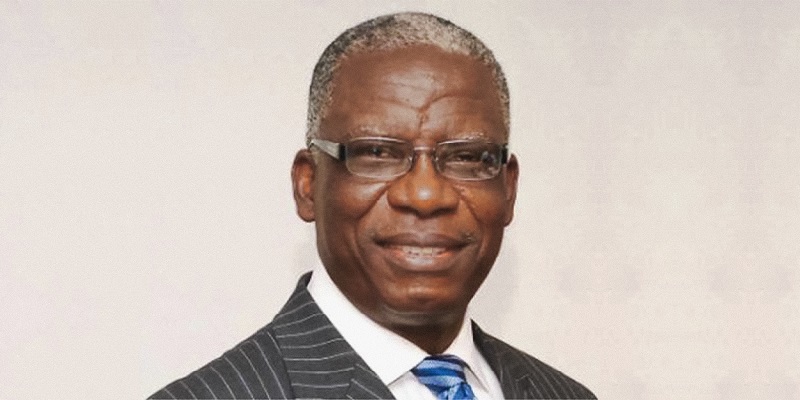
Dr Richard Ikiebe is a Media and Management Consultant, Teacher and Chairman, Board of Businessday Newspaper.